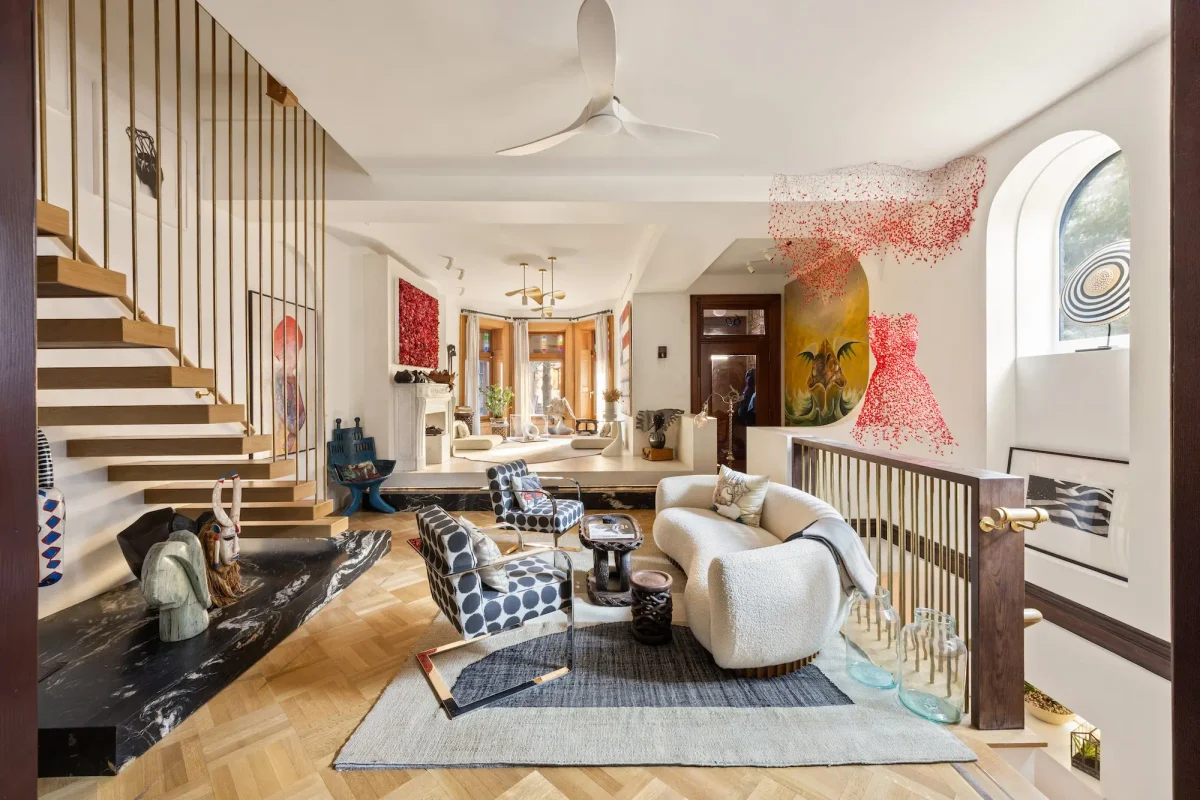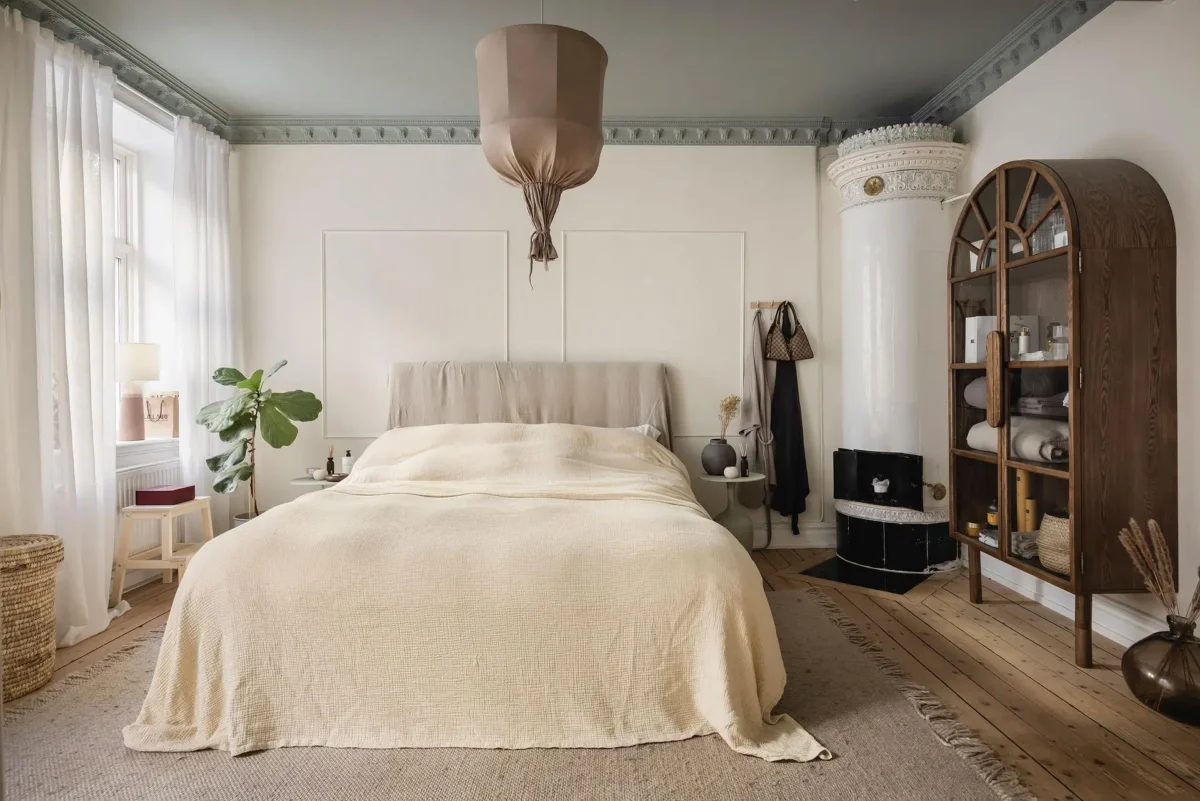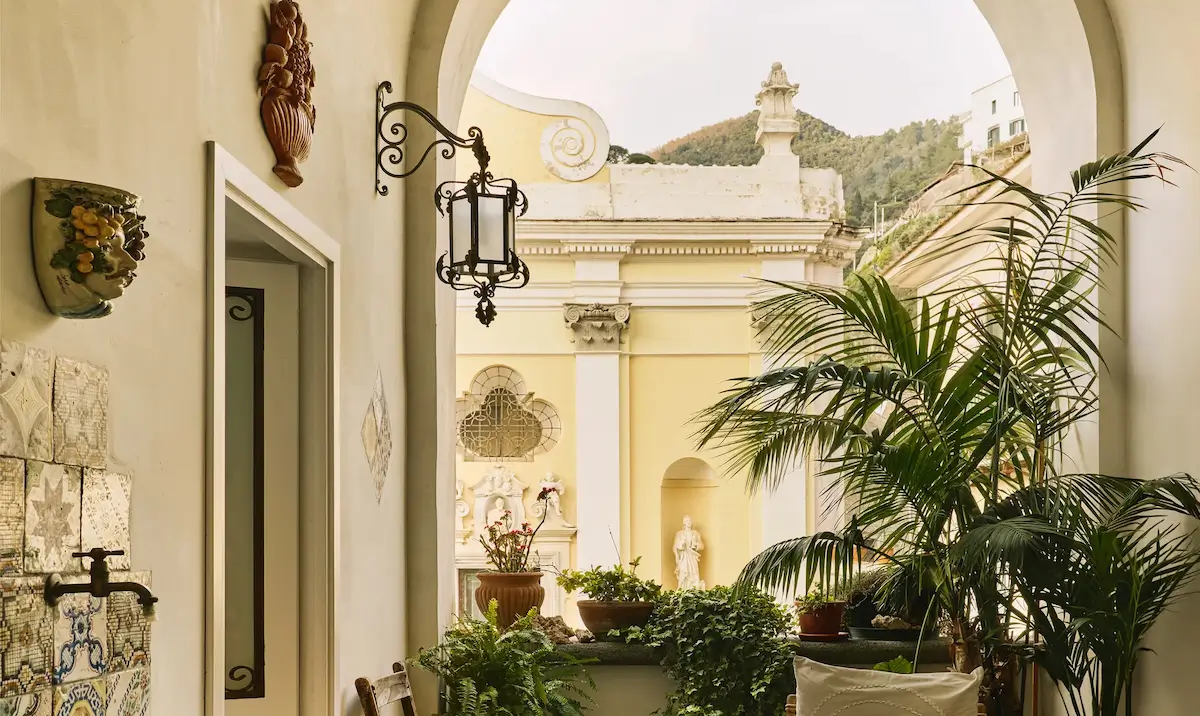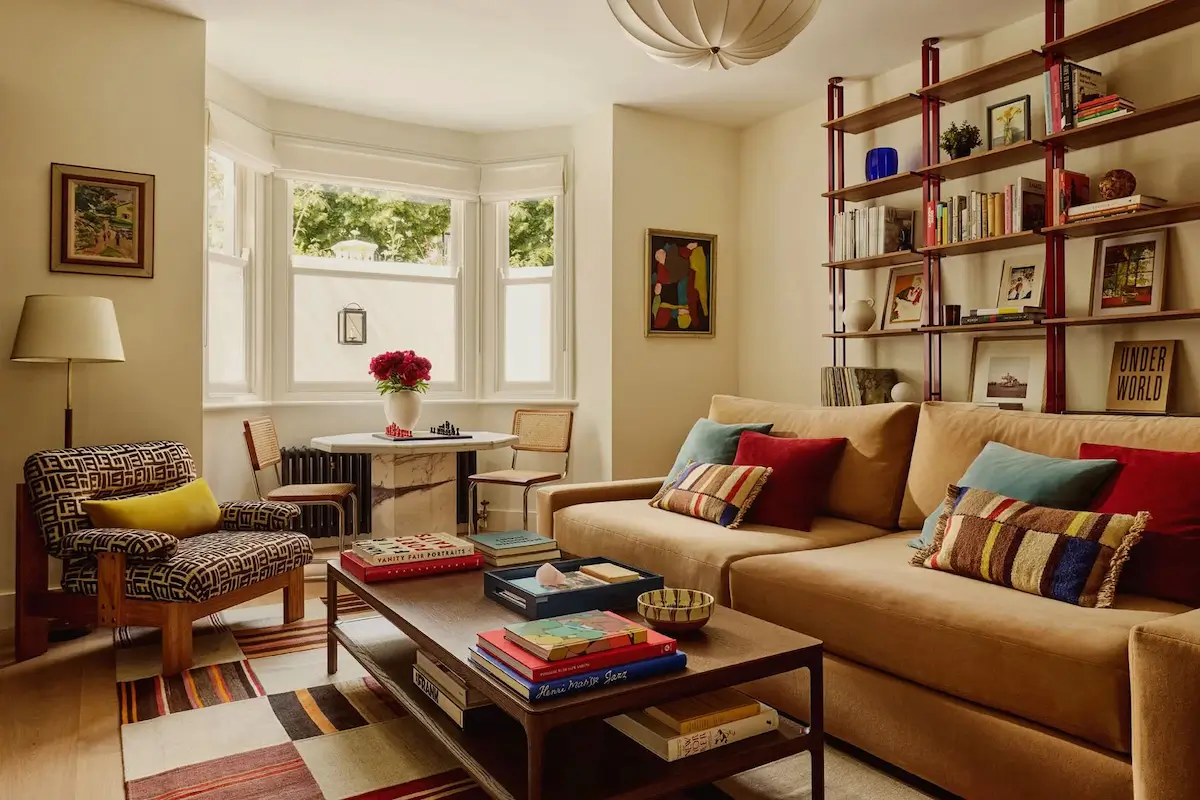
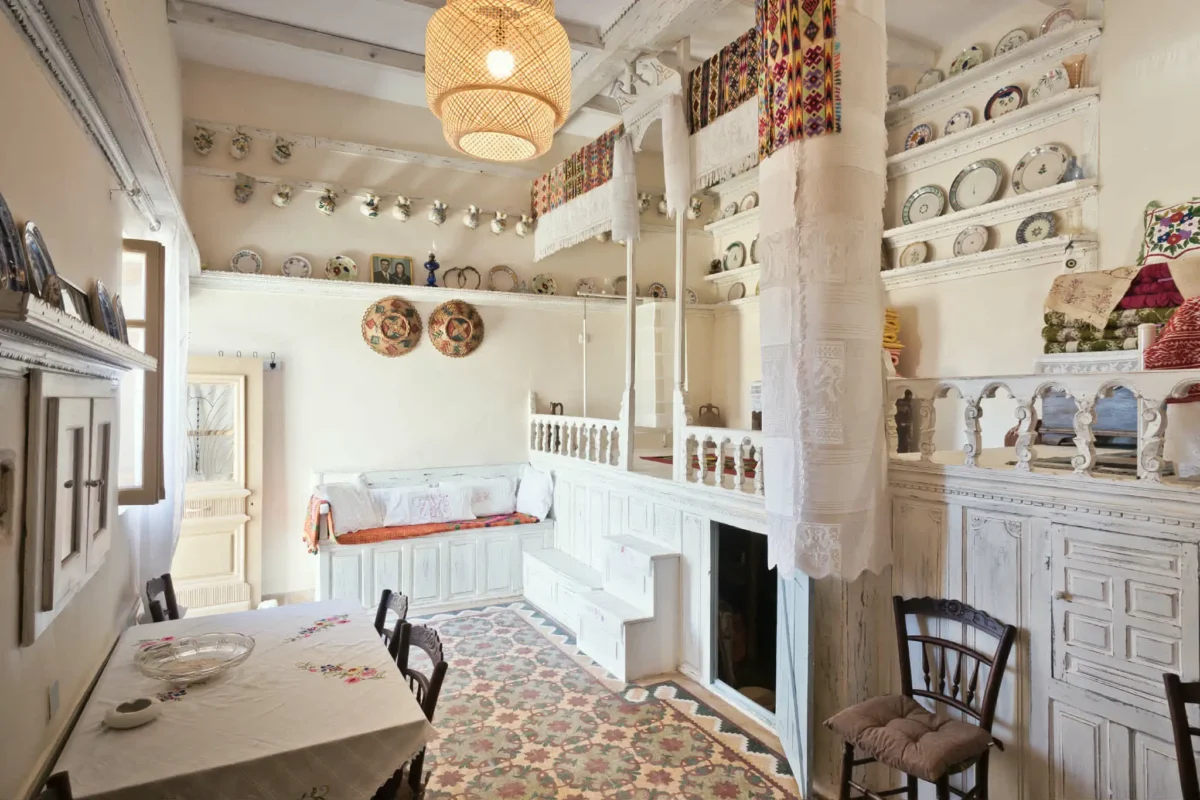
In the traditional village of Menetes on the Greek island of Karpathos, professional dancer and holistic therapist Eva Plokamaki spent ten years bringing her great-grandmother’s house back to life. She did much of the work gradually and with her own hands. Friends came to help. Bigger jobs sometimes had to wait until she could afford the craftsmen and materials they required.
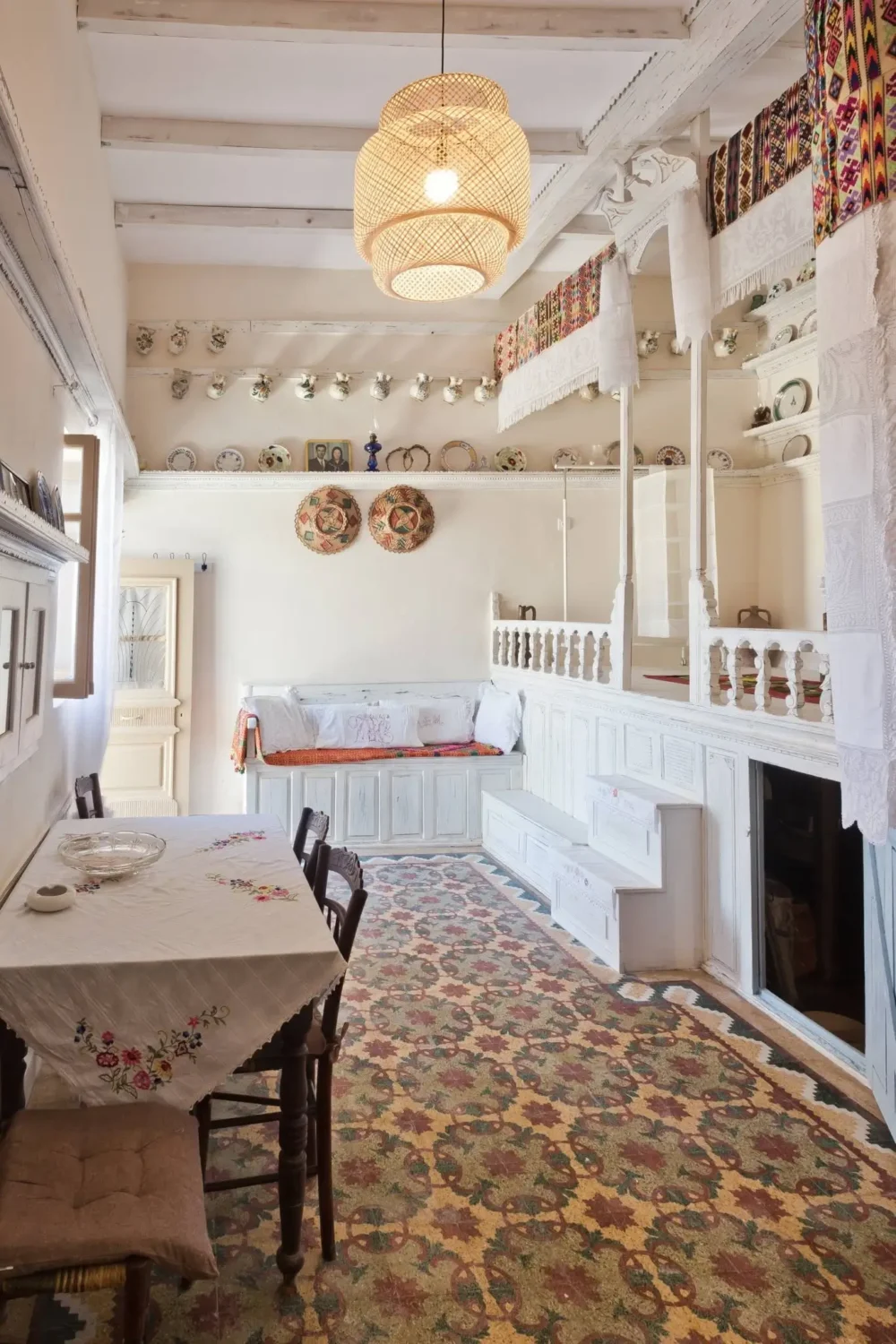
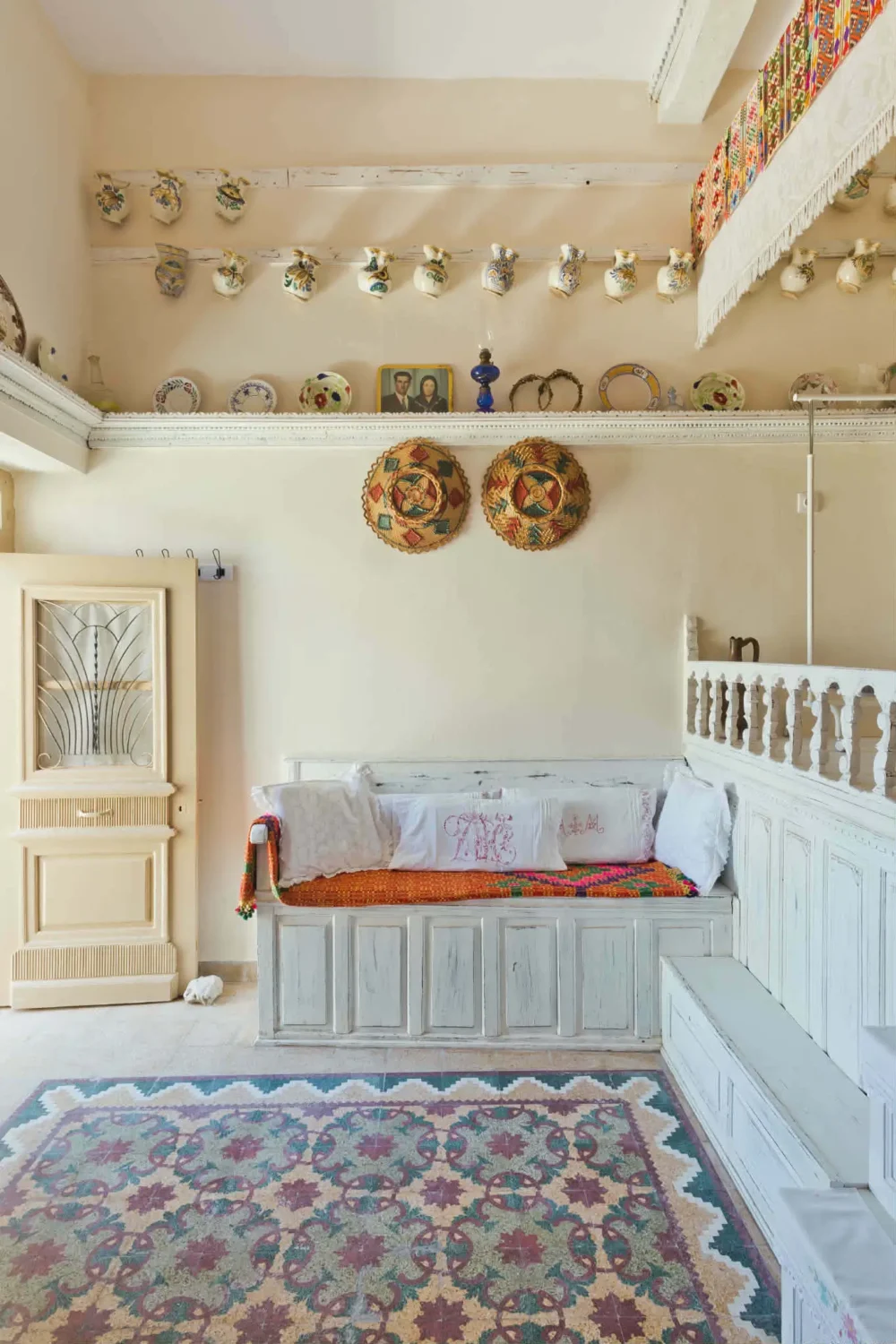
Today, the house is filled again with carved woodwork, embroidered textiles, painted plates, old photographs and objects that have survived generations of the same family.
Eva now lives permanently in Crete, but she never wanted the Karpathos house to sit empty in her absence. Her philosophy is wonderfully simple:
“Houses are meant to be lived in.”
Once you read the full story, those words mean even more.
A House Passed Down Through Women
The story of how the house came to Eva is almost as fascinating as the interior itself.
Traditionally in Karpathos, the first daughter of a family — known as the Kanakara — inherited the family property and was given her grandmother’s name.
In Eva’s family, the Kanakara was her grandmother’s eldest sister. She was twenty years older and never had children, so when Eva’s grandmother had her first baby, she asked to take the child — Eva’s mother — as her own.
Eva’s grandmother declined, but she did name her daughter Maria, after the Kanakara.
Ten children had grown up in the family house, with Eva’s grandmother being the youngest. Years later, when Eva was born as Maria’s first daughter, her grandmother chose to name her not after herself, but after Eva’s great-grandmother, to whom the house had belonged.
Through this unusual line of women, names and inheritance, the house eventually became Eva’s.
Ten Years of Restoration
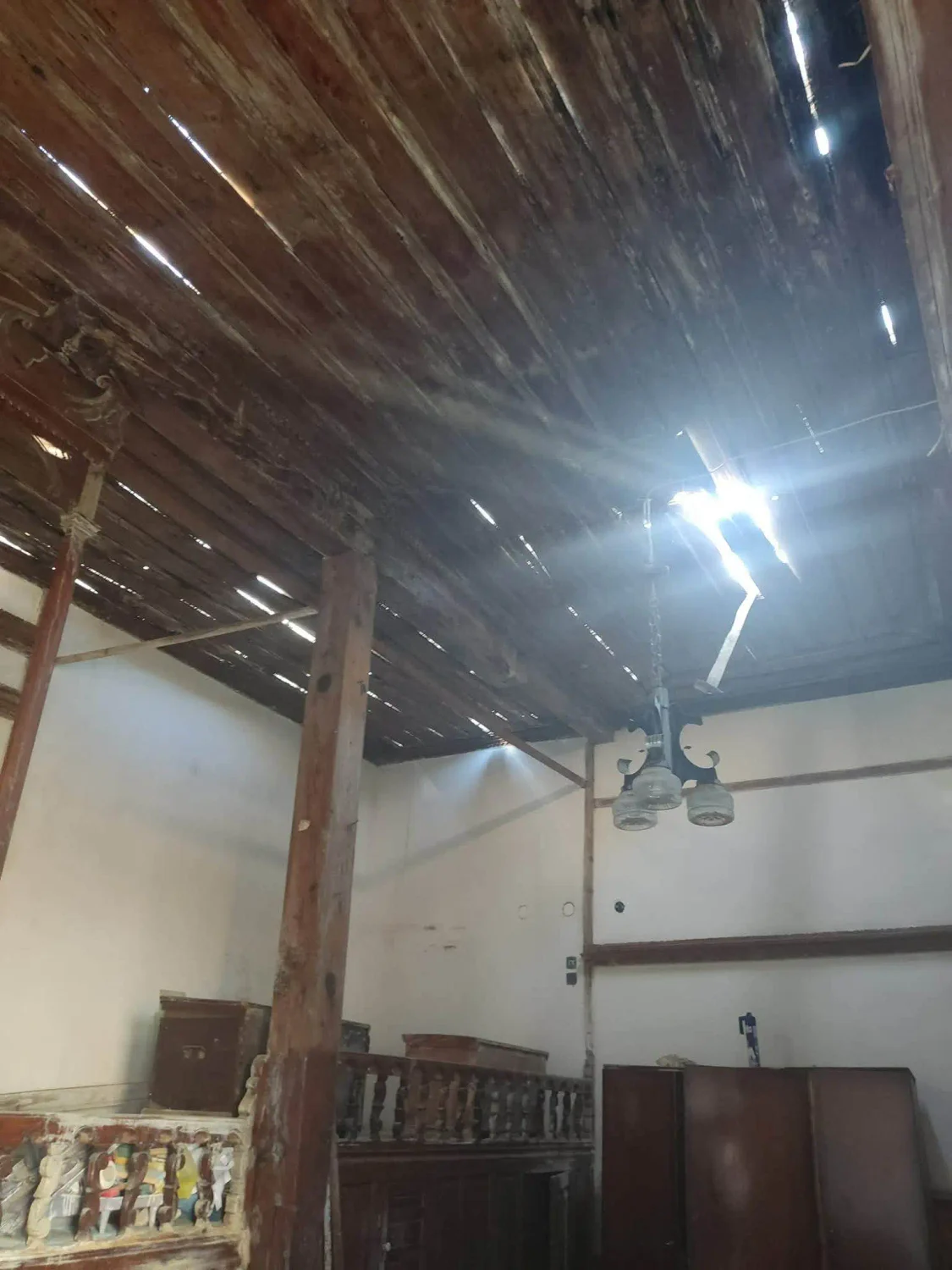
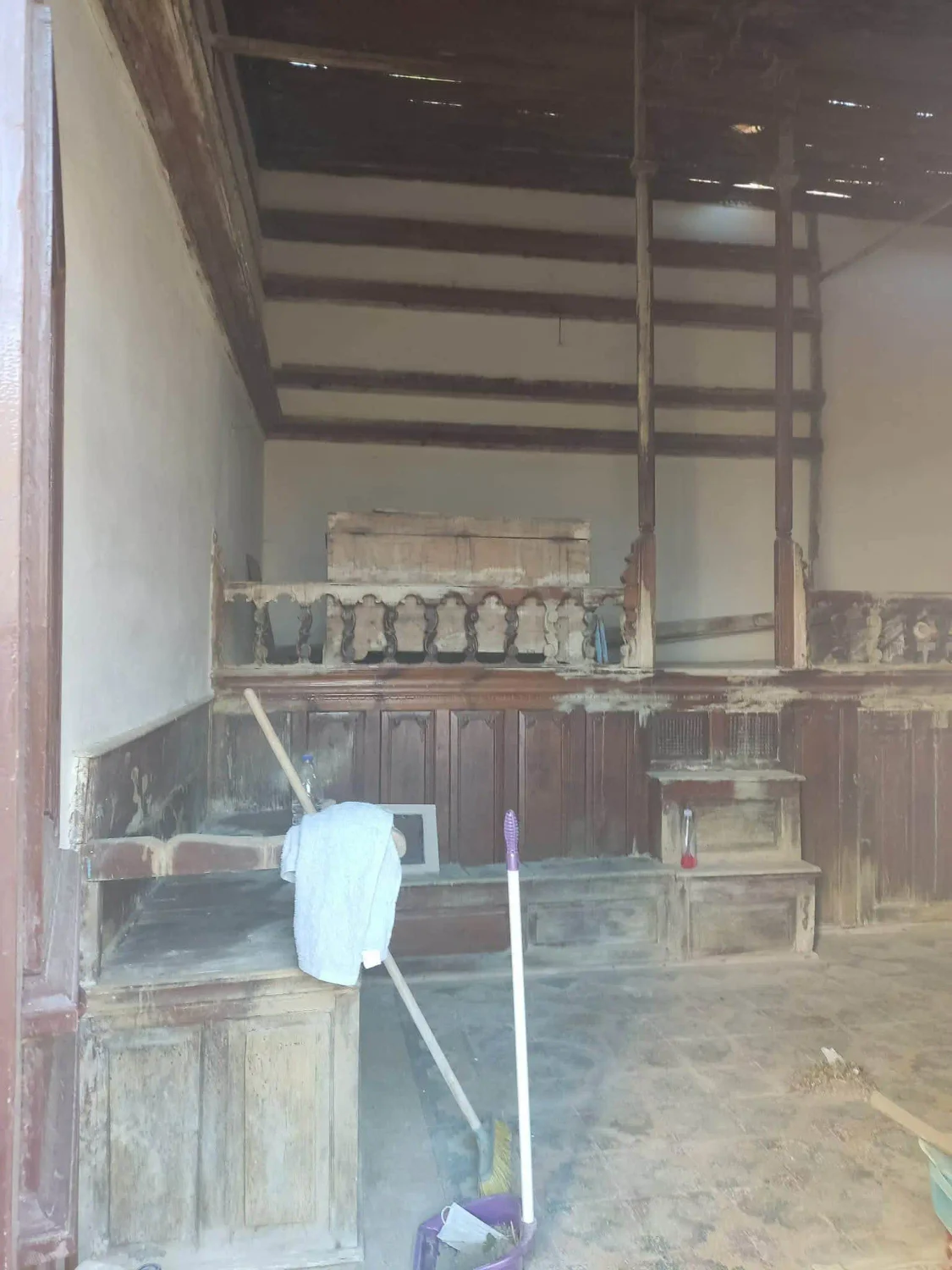
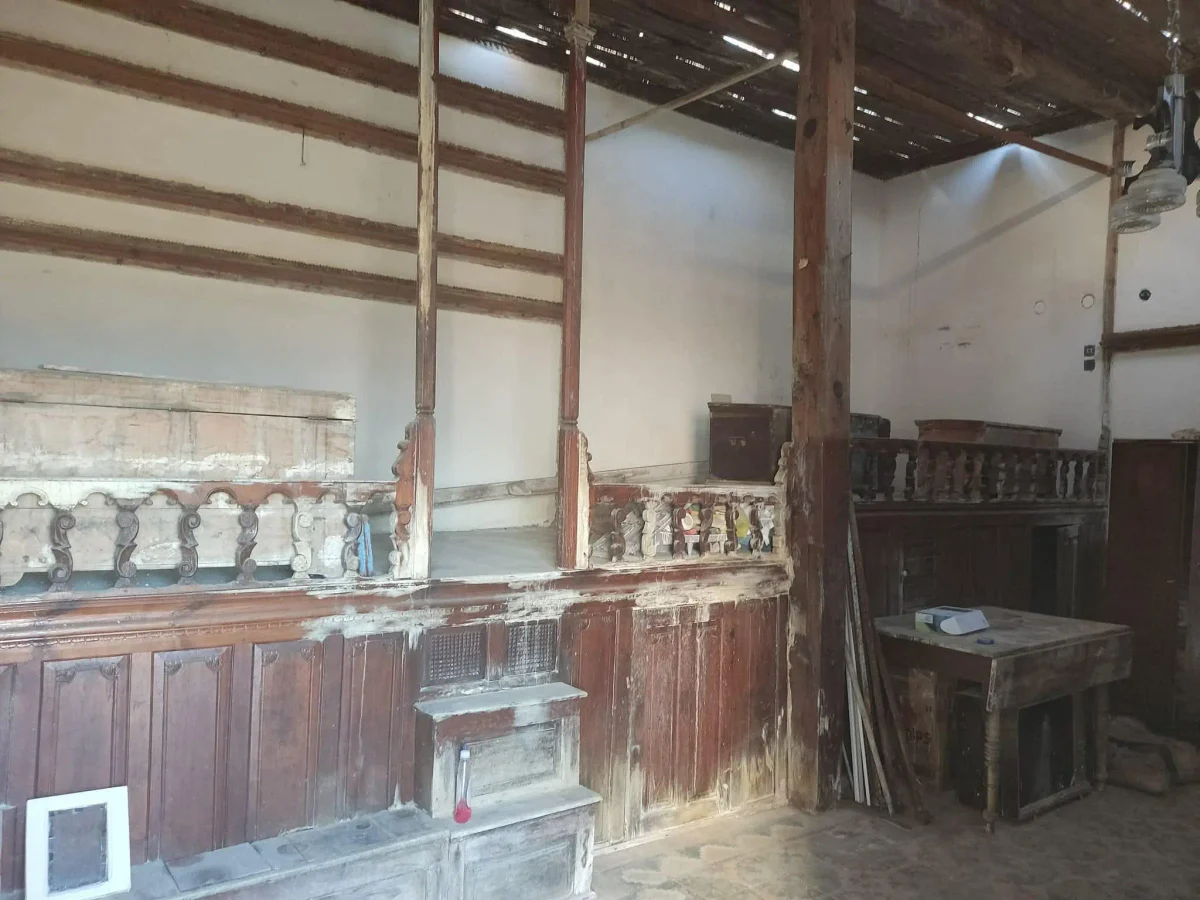
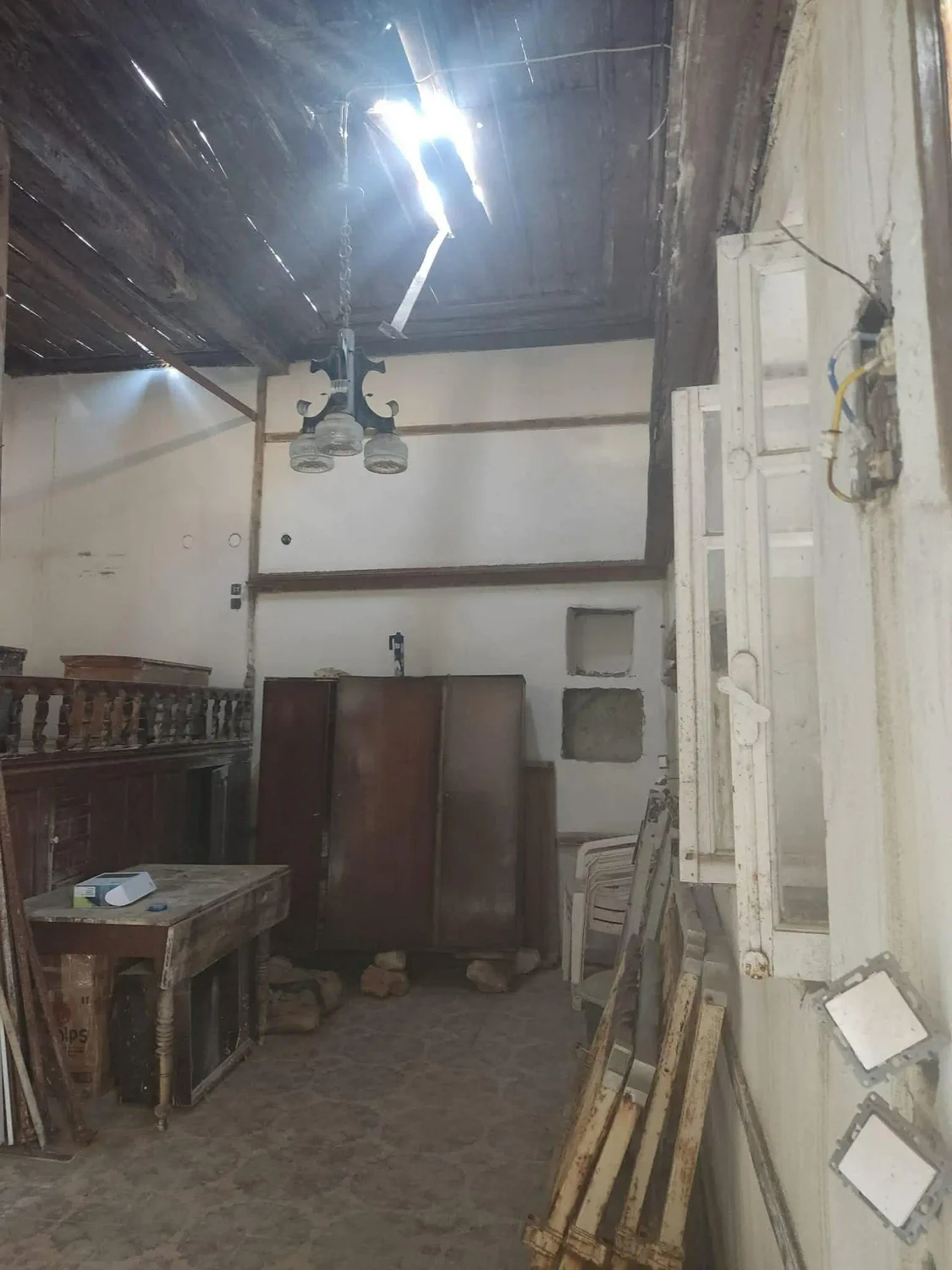
The before photographs make the transformation difficult to believe. There are exposed beams, scaffolding, deteriorated timber and, in places, daylight pouring through the roof.
But to understand what happened to the house, you first have to understand its traditional Karpathian roof.
Rather than a conventional modern roof, the house originally had what Eva calls an “oma,” a traditional construction made from timber with alternating layers of seaweed and earth. Together with the thick stone walls, this natural system helped keep the interior remarkably cool.
It was also a roof that needed regular care. Eva explains that fresh earth would traditionally be added periodically, allowing the rain to gradually redistribute it and helping maintain the protective layer.
The problem came when unsuitable soil containing seeds was used on her house.
“It became a forest up there,” Eva remembers.
Plants began growing across the roof, water eventually penetrated the house, and the damage inside was extensive.
What followed wasn’t a quick renovation. It took around ten years, with Eva doing much of the work herself, friends helping whenever they could, and craftsmen brought in for the jobs they couldn’t tackle alone.
She still remembers the moment when an electrician friend switched on the light in the restored main room for the first time.
“As soon as the light came on, I burst into tears. I couldn’t believe it had become a house.”
Keeping the Karpathian Character
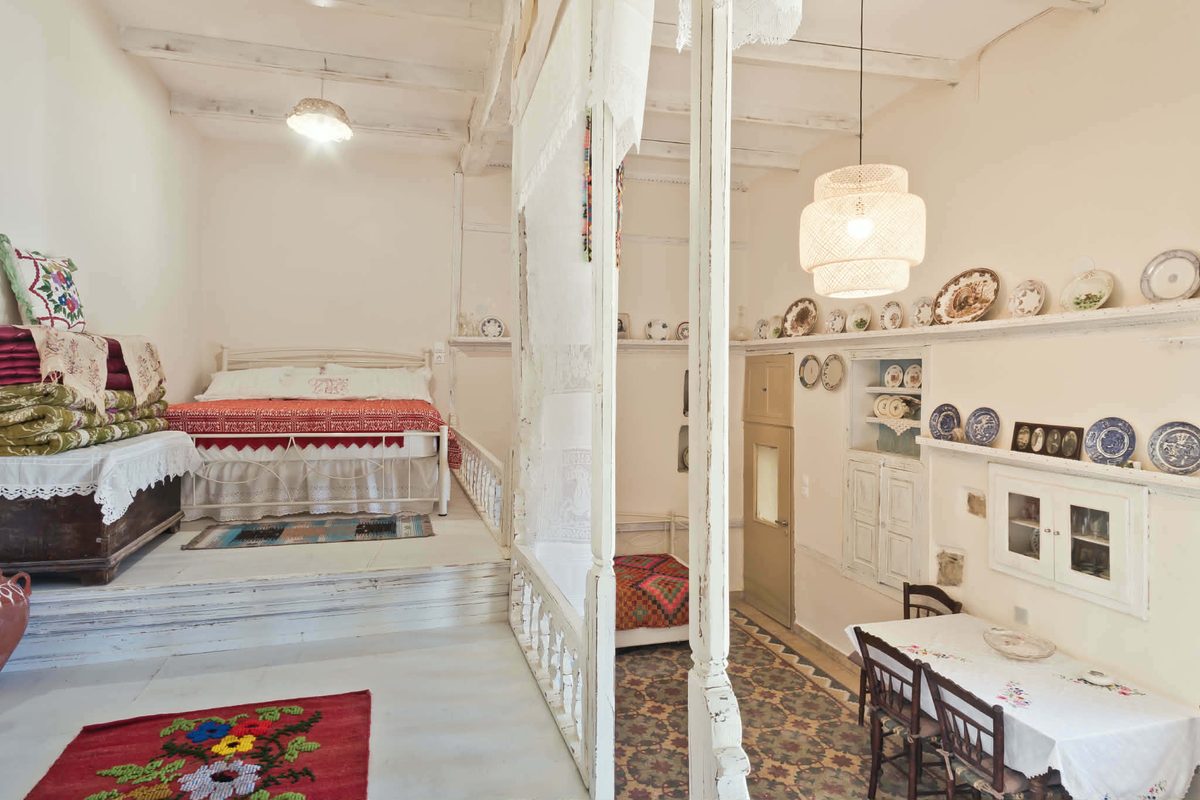
Eva’s goal was never to modernize the house beyond recognition.
The carved balustrades, raised platforms, shelves and built-in timber structures that give the interior its extraordinary character were preserved. Her main aesthetic change was to lighten the traditionally dark brown wood.
“I wanted to bring some light into it,” she explains.
The pale finish allows the architecture to remain the focus while giving the old embroidered textiles, painted plates, patterned rugs and family objects more room to breathe.
It feels collected rather than decorated — because much of it genuinely has been collected over generations.
A Bed, a Refrigerator and a Place to Dress the Bride
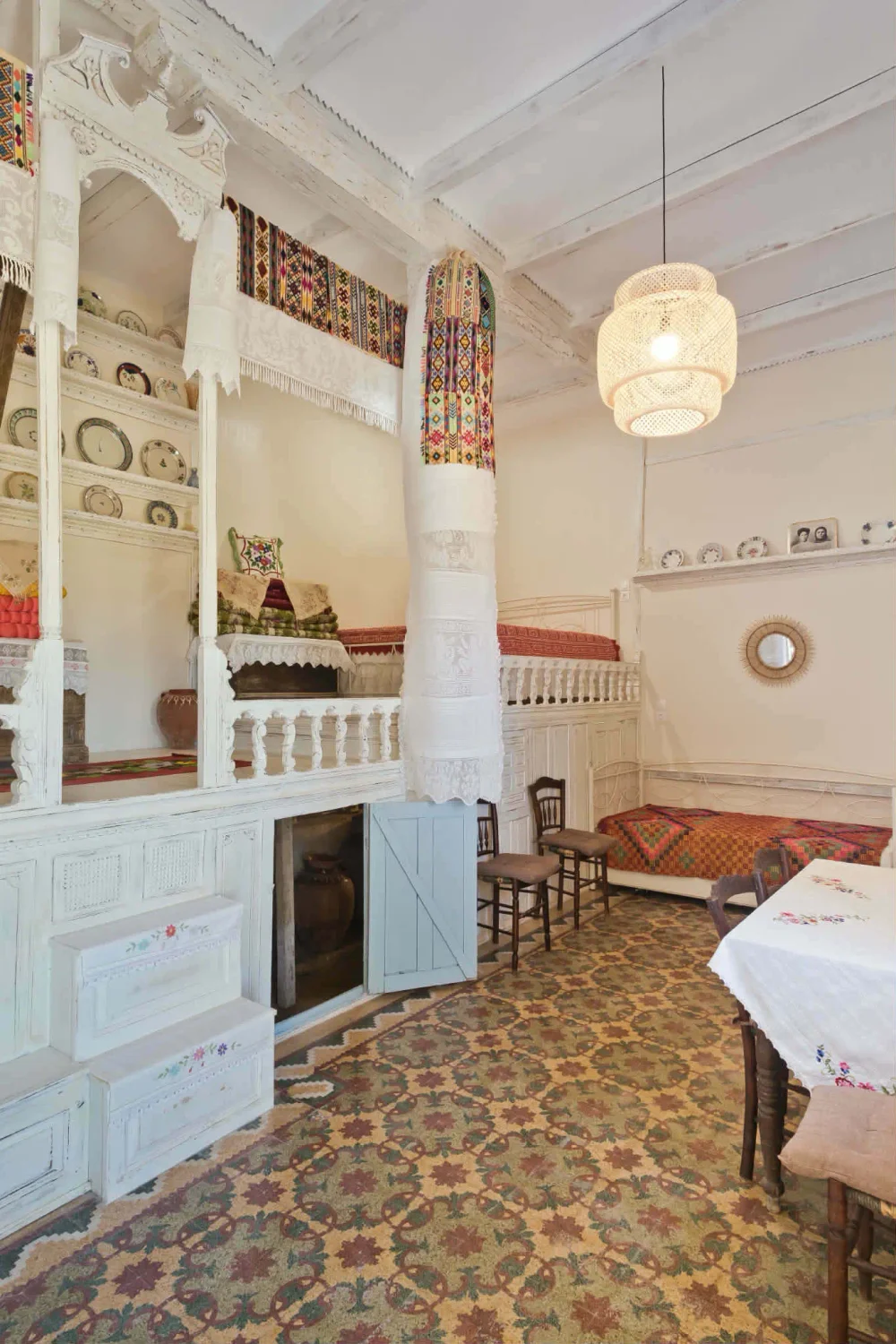
One of the most fascinating things about the house is how much meaning is hidden in its architecture.
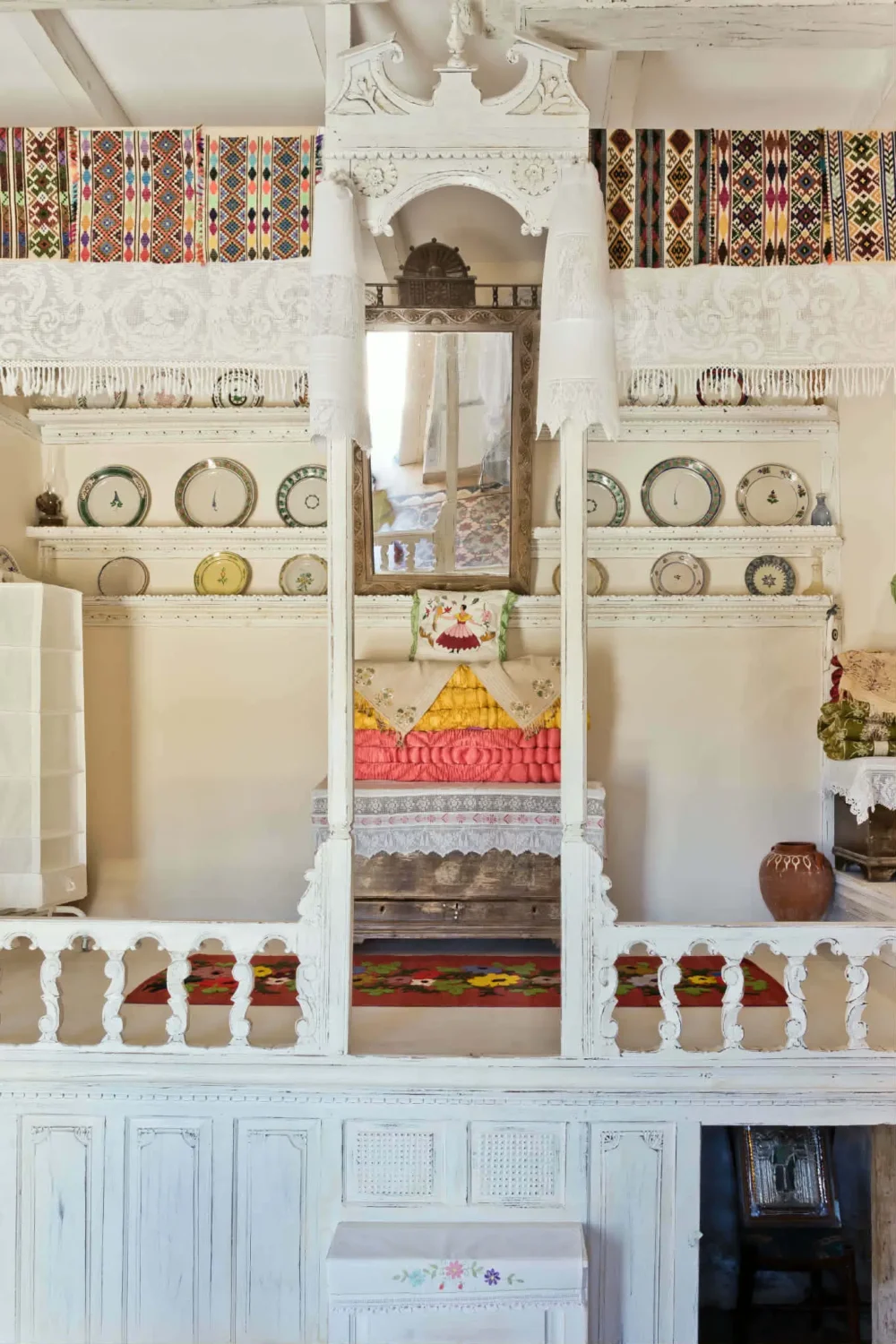
Beneath the raised wooden sleeping area in the main Karpathian room is a naturally cool storage space known locally as the apokriatos. Before refrigerators, this was where the family stored oil, meat and other food.
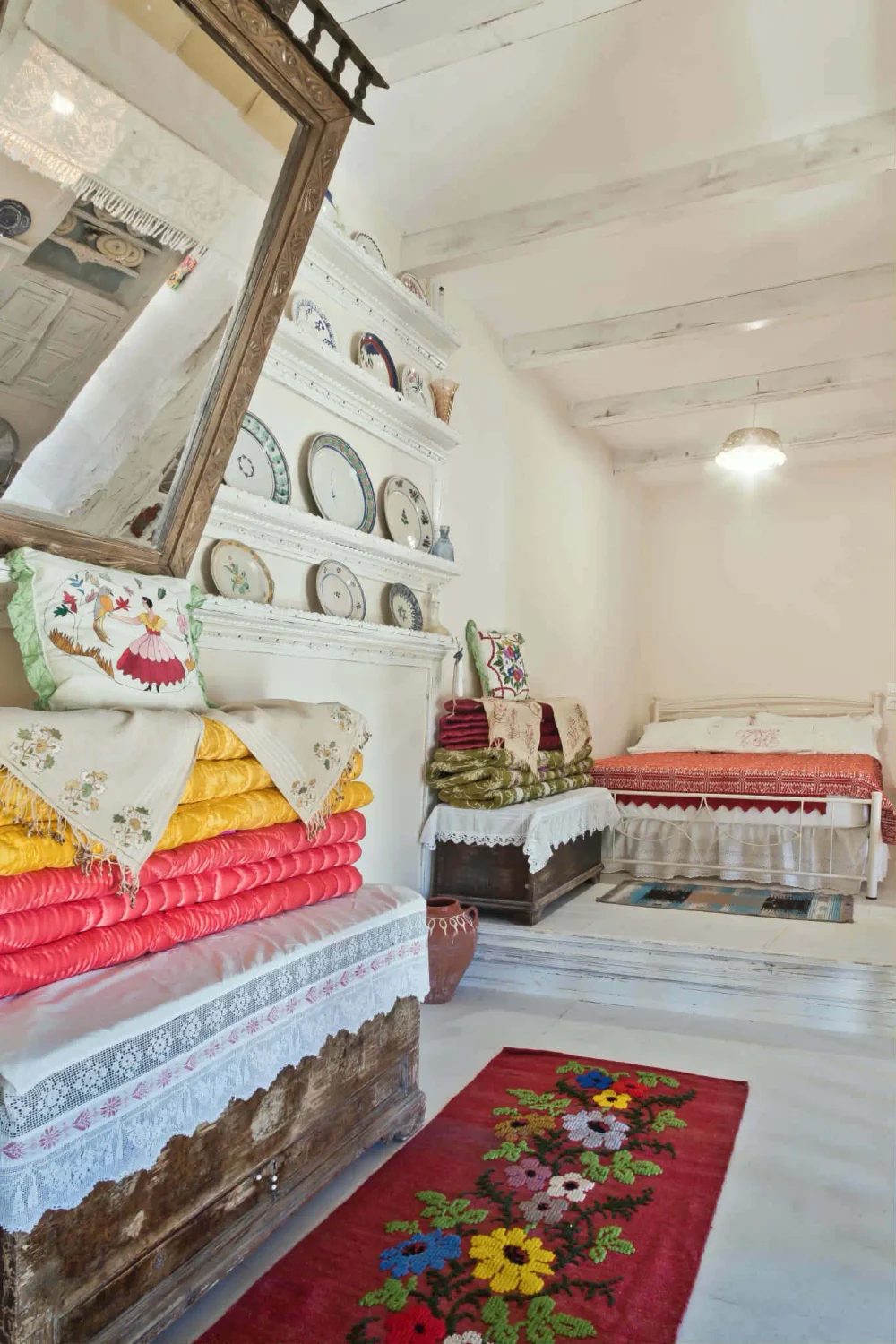
Above it is the raised bed — but sleeping wasn’t its only purpose.
Traditionally, this was also where the bride was dressed before her wedding. She would prepare above while relatives, friends and musicians gathered below, with food, music and improvised mantinades, the traditional rhyming verses of the island.
Eva says the custom can still be found today in Karpathian homes that have preserved these traditional interiors.
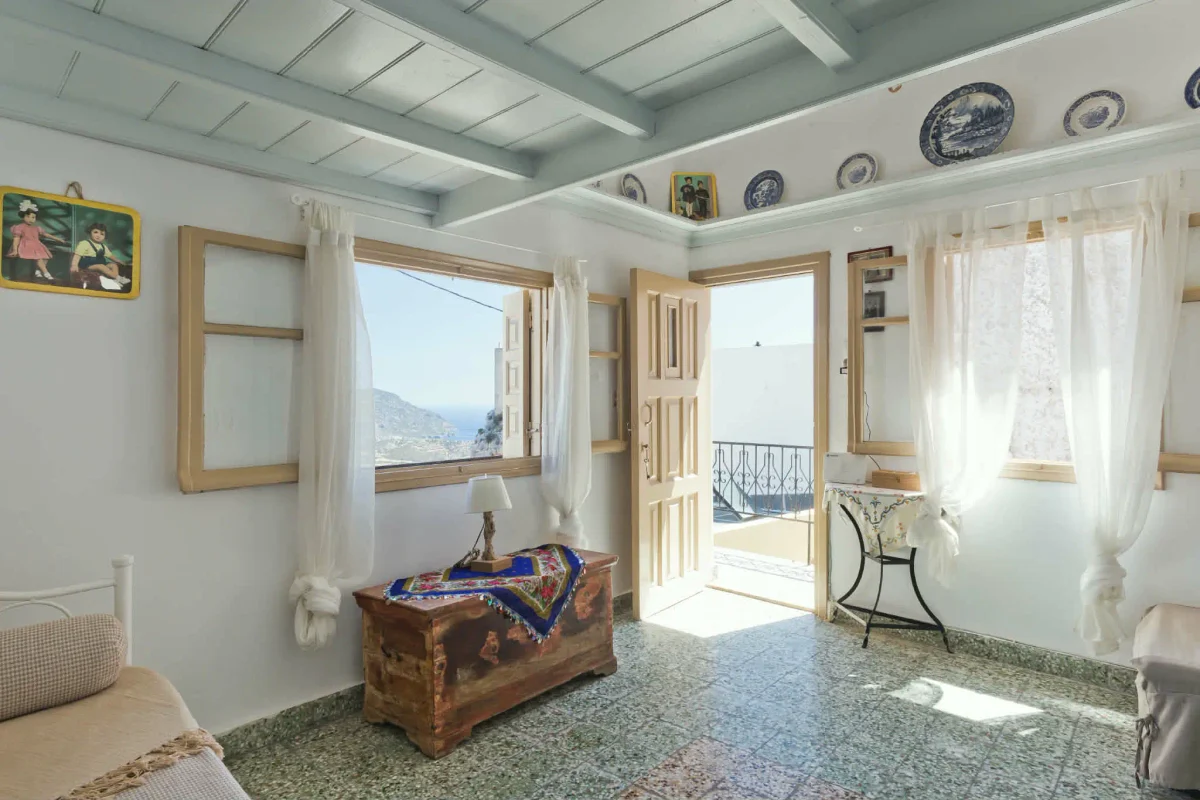
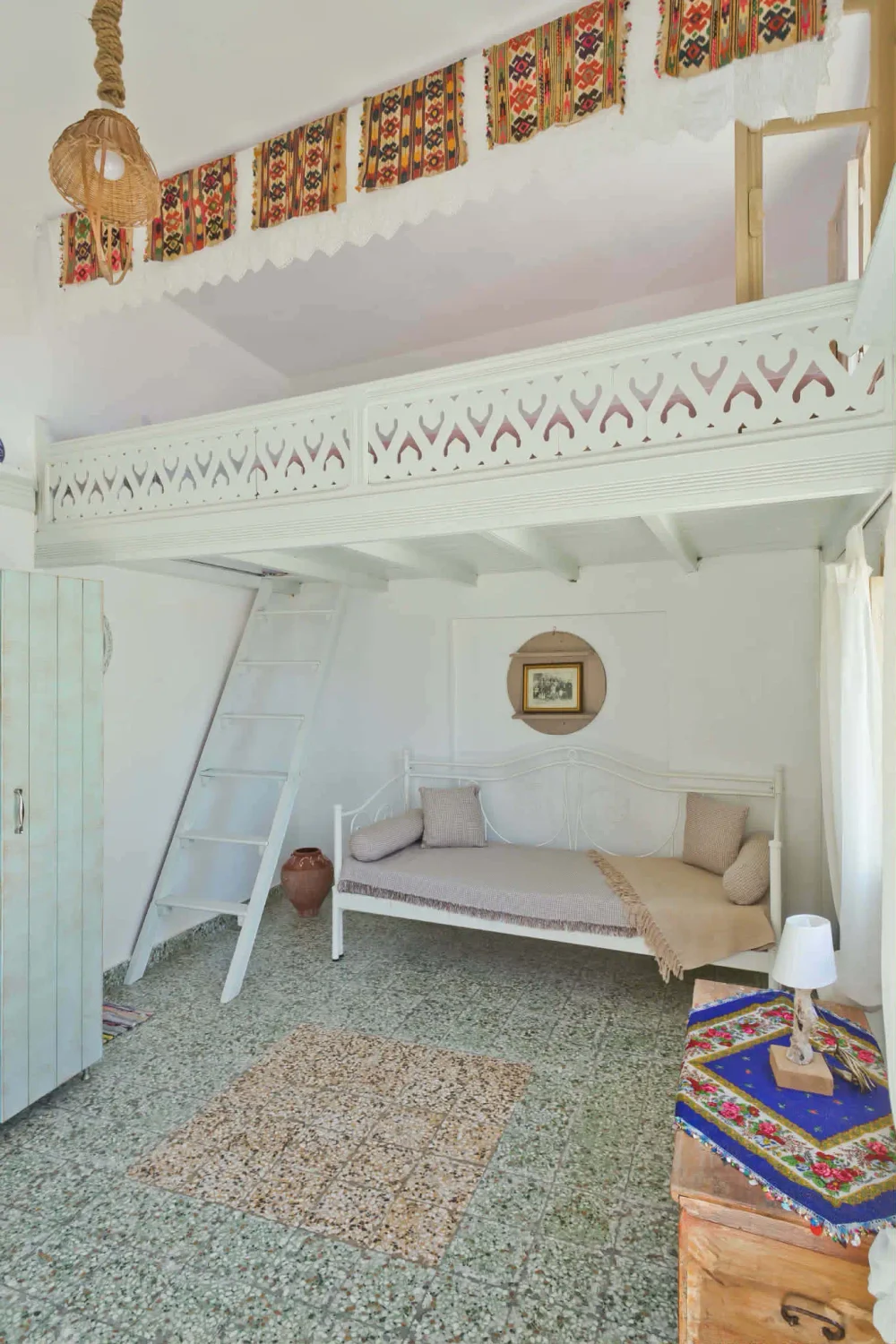
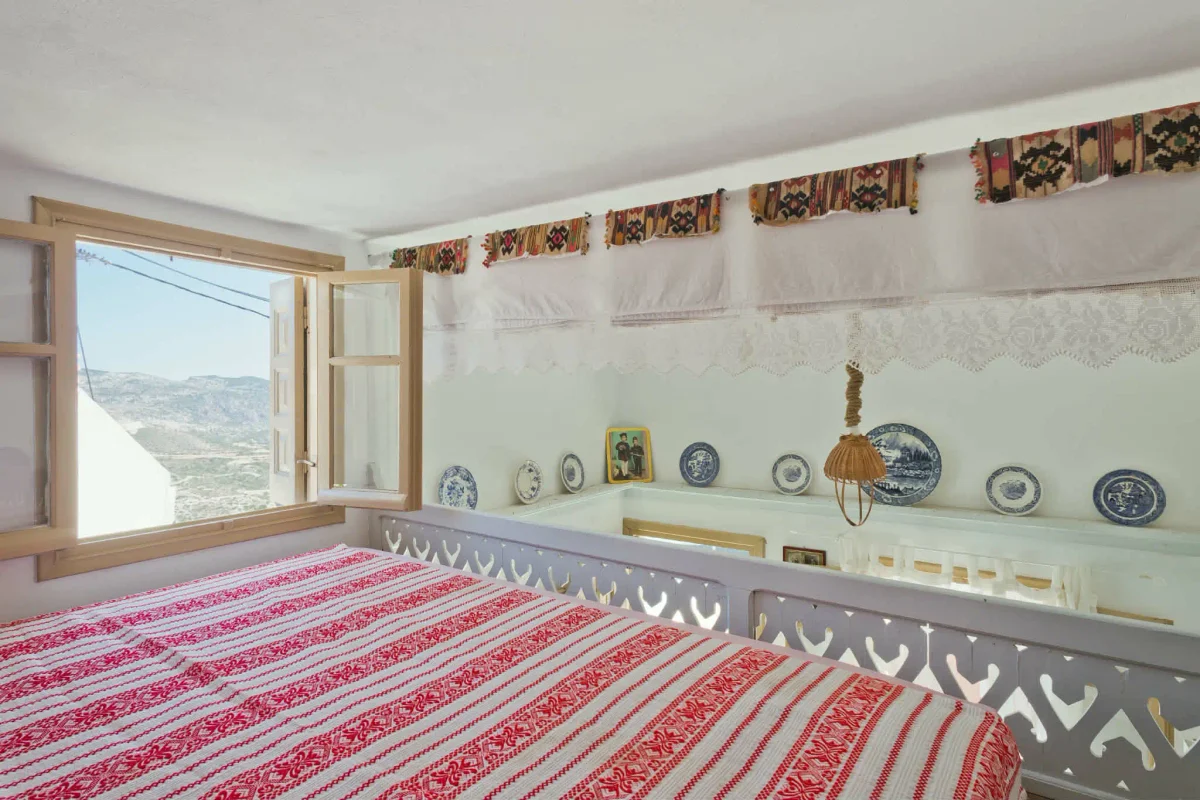
Elsewhere is the mousandra, another characteristic elevated sleeping space, this time in a separate room with a window looking toward the sea.
It is a wonderful reminder that the beauty of these old interiors was never purely decorative. Every part of the house had a purpose.
A House Full of Family History
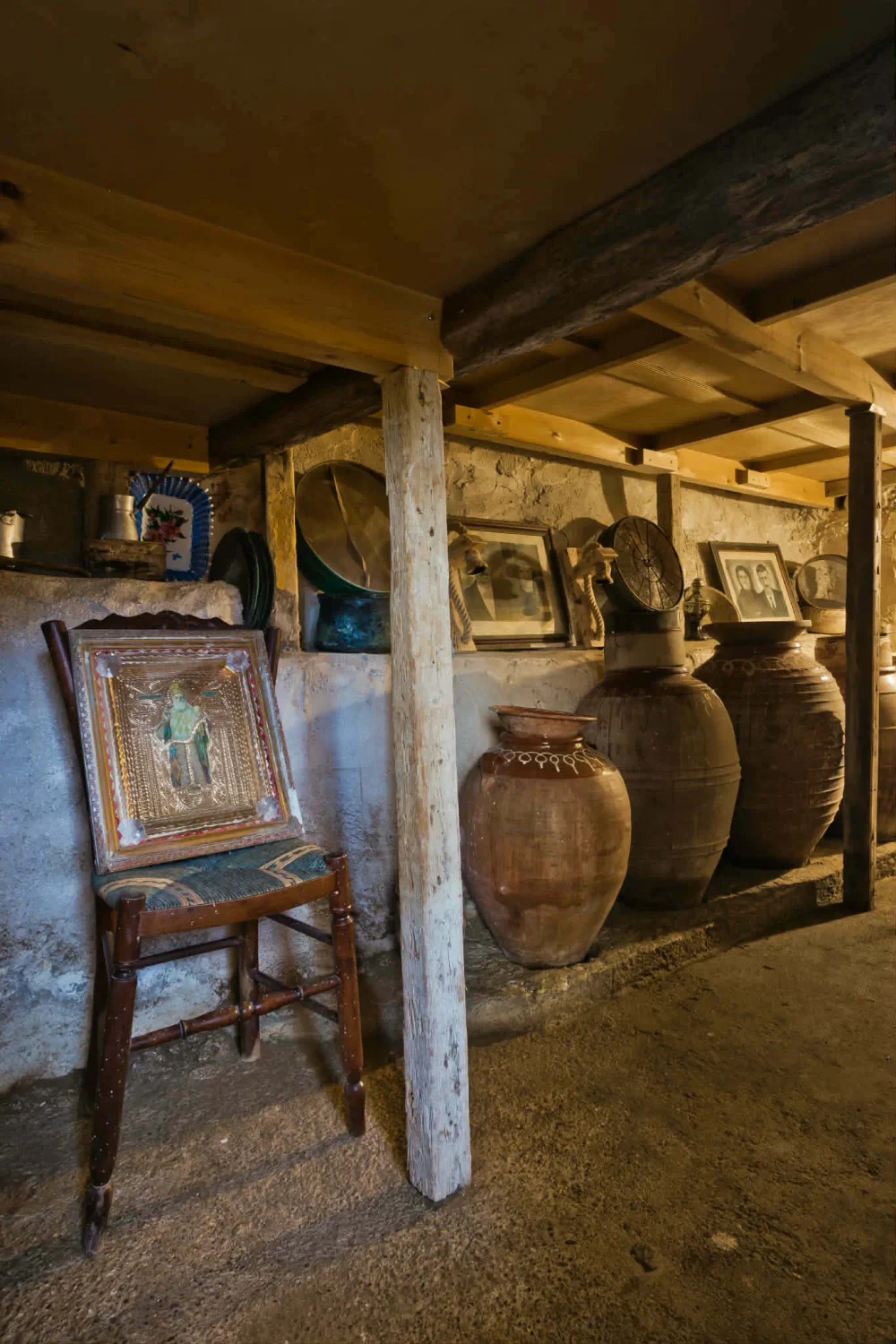
Many of the objects inside have their own stories.
There are old painted plates, photographs and textiles, while one of Eva’s most treasured possessions is a pair of old wedding crowns belonging to her aunt.
She also remembers a small wooden box that once contained documents with dates reaching back as far as the 1600s. Sadly, they were eventually lost to water damage.
These are the details that make the house impossible to reproduce. It doesn’t look historic because someone styled it that way. It is historic.
“Houses Are Meant to Be Lived In”
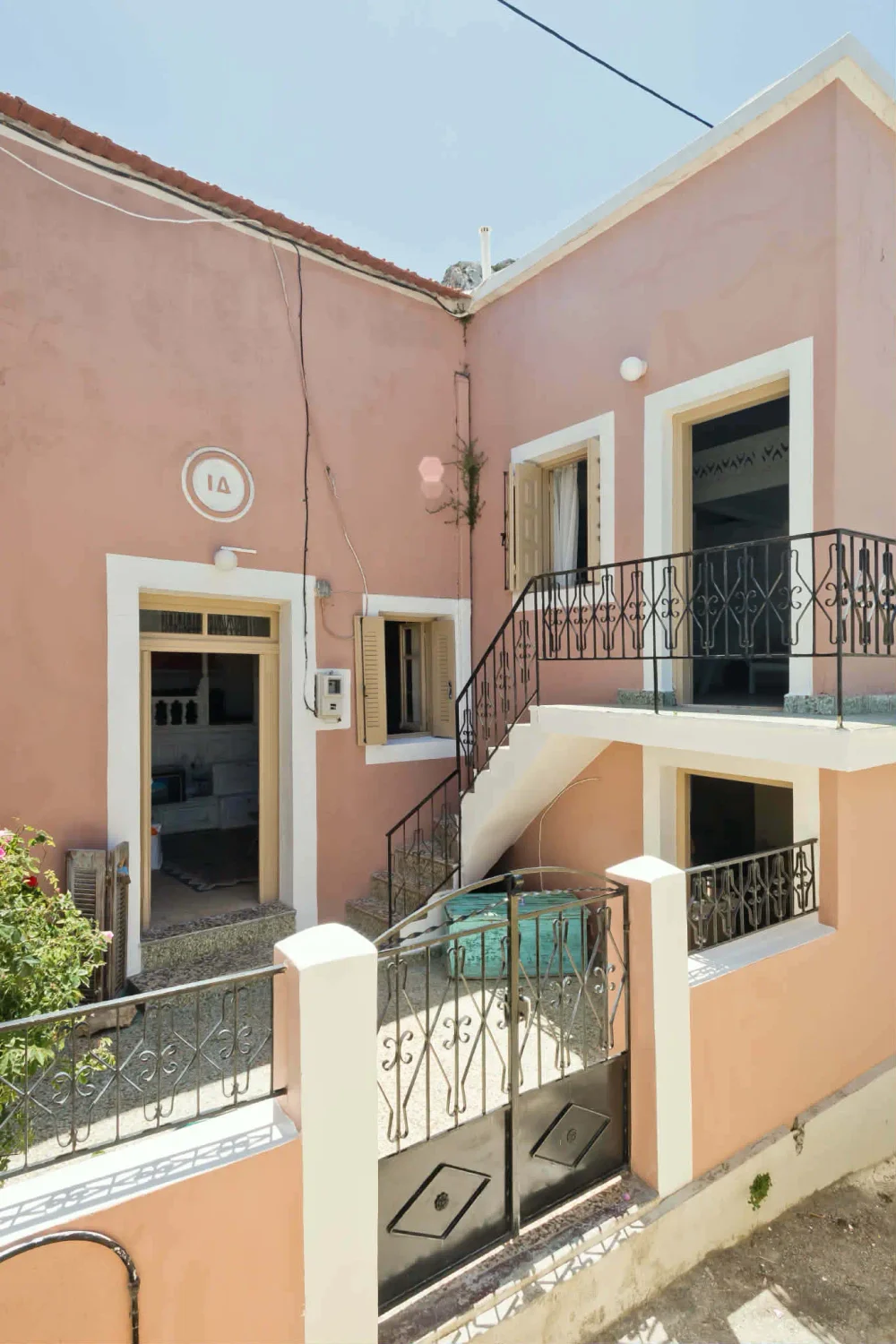
Perhaps the most unexpected part of Eva’s story came after the restoration was finished.
Instead of becoming protective of the house she had spent so long saving, she began opening it to other people.
Every year, she offers free accommodation to someone who needs a holiday but cannot afford the cost of staying away from home.
“I do it because not everyone has the opportunity,” she explains. With travel becoming increasingly expensive, she reasons that if someone can pay to reach Karpathos, at least she can give them somewhere to stay.
There is something particularly lovely about the fact that Eva restored the house with the help of friends and now uses that same house to help other people.
This year, she has also made it available to teachers for €270 a month, offering an affordable option at a time when finding long-term housing on Greek islands can be extremely difficult.
And now another change is coming.
Eva has decided to sell.
It is a painful decision after ten years of work and so much family history, but her life is elsewhere now. She will take the most personal photographs and heirlooms with her, while hoping the house itself will continue to be used and loved.
After generations of family life, a damaged roof, ten years of restoration, friends lending their hands, brides dressing above its old wooden platform and strangers finding a temporary home within its walls, perhaps that is the most fitting future for it.
As Eva says:
“Houses are meant to be lived in.”
Eva Plokamaki’s restored traditional home in Menetes, Karpathos, is currently for sale for €168,000.
Anyone interested in the house can contact Eva directly at Evitsko@yahoo.gr for further information.
Discover more from Decoholic
Subscribe to get the latest posts sent to your email.