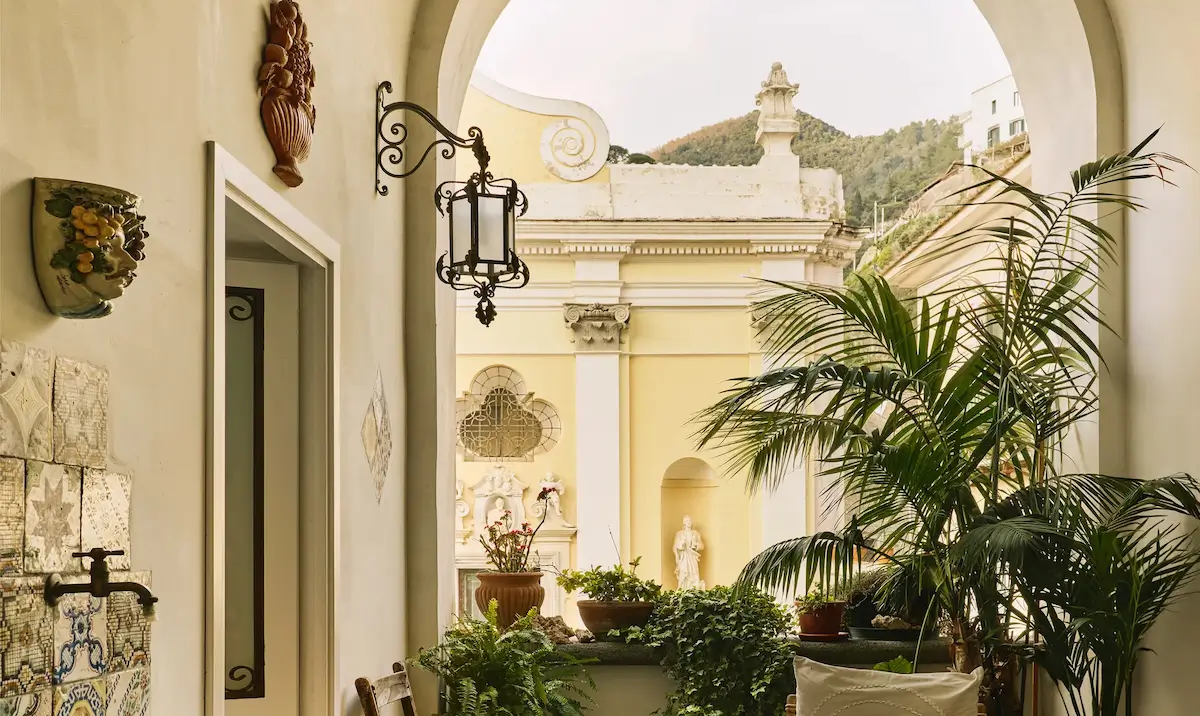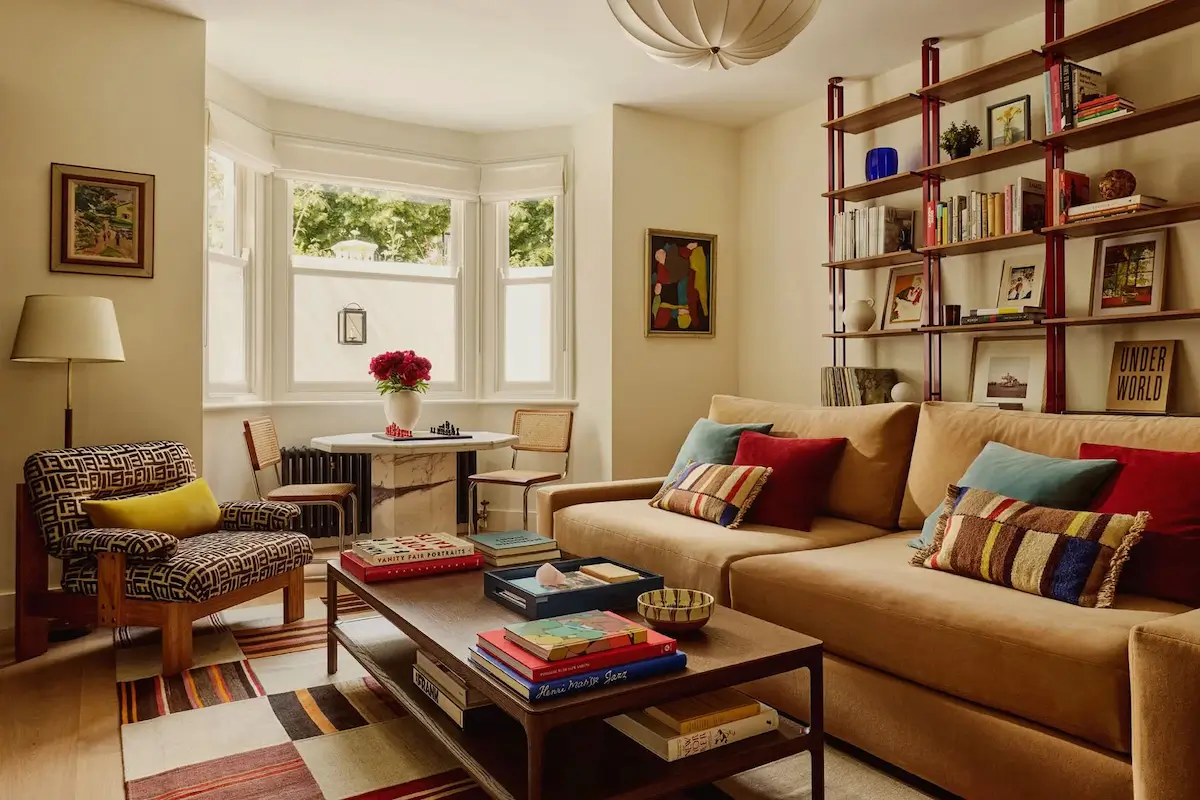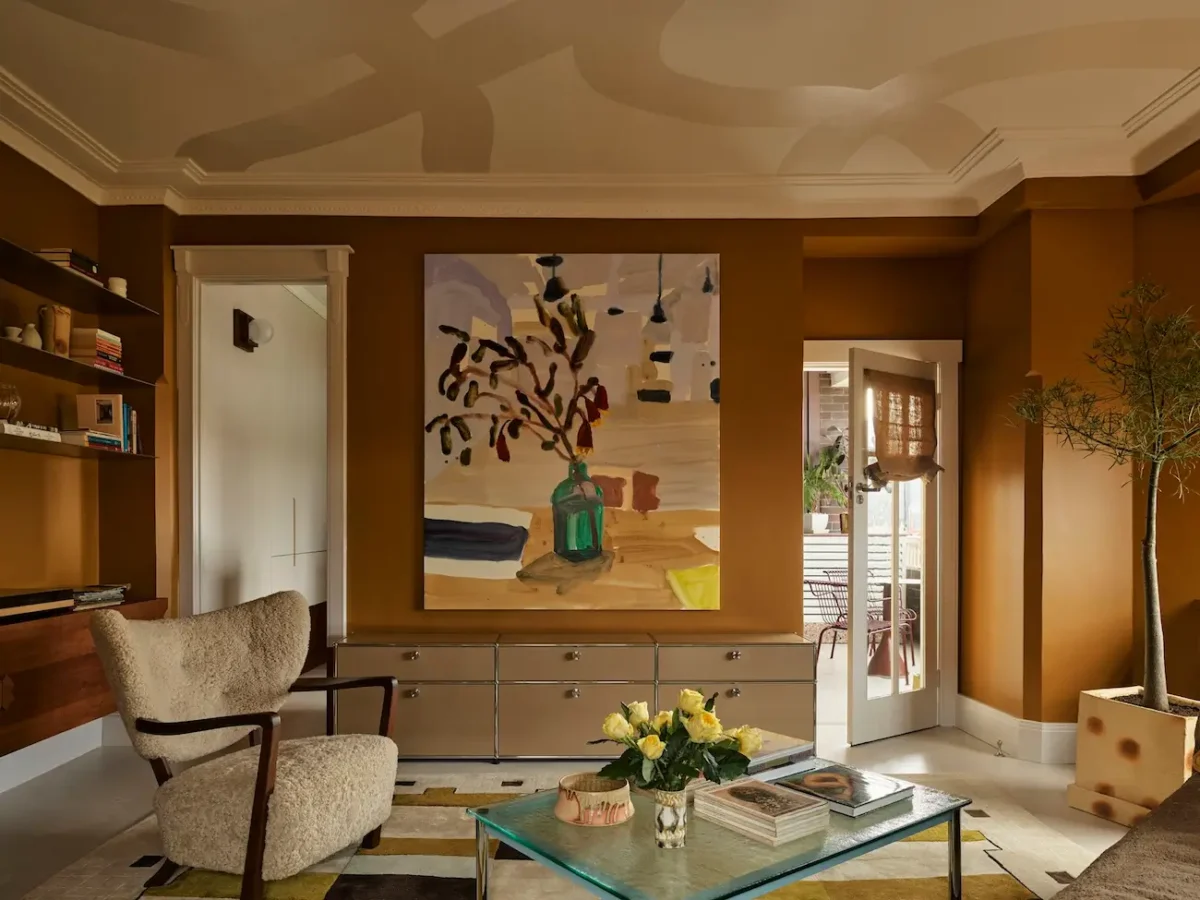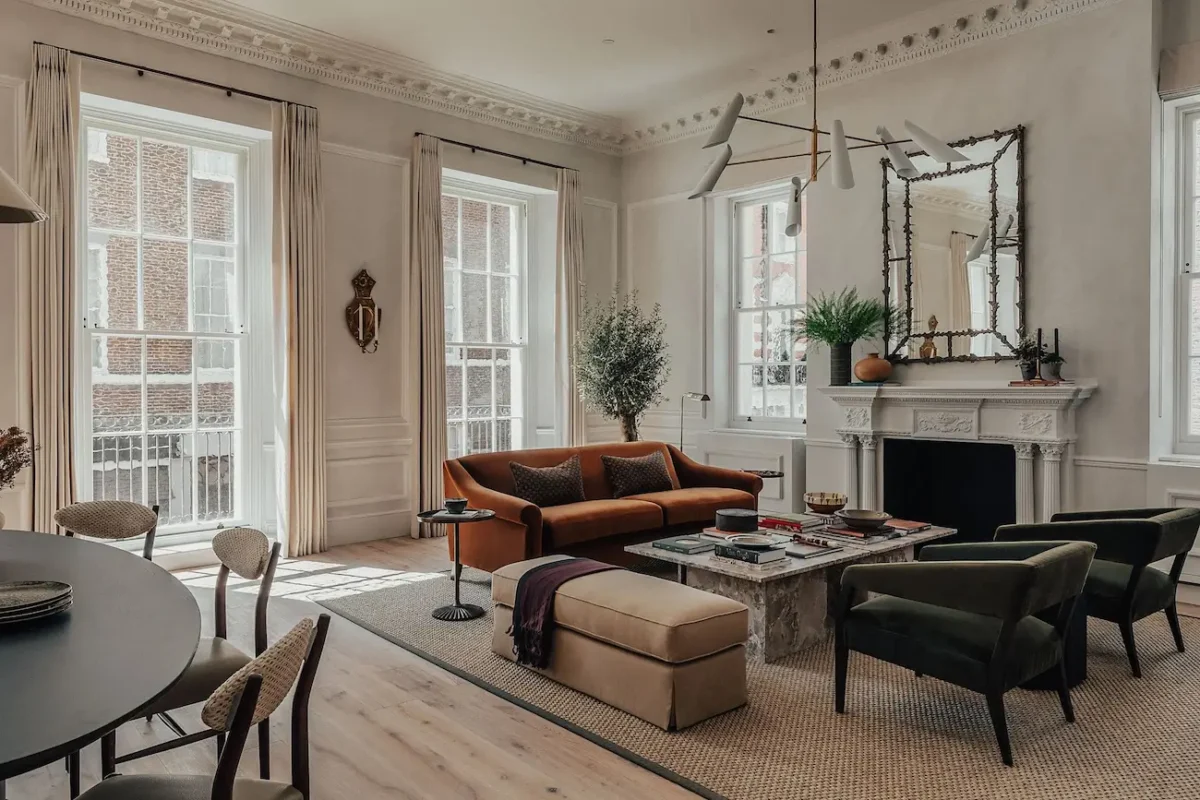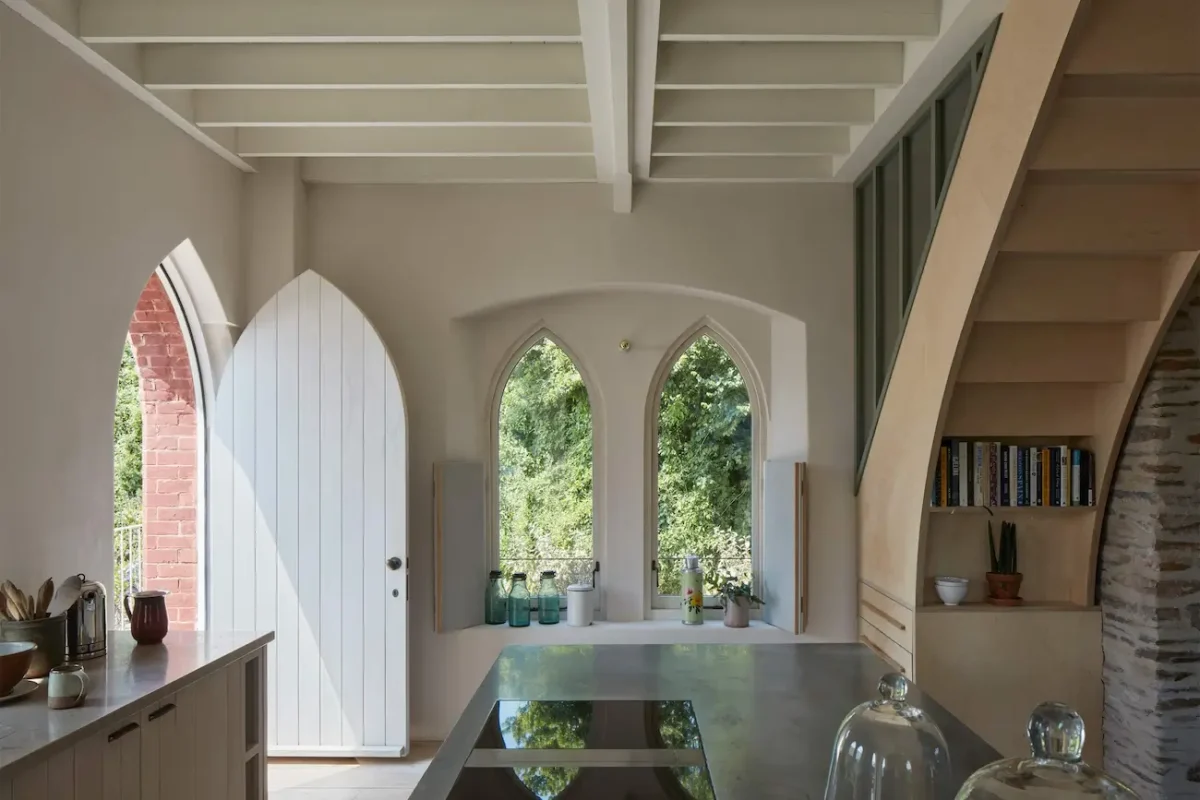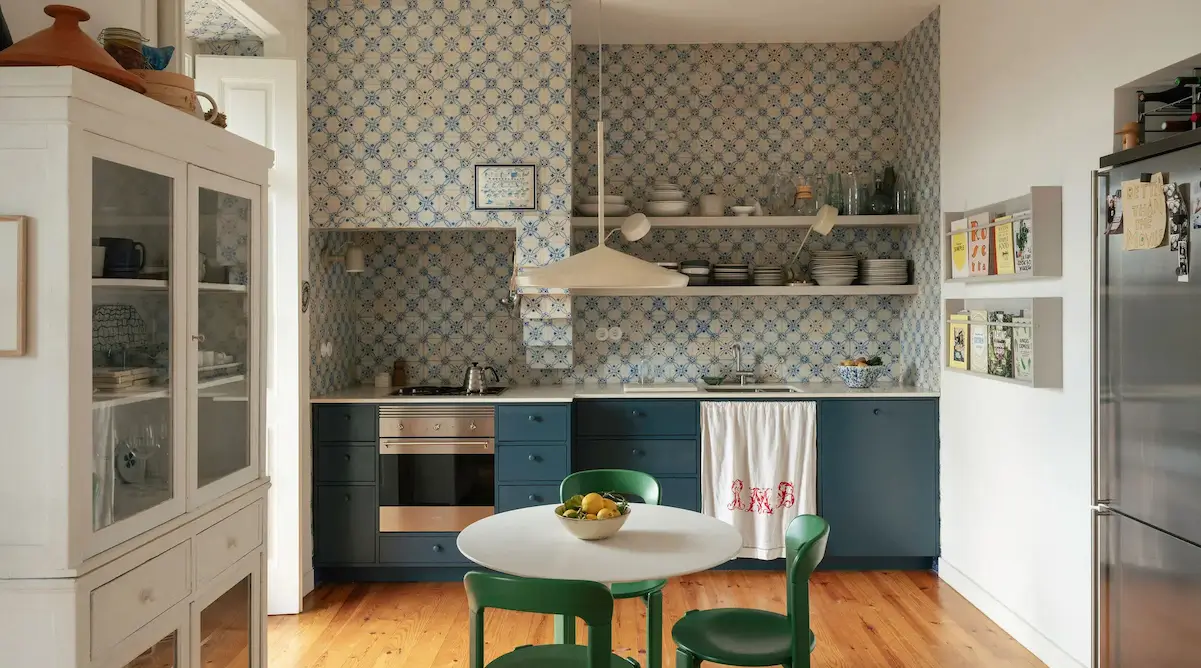
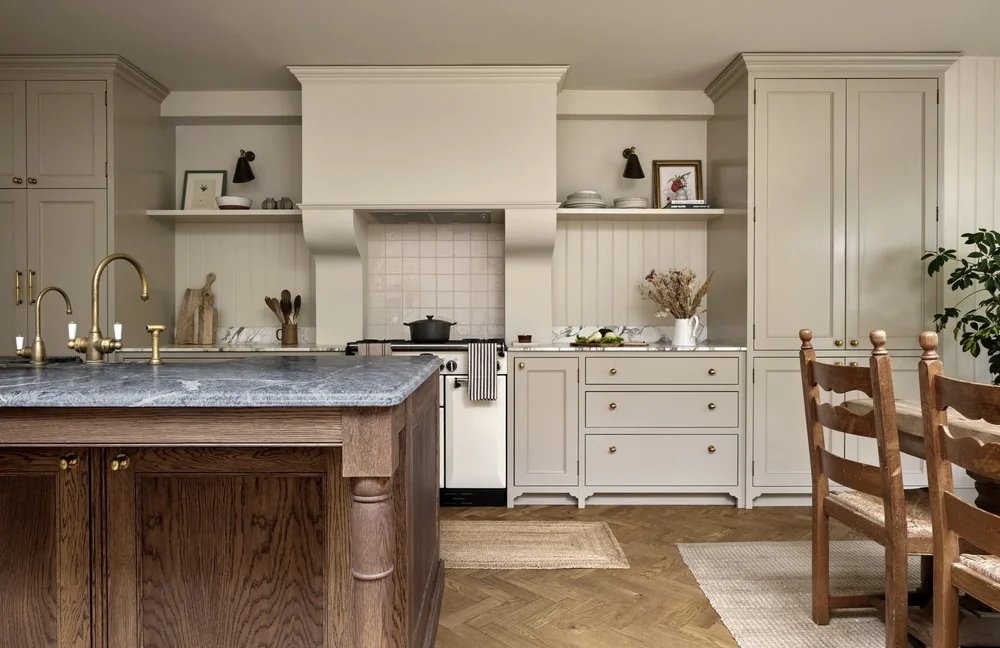
This three-storey townhouse in Hackney, designed by London-based studio Frank and Faber, doesn’t try to erase the building’s history or compete with it. Instead, it quietly leans into everything that made the house special in the first place—its soaring ceilings, intricate cornicing, original fireplaces, and beautifully imperfect proportions—before layering in a contemporary extension and bespoke interiors that feel completely at home.
The result is elegant without being intimidating, traditional without feeling stuffy, and modern without chasing trends. Basically? It’s the kind of home that makes you wonder why every renovation can’t look this effortless.
A Kitchen That Feels Like It Has Always Been There
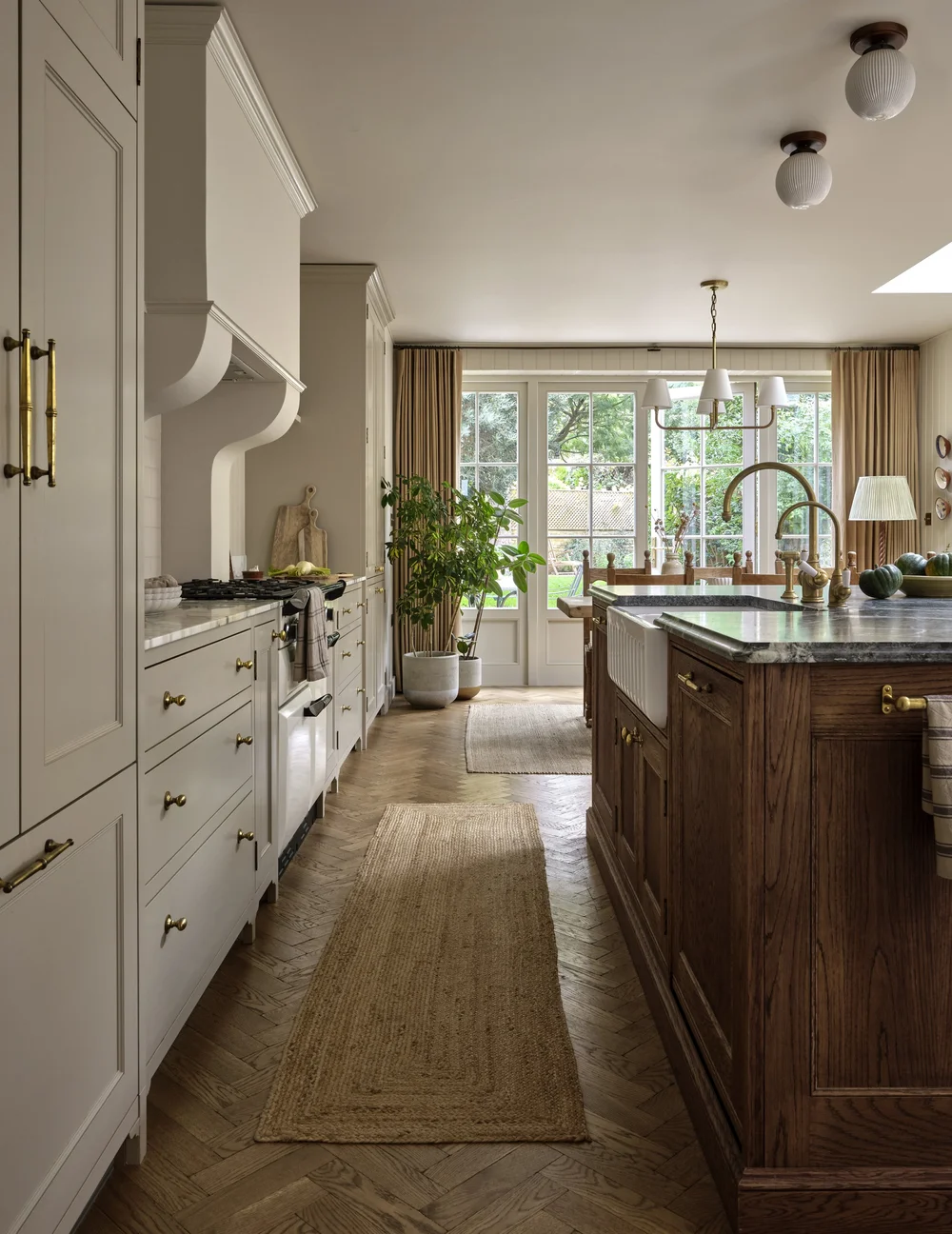
Let’s start with the kitchen because it’s impossible not to.
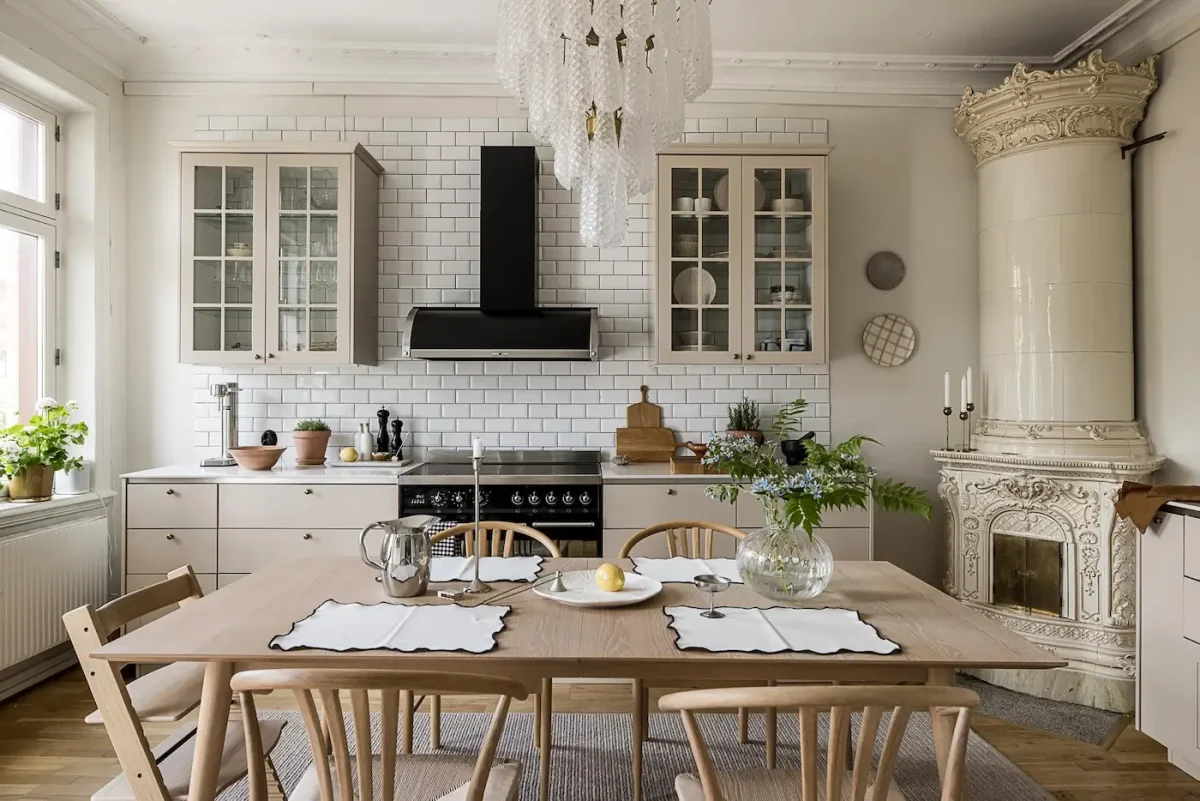
The bespoke cabinetry is painted in a warm mushroom-toned neutral that sits somewhere between taupe, putty, and soft greige—one of those colors that changes with the light and somehow makes everything around it look better. Instead of opting for ultra-sleek minimalism, Frank and Faber embraced classic detailing, adding framed cabinet fronts, aged brass hardware, and an oversized plaster range hood that anchors the room beautifully.
Then comes the unexpected star: the island.
Crafted from richly stained timber with chunky turned legs, it introduces depth and warmth against the lighter perimeter cabinetry. Topped with dramatic dark stone and paired with unlacquered brass fixtures, it feels substantial without becoming heavy. It’s exactly the kind of contrast that keeps a neutral kitchen from fading into the background.
Herringbone timber floors, open shelves styled with ceramics and artwork, and natural woven runners complete the look, creating a kitchen that feels collected over decades rather than installed in a single renovation.
Original Architecture Gets the Respect It Deserves
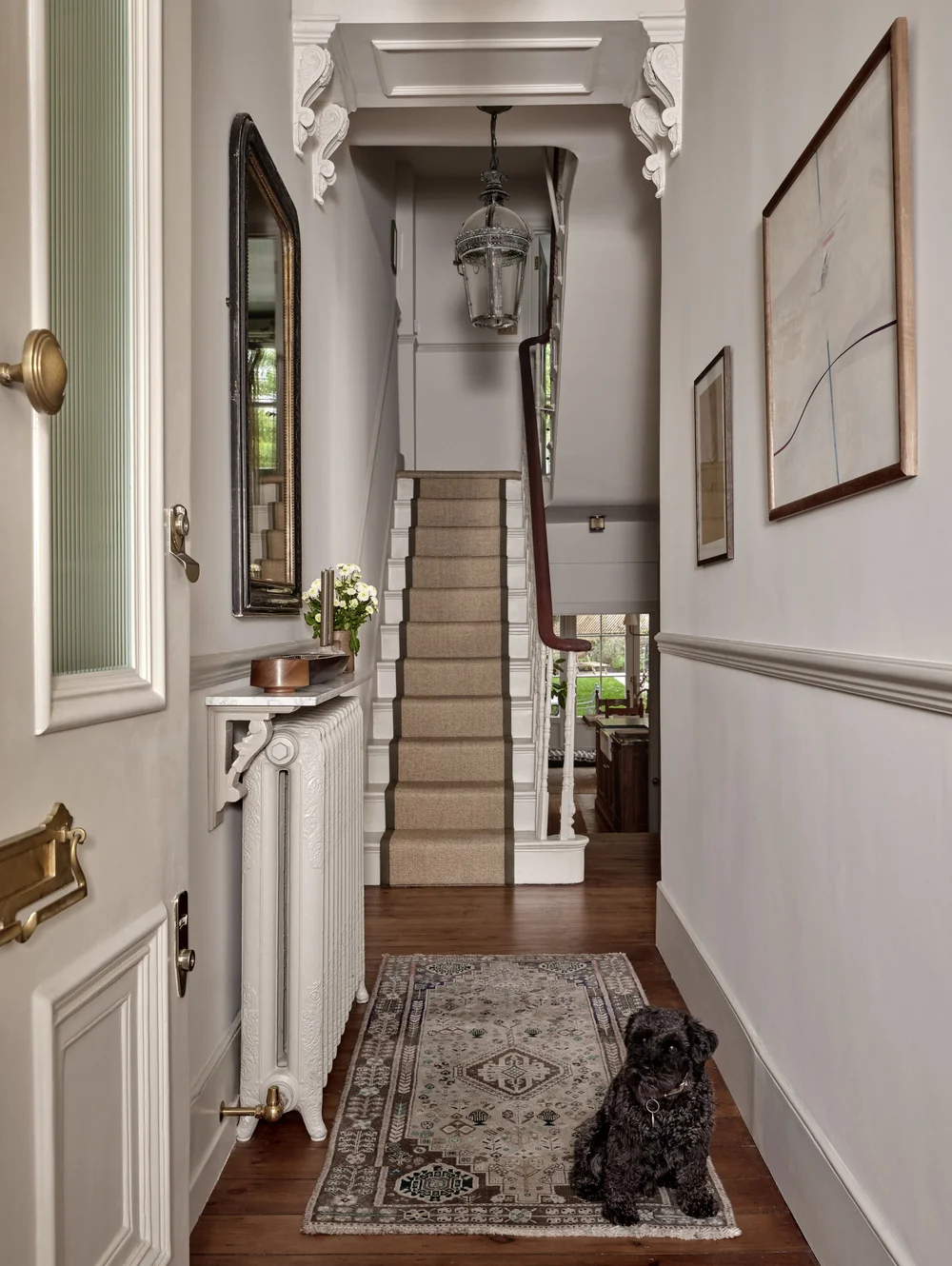
One of the easiest mistakes in period renovations is treating decorative features like obstacles.
Here, they’re treated like treasures.
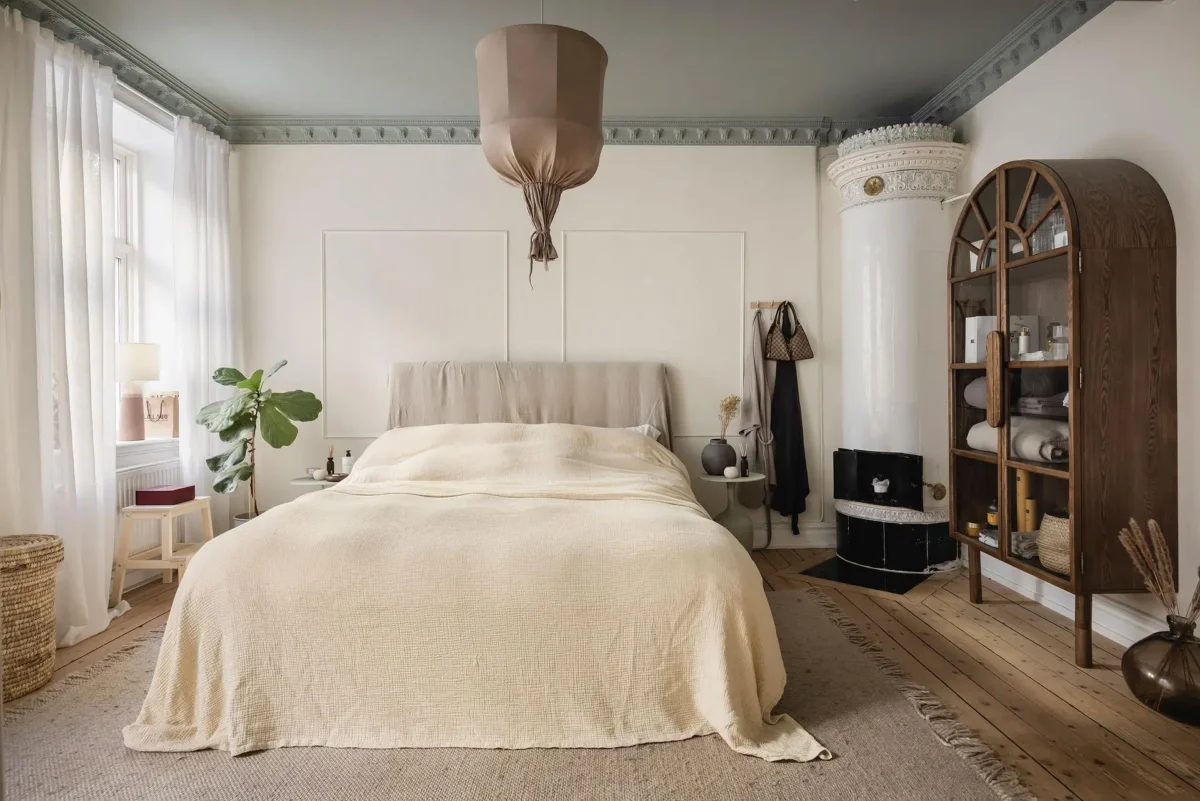
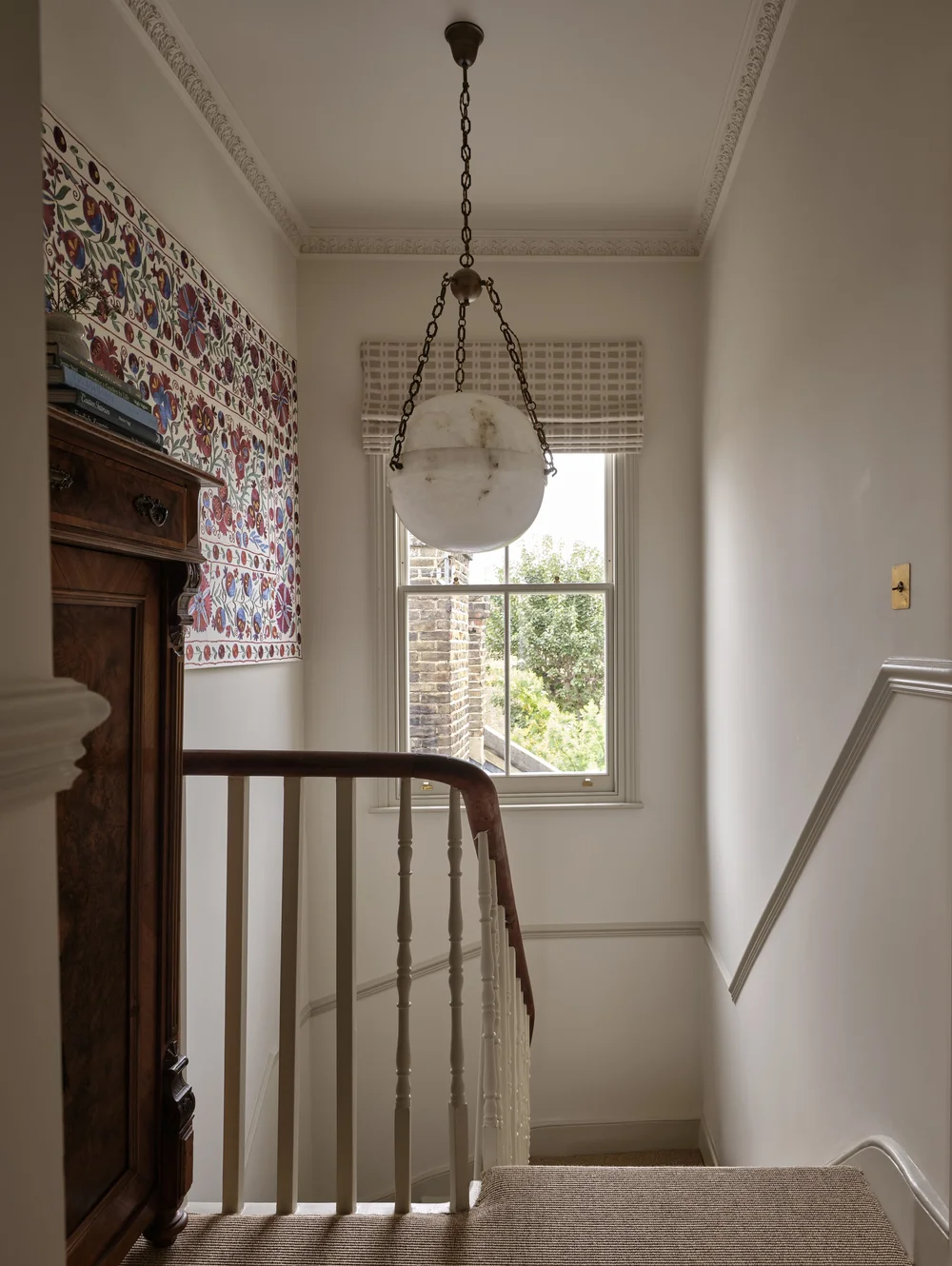
Throughout the house, ornate ceiling roses, elaborate cornices, marble fireplaces, original radiators, and traditional moldings remain front and center. Instead of competing with them, the furnishings quietly support the architecture.
Walls are painted in soft earthy neutrals that allow the craftsmanship to shine, while vintage-inspired lighting and carefully selected artwork make each room feel personal rather than perfectly staged.
Nothing feels over-designed, which is probably why the spaces feel so welcoming.
A Living Room That Masters Quiet Luxury
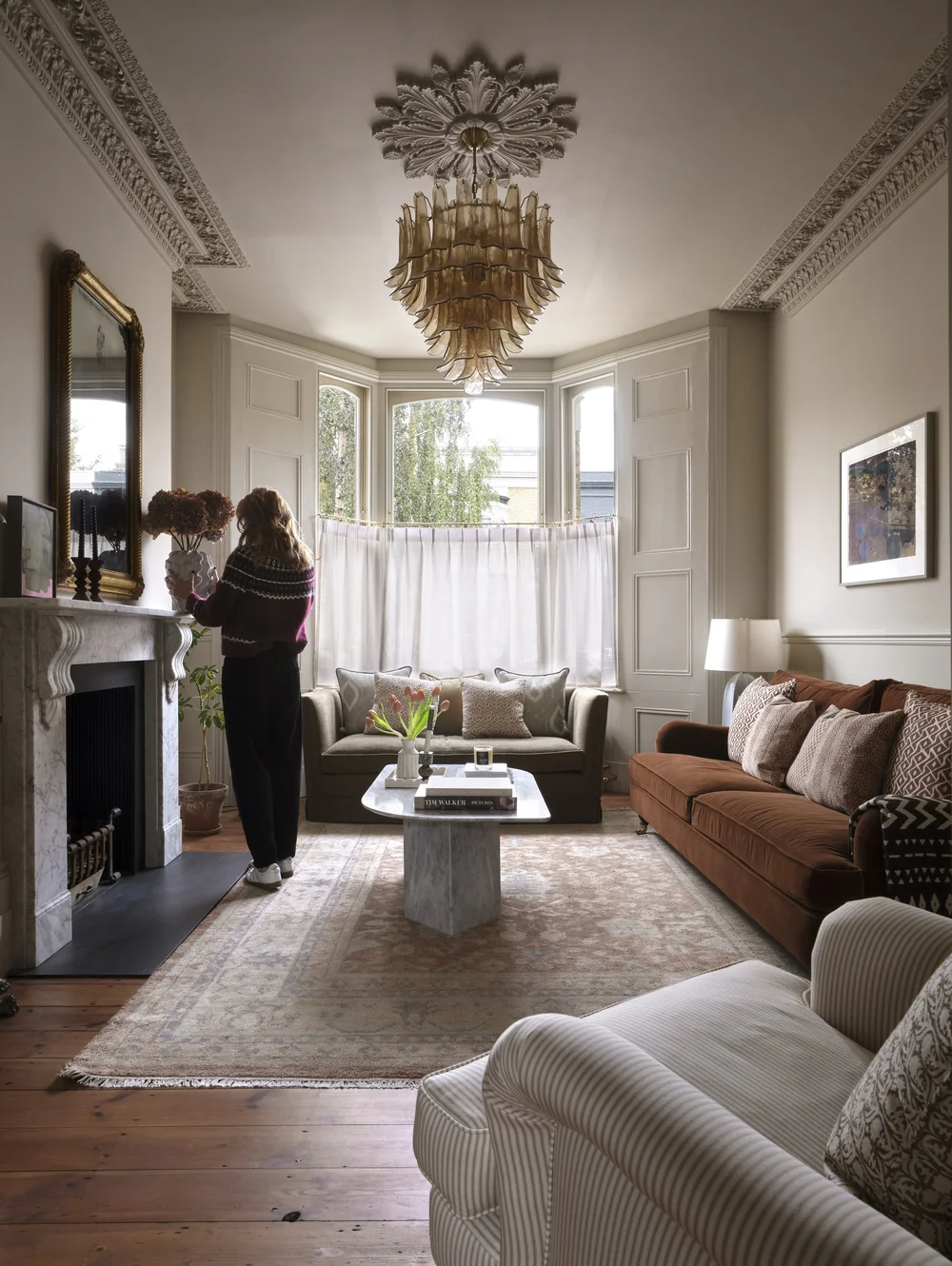
The front reception room is a lesson in restraint.
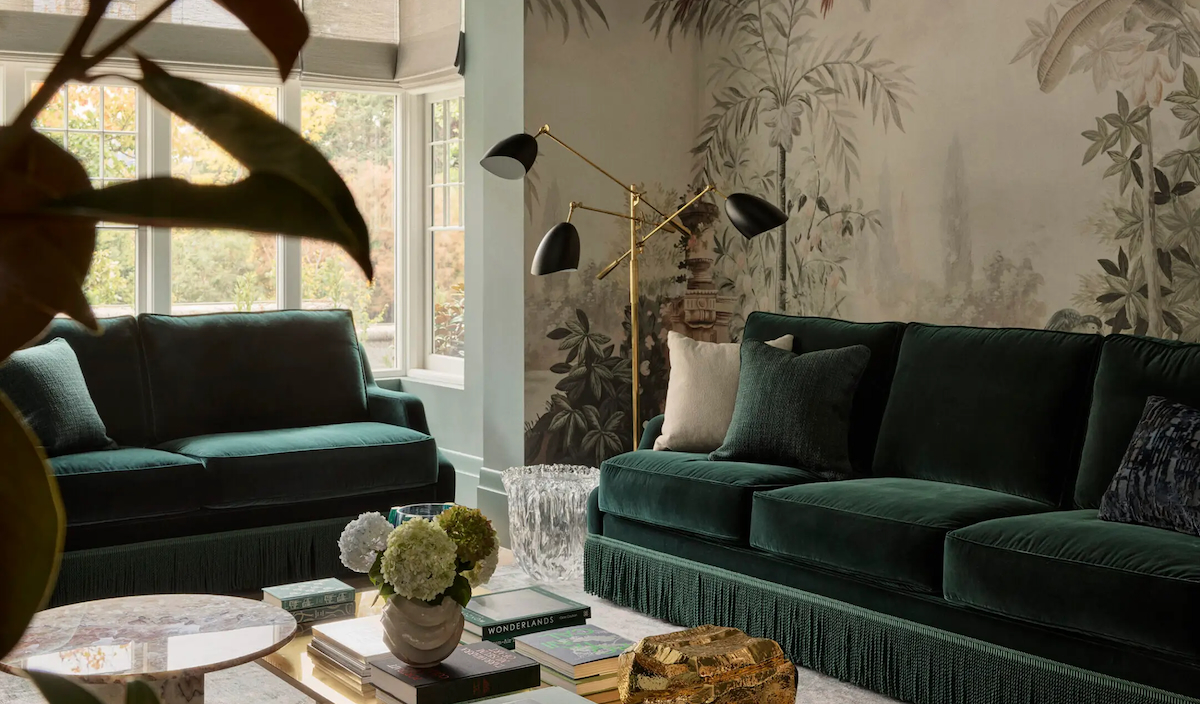
The original marble fireplace still commands attention, while an oversized Murano-style chandelier adds just enough drama overhead without stealing the show. A rust-colored velvet sofa introduces warmth against soft oatmeal upholstery, vintage rugs soften the timber flooring, and antique brass accents appear throughout without becoming overly polished.
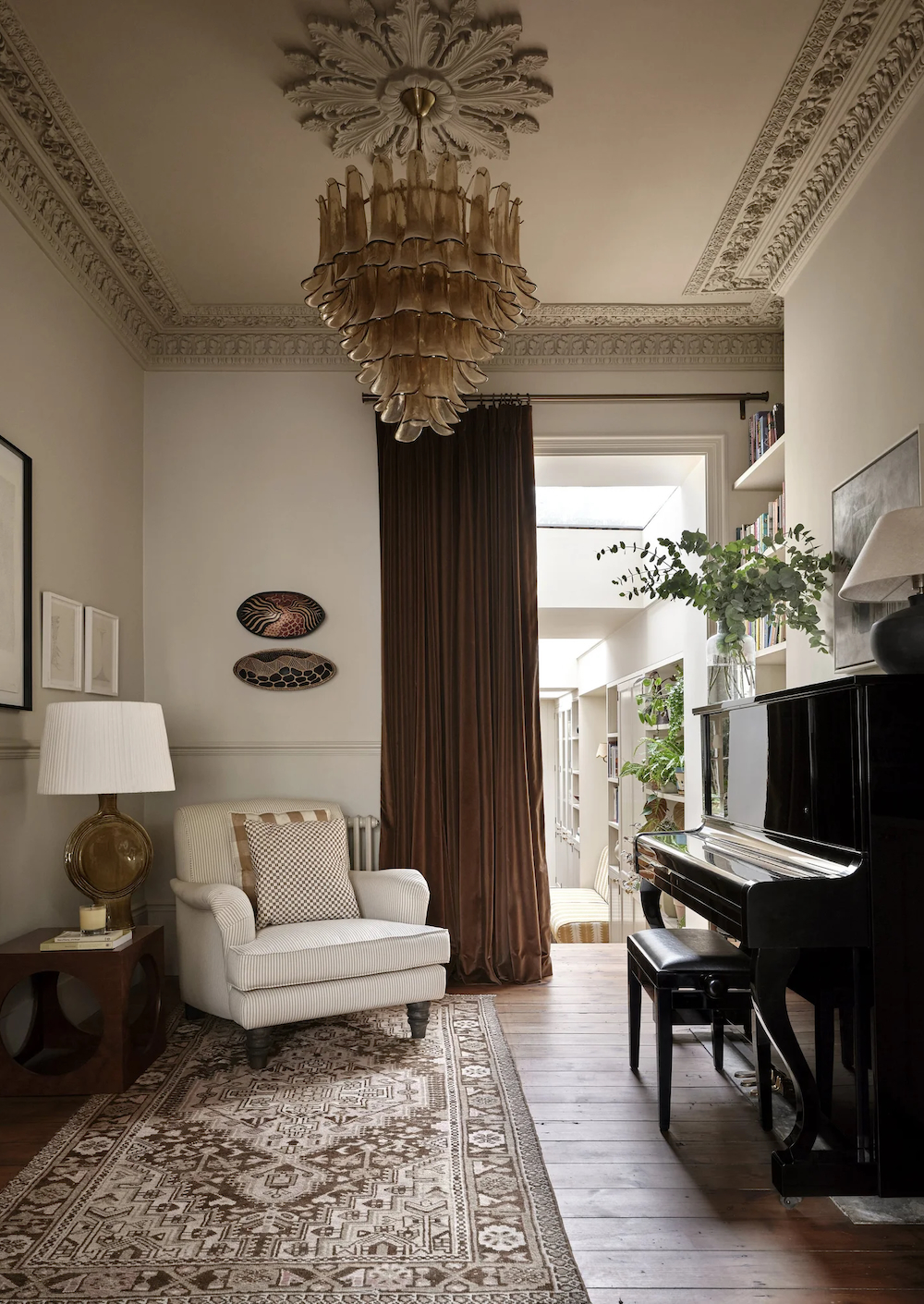
It’s layered, comfortable, and wonderfully unpretentious.
The room doesn’t rely on statement furniture or bold color to create interest. Instead, texture does most of the work—velvet, linen, marble, aged wood, and woven fabrics quietly building depth.
Color Appears Exactly Where It Should
Although much of the home stays within a muted palette, Frank and Faber clearly understand that restraint doesn’t mean avoiding color altogether.
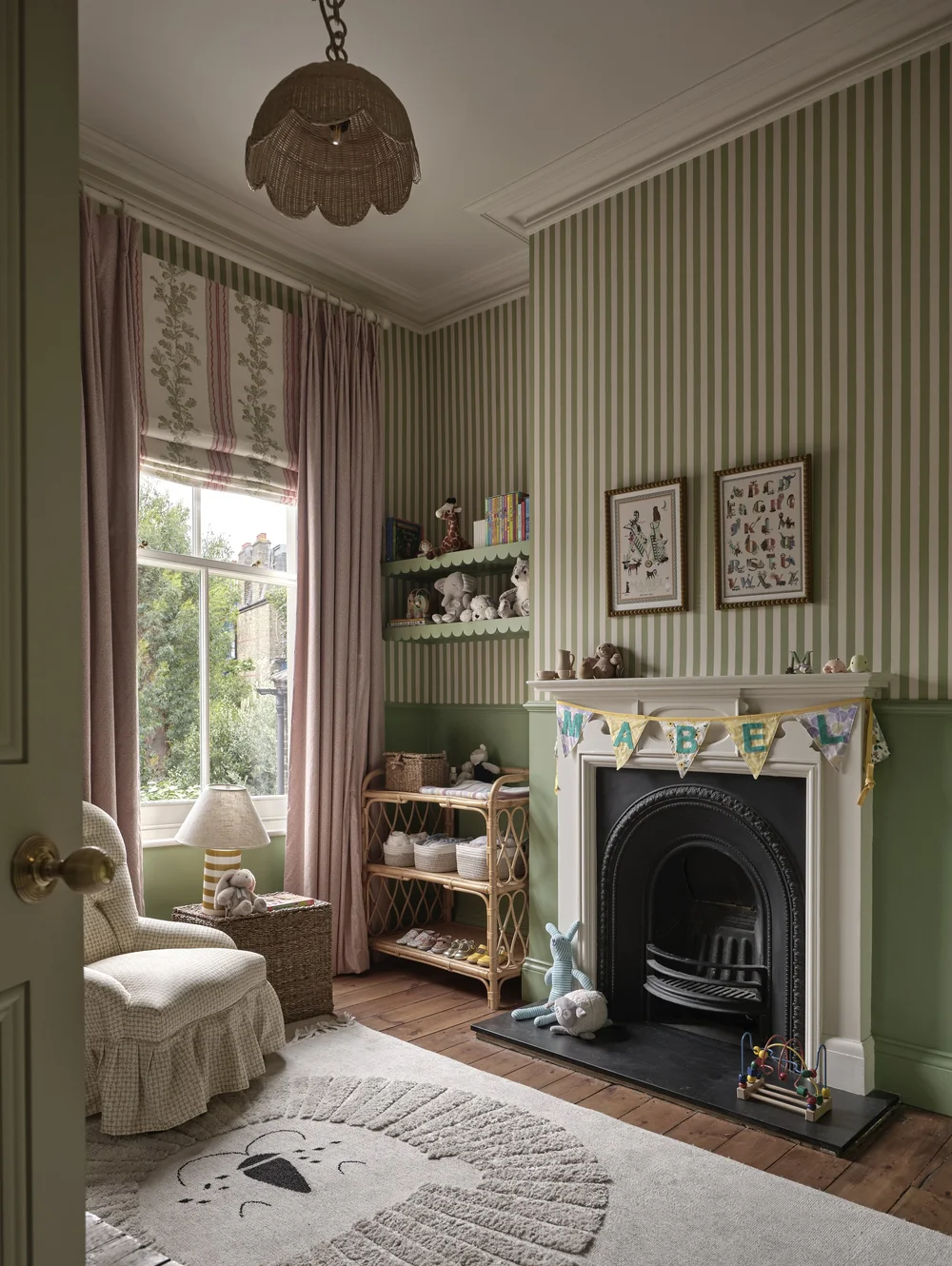
The children’s room is probably the happiest example.
Olive-and-cream striped wallpaper climbs the walls above green-painted wainscoting, while dusty pink curtains soften the scheme. The original fireplace remains intact, proving once again that period architecture and playful family life can happily coexist.
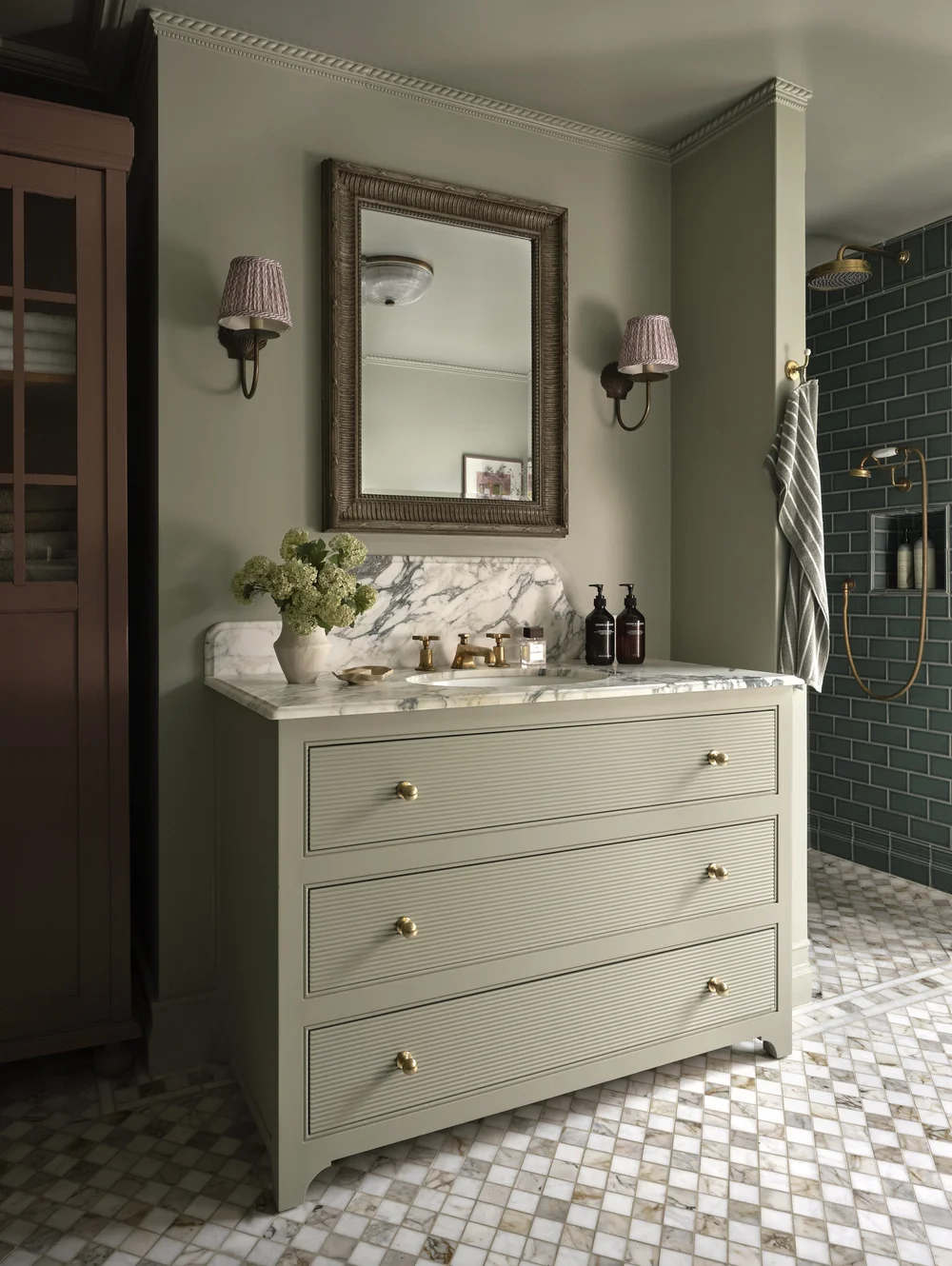
Elsewhere, the bathrooms introduce richer tones. One features deep green subway tiles paired with marble floors and brass fittings, giving the room a distinctly classic London townhouse feel without slipping into cliché.
Bathrooms That Feel Collected Rather Than Coordinated
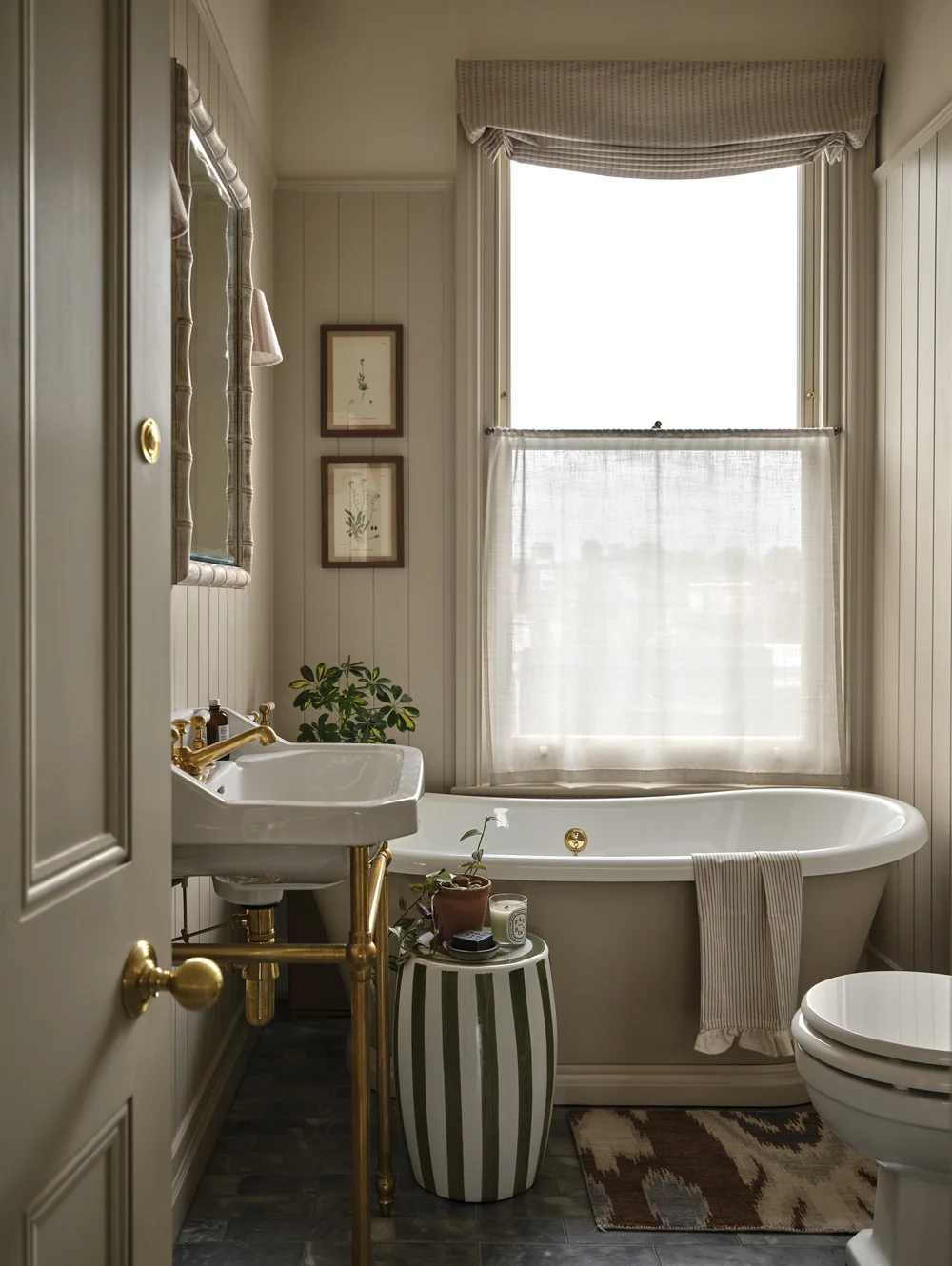
Instead of chasing a matching-house aesthetic, each bathroom has its own personality while sharing the same design language.
Marble bathroom surfaces, vintage-inspired brass fixtures, tongue-and-groove wall paneling, and carefully selected mirrors create spaces that feel timeless rather than trend-driven.
One bathroom pairs soft sage walls with dramatic green tile in the shower, while another embraces a simpler palette with traditional sanitaryware, striped accessories, and warm brass plumbing exposed beneath a classic wall-mounted sink.
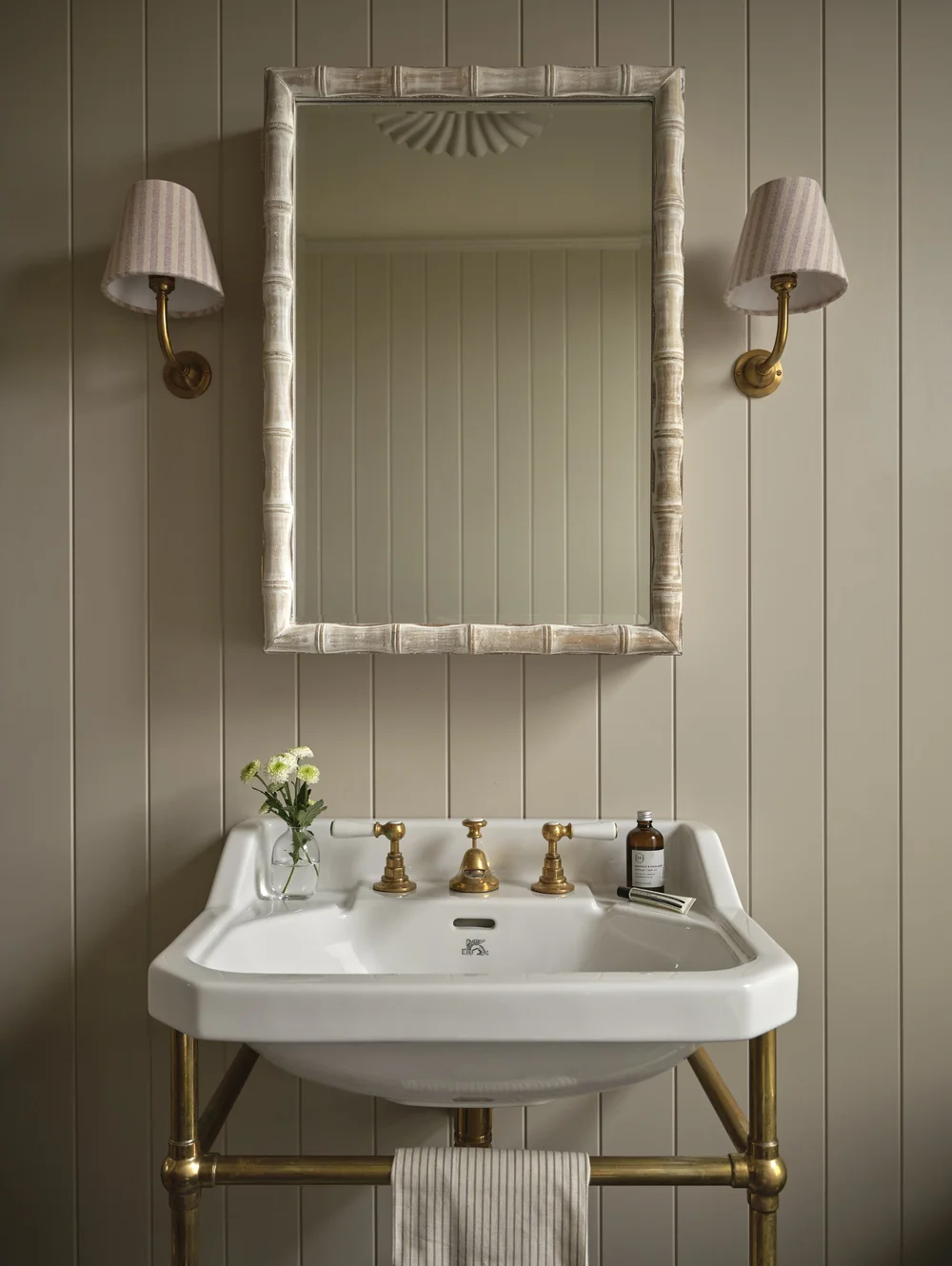
It’s proof that bathrooms don’t need endless materials to feel luxurious—they just need thoughtful ones.
Bespoke Joinery Makes Everyday Living Better
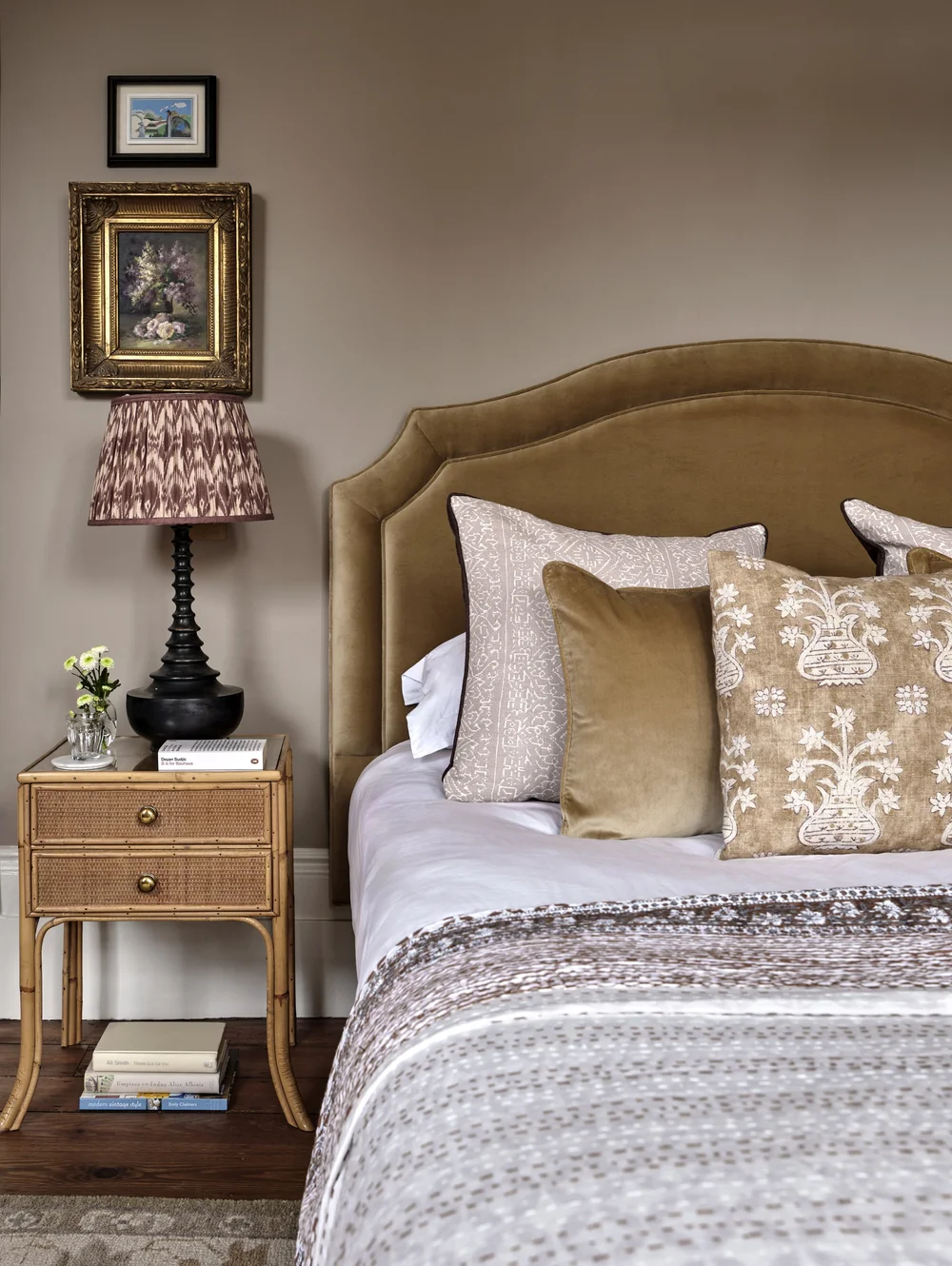
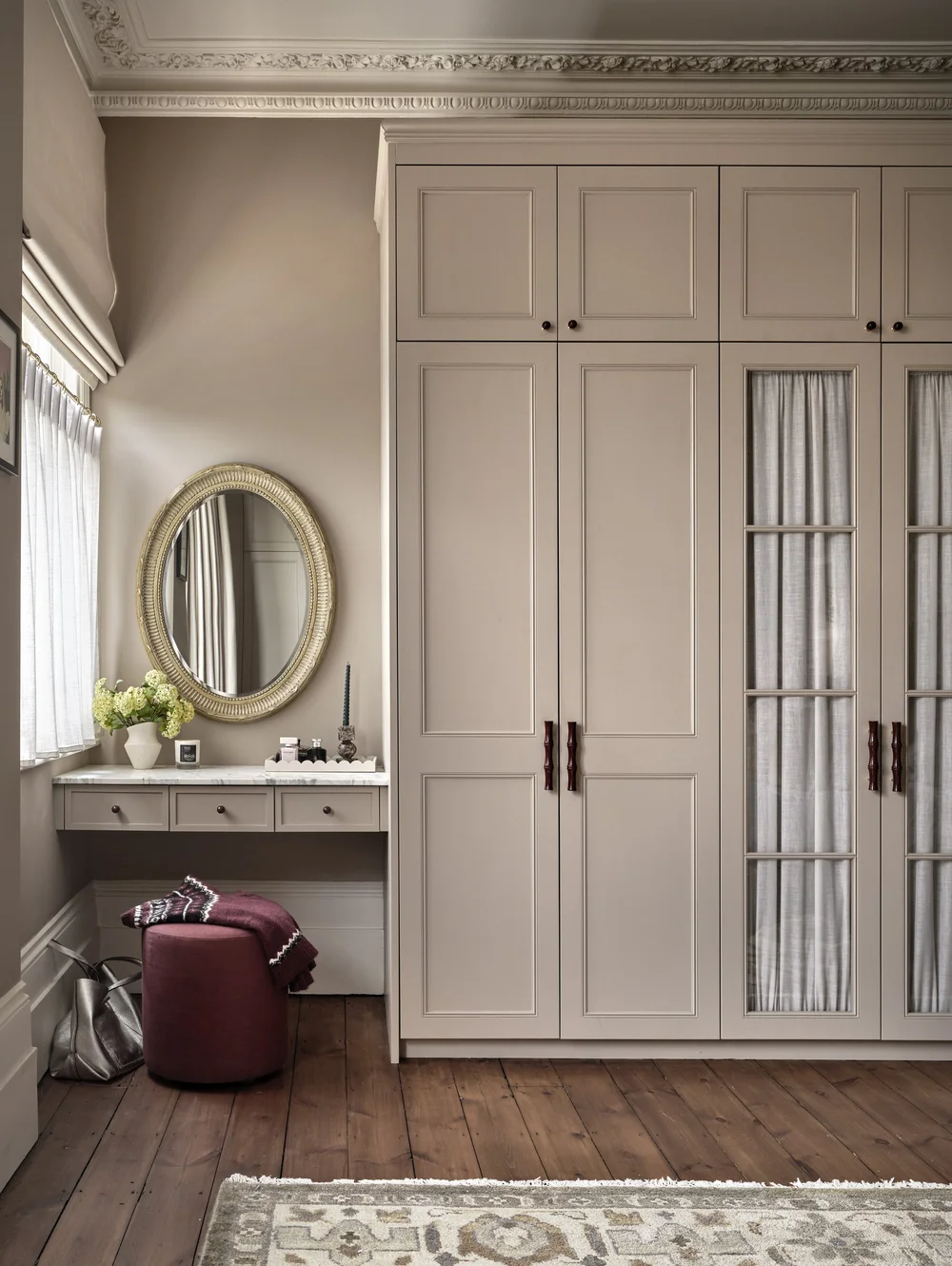
One detail that quietly ties the entire project together is the custom joinery.
From floor-to-ceiling fitted wardrobes and ribbed vanity drawers to window seats, shelving, and built-in storage, every element appears designed specifically for the house rather than chosen from a catalog.
The craftsmanship feels understated, but it’s everywhere.
That’s often the difference between a renovation that photographs beautifully and one that genuinely improves how people live.
Why This House Works So Well
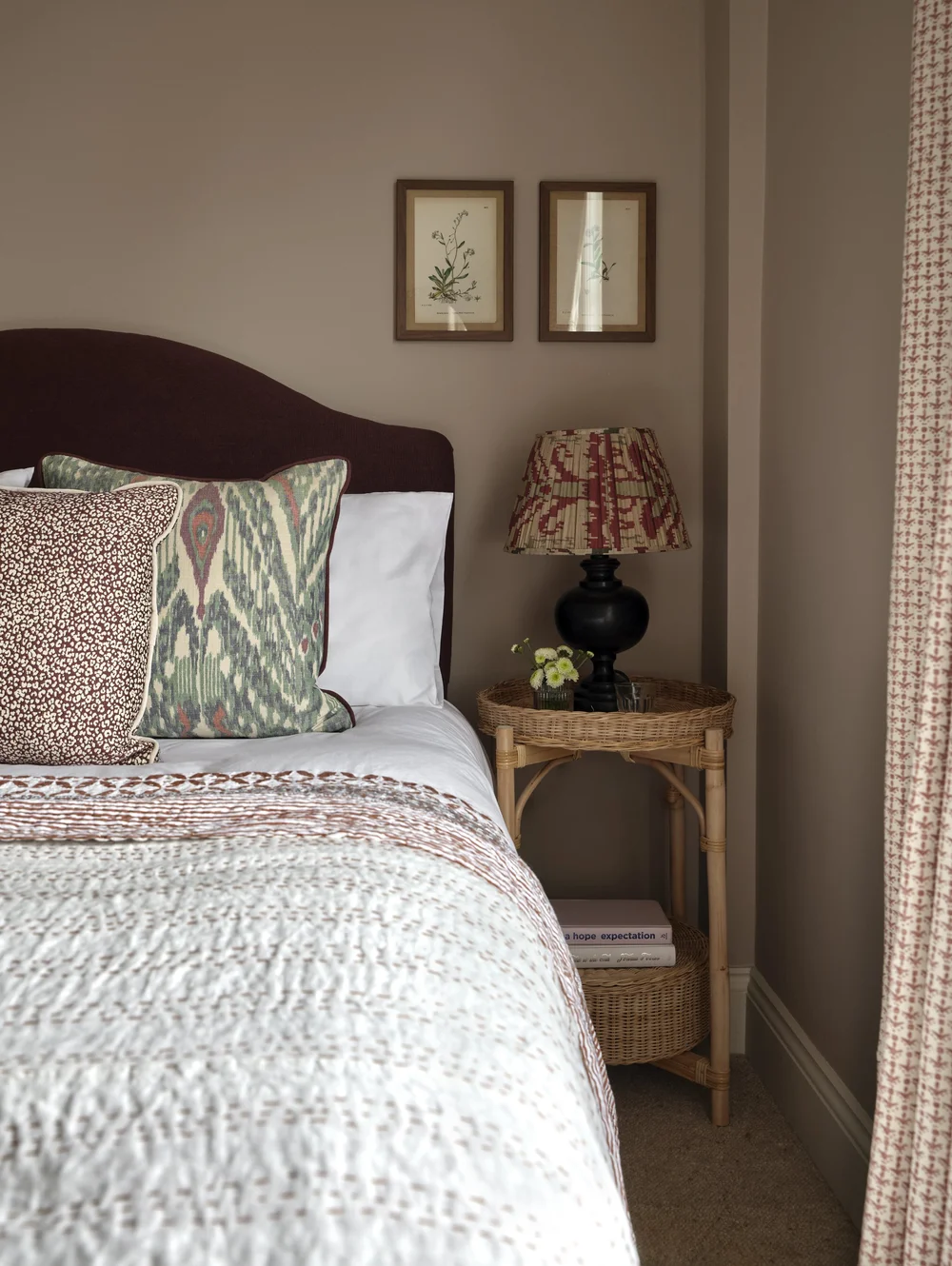
What’s refreshing about this Hackney townhouse is that it never tries too hard.
There isn’t a single room screaming for social media attention. No oversized sculptural lighting chosen purely for drama. No awkward statement stone. No trend chasing.
Instead, every decision seems rooted in longevity.
The historic character remains intact, the contemporary interventions feel purposeful, and the interiors strike that elusive balance between elegance and comfort that so many renovations aim for but rarely achieve.
Frank and Faber haven’t reinvented the Victorian townhouse—they’ve simply reminded us why these homes were worth preserving in the first place. And sometimes, that’s the most impressive design move of all.
Discover more from Decoholic
Subscribe to get the latest posts sent to your email.