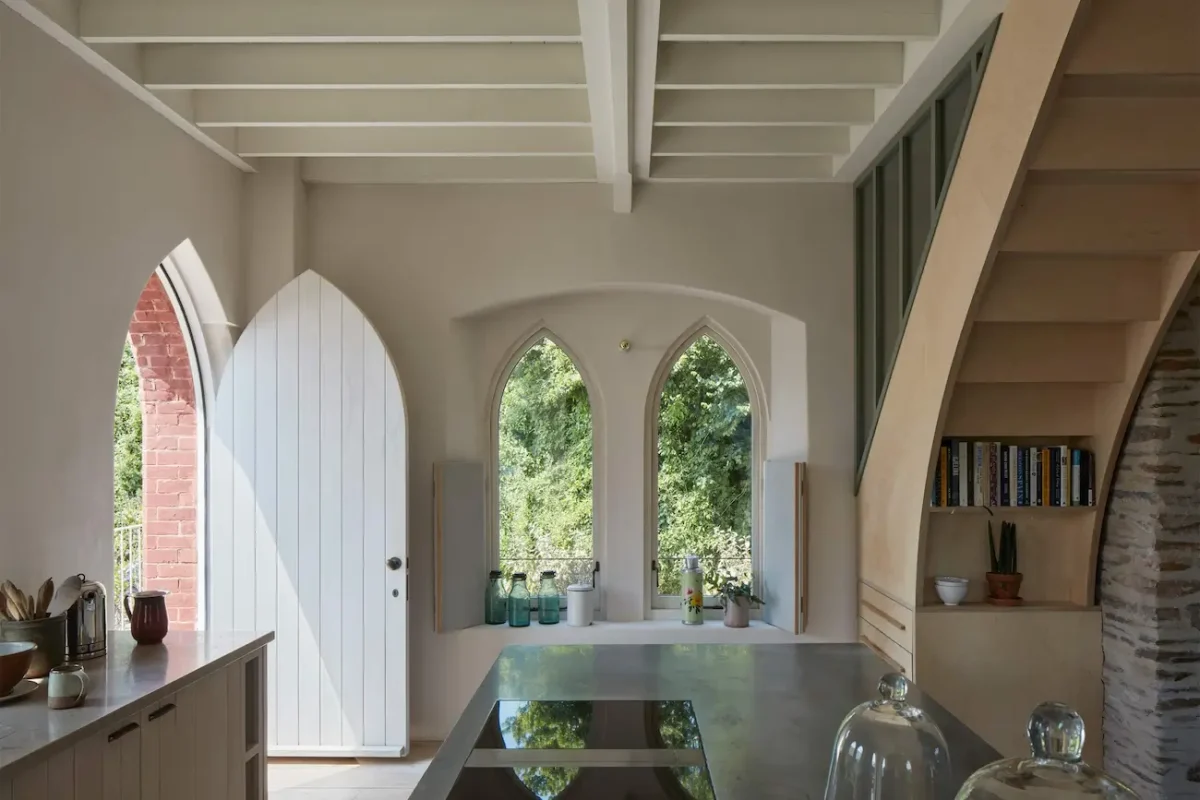
Some buildings seem destined for a second life. Churches, in particular, often possess a sense of scale, craftsmanship, and atmosphere that modern homes struggle to replicate. The Old Chapel in west Devon is a perfect example. Originally built in the early 20th century, this former place of worship has been transformed by Tuckey Design Studio into a warm family home that embraces its history rather than concealing it.
Set within the rolling Devon countryside, the project carefully balances contemporary living with the building’s ecclesiastical character. Original stone walls, soaring ceilings, Gothic-inspired windows, and exposed timber structures remain central to the design, while a series of subtle interventions make the space work effortlessly for modern family life.
A Historic Chapel Reimagined for Family Living
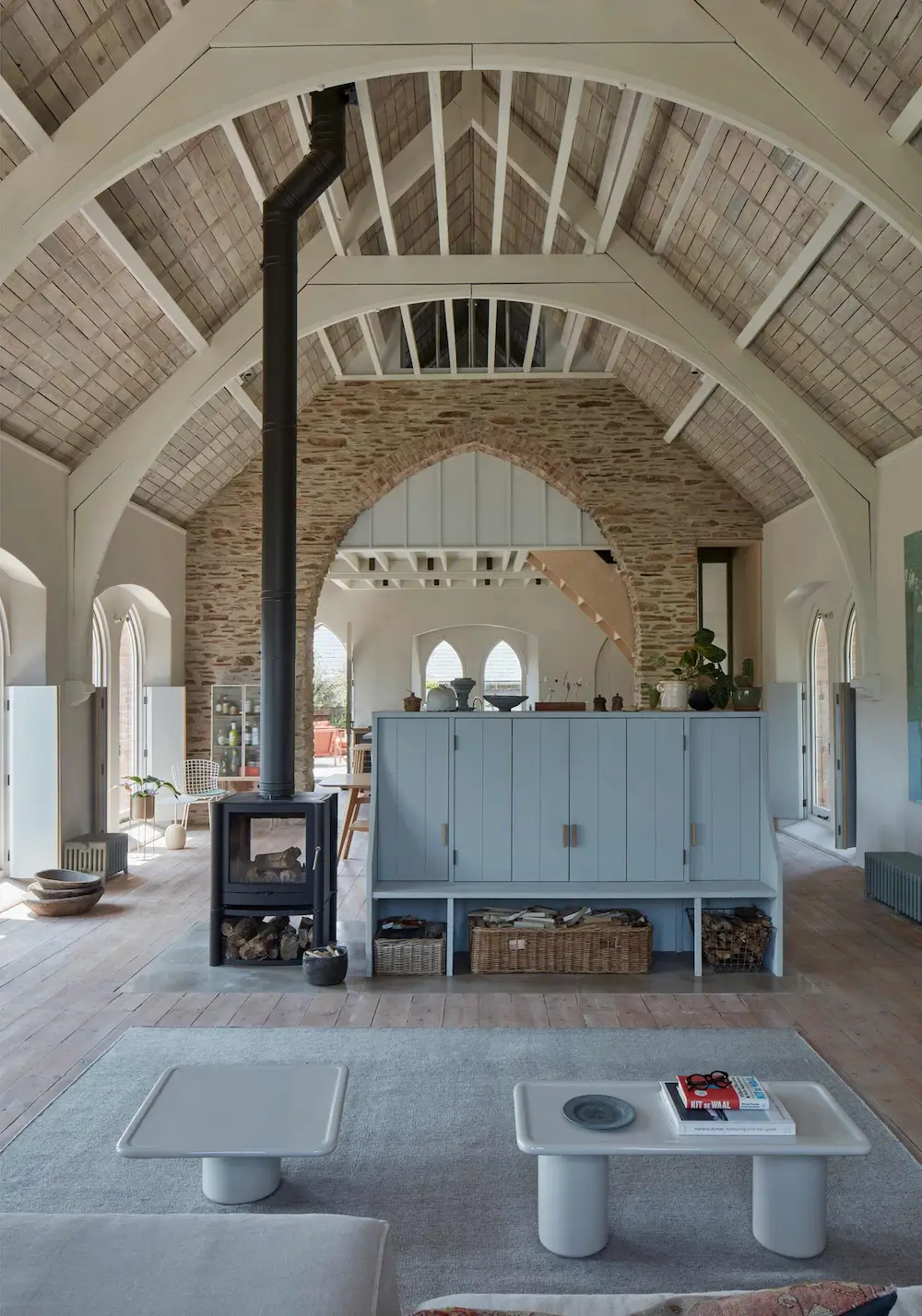
The former nave has been transformed into a spacious living area centered around a wood-burning stove beneath soaring vaulted ceilings.
Rather than subdividing the chapel into a collection of conventional rooms, the architects chose to celebrate its extraordinary volume. The former nave now serves as an expansive open-plan living area where the building’s original proportions can still be fully appreciated.
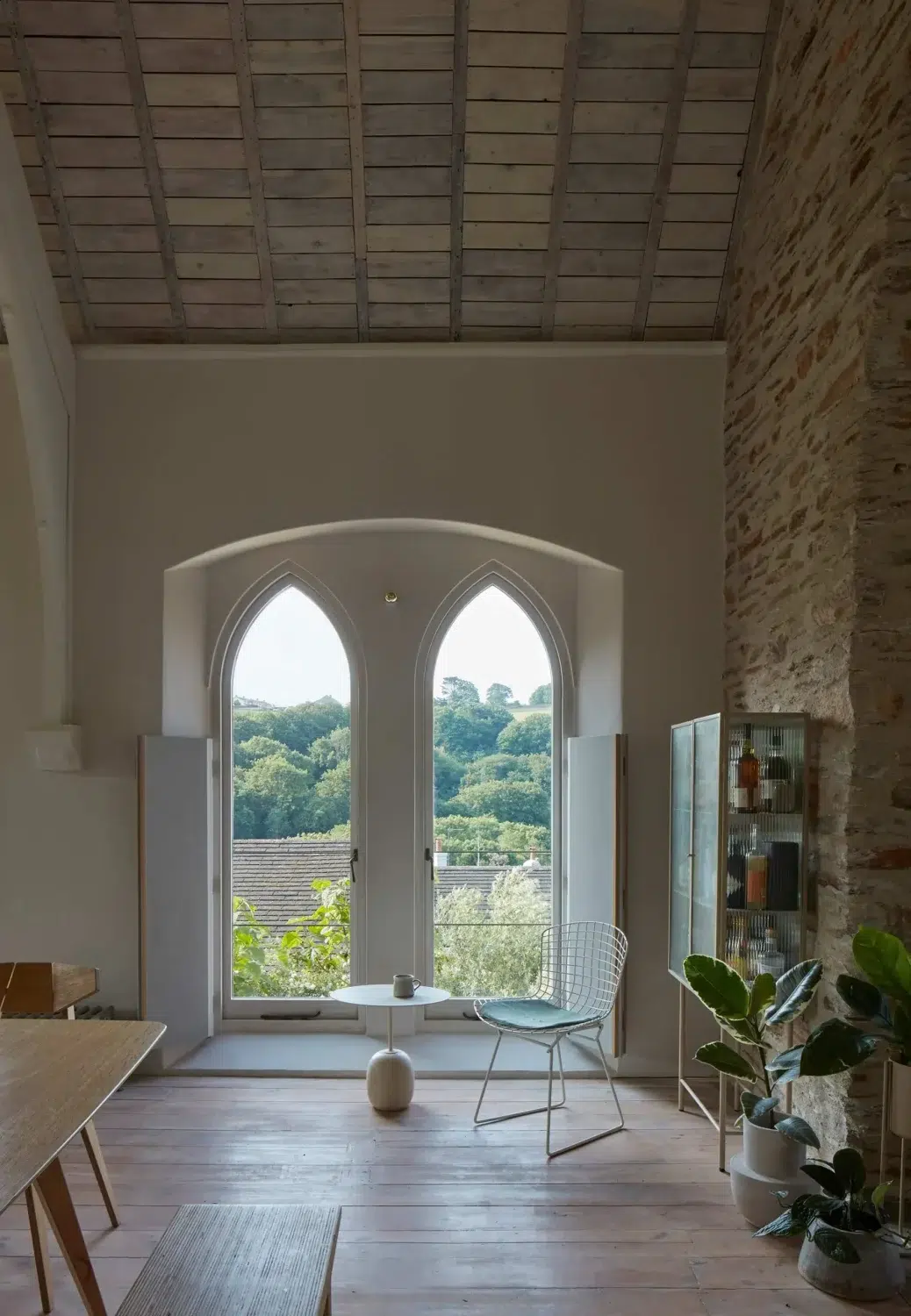
Natural light pours through slender arched windows, framing views of the surrounding woodland and coastal landscape beyond. The sense of openness is enhanced by the uninterrupted sightlines that stretch across the entire length of the chapel.
Preserving the Drama of the Original Nave
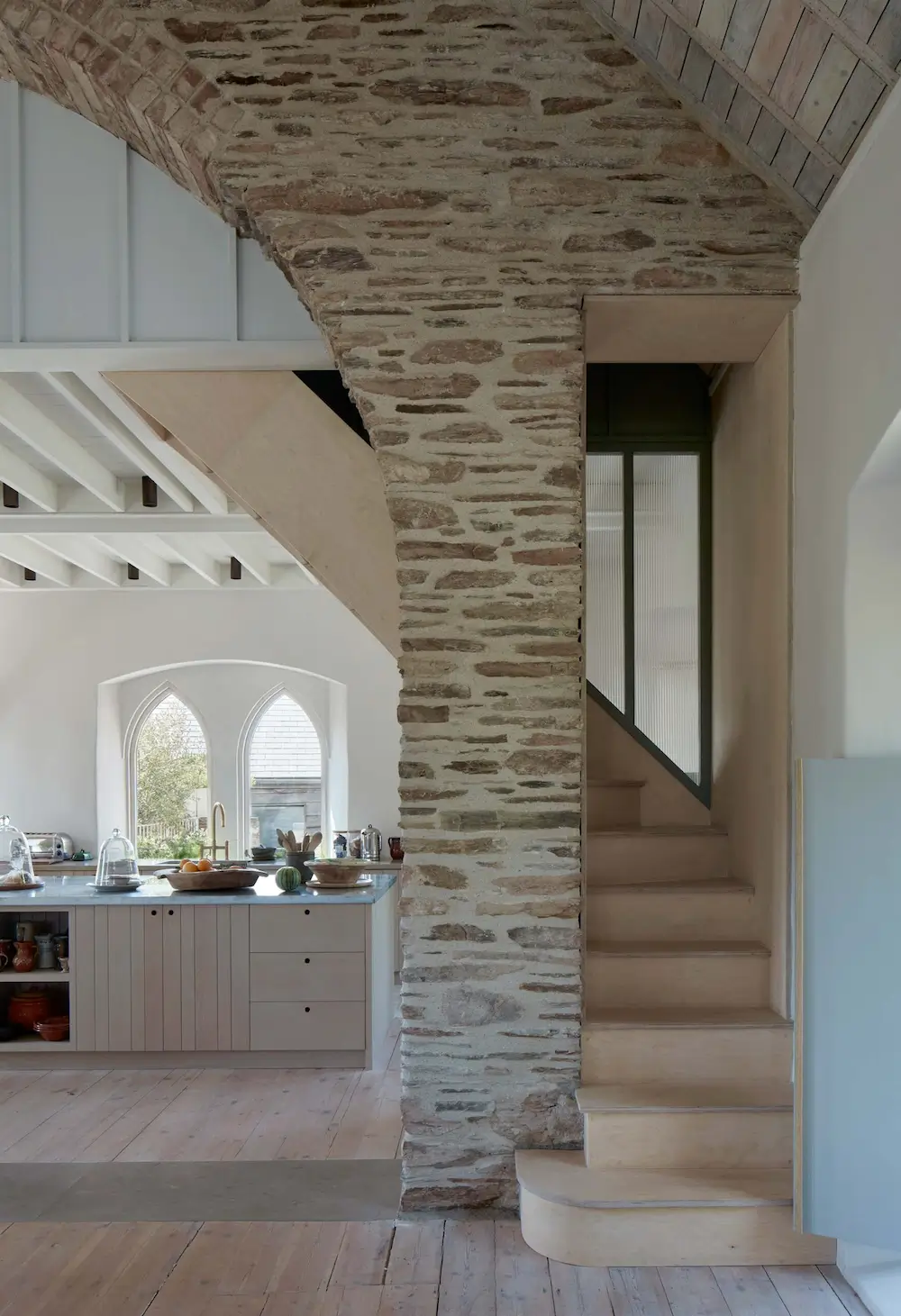
A new plywood staircase winds alongside a restored stone arch, creating a striking contrast between old and new.
At the center of the main living space sits a wood-burning stove, creating a natural gathering point for family life. The stove’s dark silhouette contrasts beautifully with the pale palette of timber, plaster, and stone that defines the interior.
Above, reclaimed timber boards line the stripped-back ceiling, while restored joists create a rhythmic pattern that draws the eye upward toward the dramatic pitched roof. These original architectural elements provide a constant reminder of the building’s former purpose.
The result is a space that feels both grand and intimate—a rare balance that many large open-plan interiors struggle to achieve.
A Floating Plywood Room Above the Kitchen
One of the most striking additions is the new plywood volume suspended above the kitchen. Rather than competing with the historic fabric of the chapel, the insertion appears almost like a piece of furniture placed within the larger space.
The elevated structure houses an additional bedroom and study area while preserving views through the original volume of the nave. Its simple geometry and pale timber finish allow it to sit quietly within the historic shell.
Access is provided via a carefully crafted stair that winds alongside a repointed stone gable wall, creating an elegant dialogue between old and new.
Stone Arches, Timber Beams, and Honest Materials
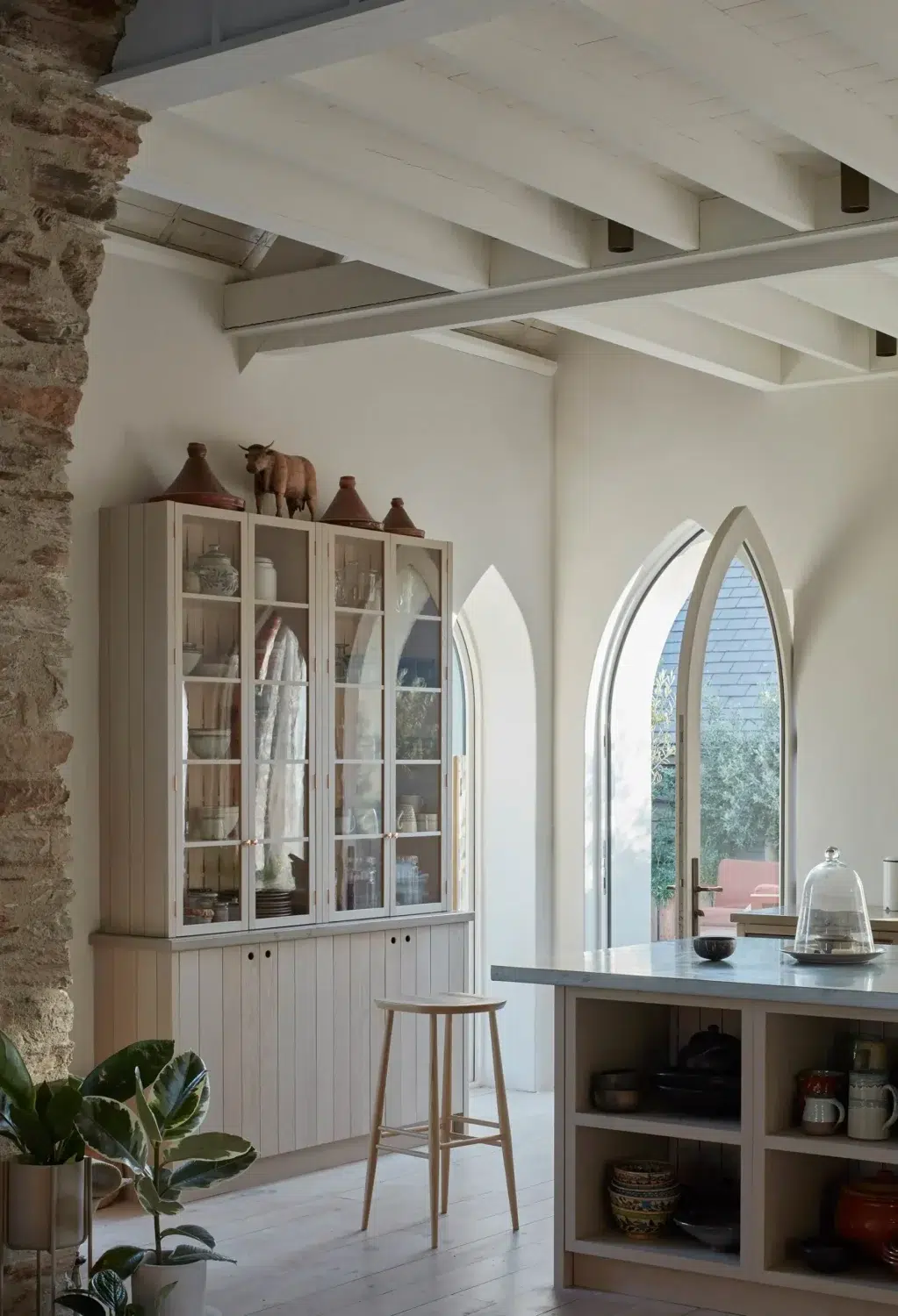
Custom timber cabinetry and arched openings echo the chapel’s historic architecture while introducing warmth and functionality.
Throughout the project, the material palette remains restrained and remarkably cohesive. Exposed stone walls reveal the craftsmanship of the original construction, while pale plywood joinery introduces warmth and functionality without overwhelming the historic architecture.
The architects have avoided unnecessary embellishment, allowing natural textures and carefully considered details to define the interiors. Original arches continue to frame views between spaces, while built-in storage and bespoke cabinetry feel seamlessly integrated into the fabric of the building.
It’s a lesson in how contemporary interventions can support heritage architecture rather than dominate it.
The Kitchen’s Polished Zinc Countertop Reflects the Landscape
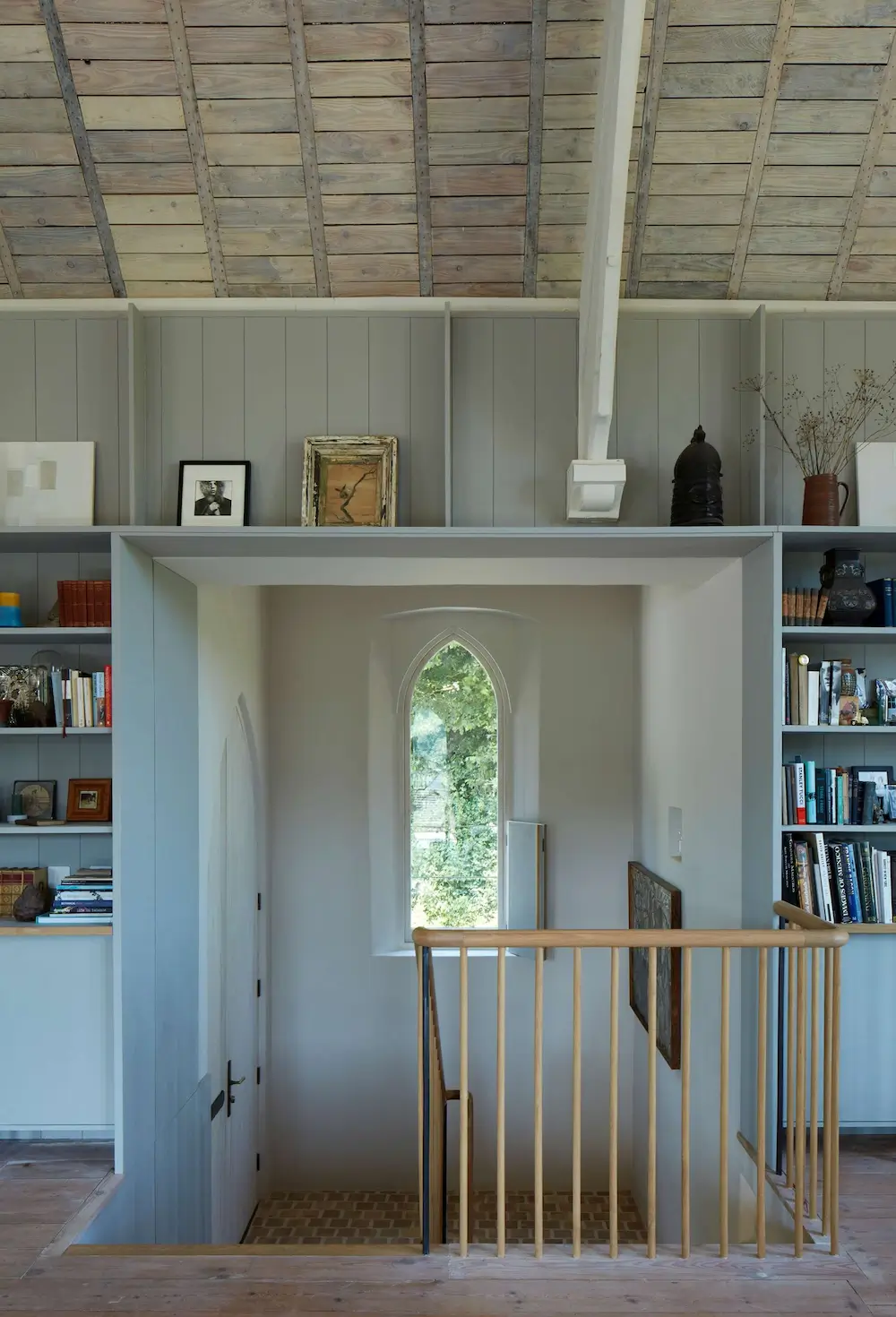
A library-lined mezzanine introduces additional living space while preserving views across the chapel’s original volume.
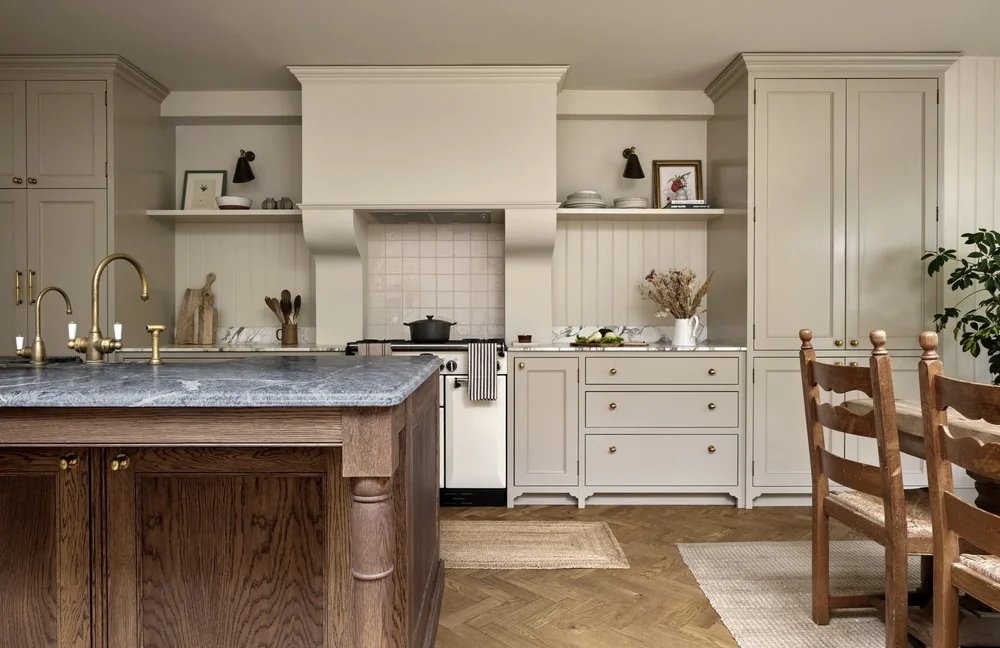
The kitchen combines practicality with understated beauty. A large island topped with polished zinc serves as the focal point of the space, its reflective surface capturing changing light throughout the day.
The surrounding cabinetry is finished in pale timber, complementing the plywood additions elsewhere in the home. Open shelving and simple detailing reinforce the relaxed atmosphere, while large arched windows establish a constant connection to the surrounding landscape.
Even the smallest details contribute to the overall sense of calm and cohesion.
Transforming the Former Crypt into Light-Filled Bedrooms
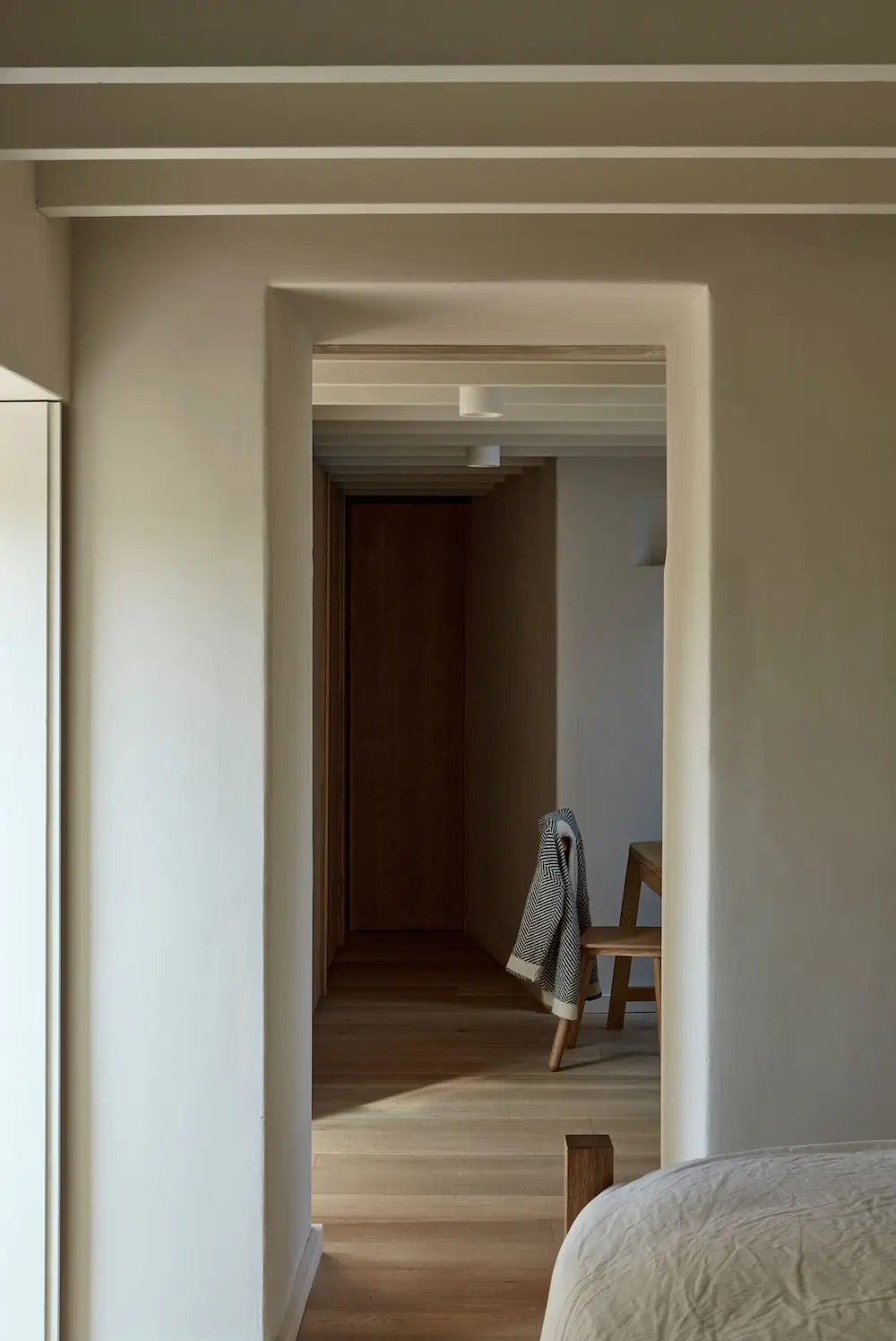
Simple materials and carefully framed views create a peaceful atmosphere throughout the private spaces.
Below the main living spaces, the former crypt has been extended to create generous south-facing bedrooms overlooking a sloping garden and intimate courtyard.
The lower level feels surprisingly bright, thanks to carefully positioned openings that maximize natural light. Thick stone walls have been carved with sculpted niches that accommodate subtle lighting fixtures, highlighting the texture of the historic masonry while creating a warm and welcoming atmosphere.
The new spaces feel contemporary without losing their connection to the building’s past.
Reclaimed Terracotta Tiles Add Warmth and Character
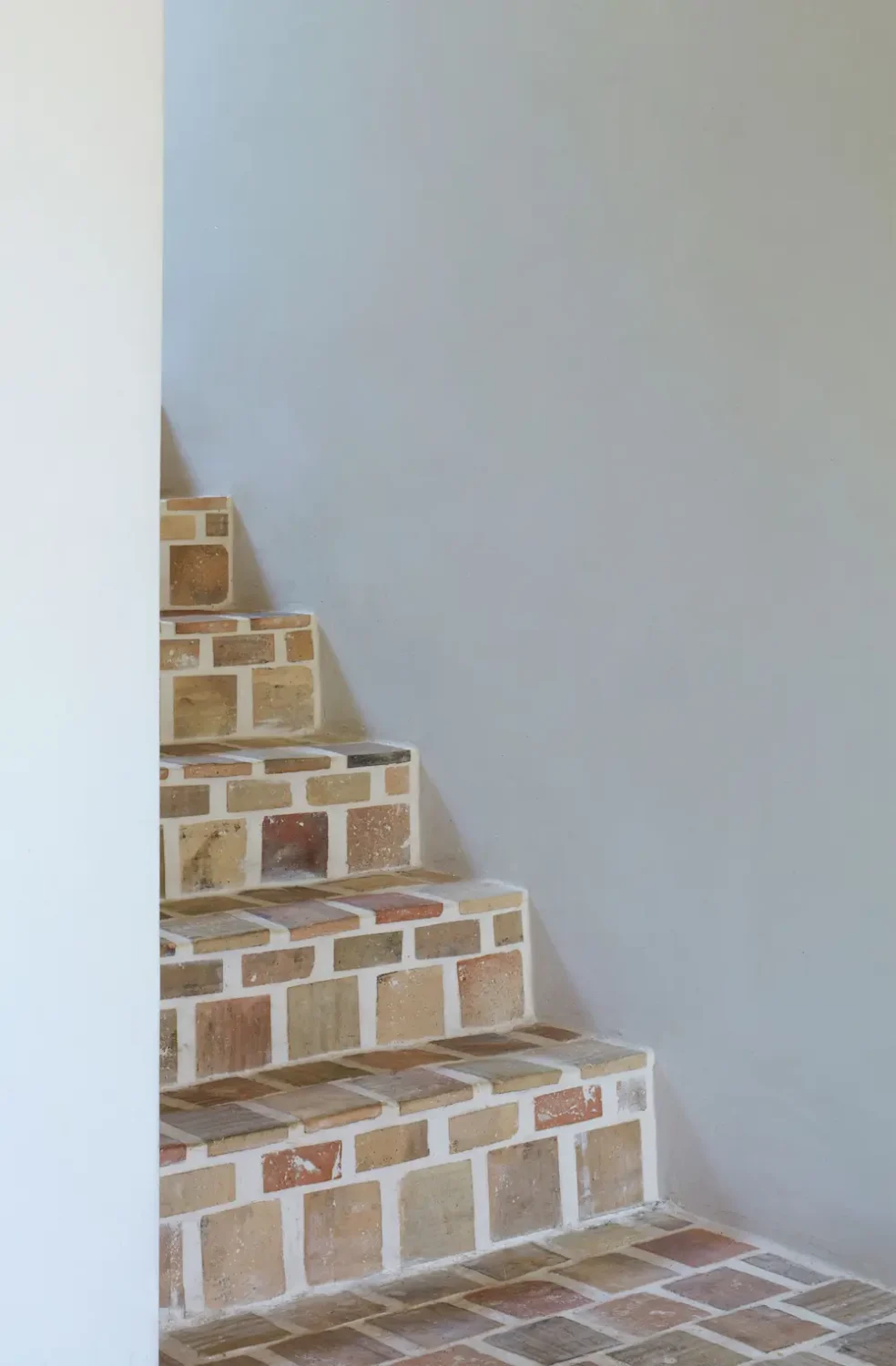
Reclaimed terracotta tiles bring texture, warmth, and a sense of history to the home’s staircases.
One of the home’s most charming features is the staircase finished with reclaimed terracotta tiles. The varied tones of the aged bricks introduce texture, warmth, and a sense of history underfoot.
Throughout the project, reclaimed materials are used thoughtfully rather than decoratively. Their imperfections help ground the contemporary interventions and reinforce the building’s connection to its past.
These small moments of craftsmanship contribute significantly to the home’s overall character.
Where Contemporary Design Meets Ecclesiastical Architecture
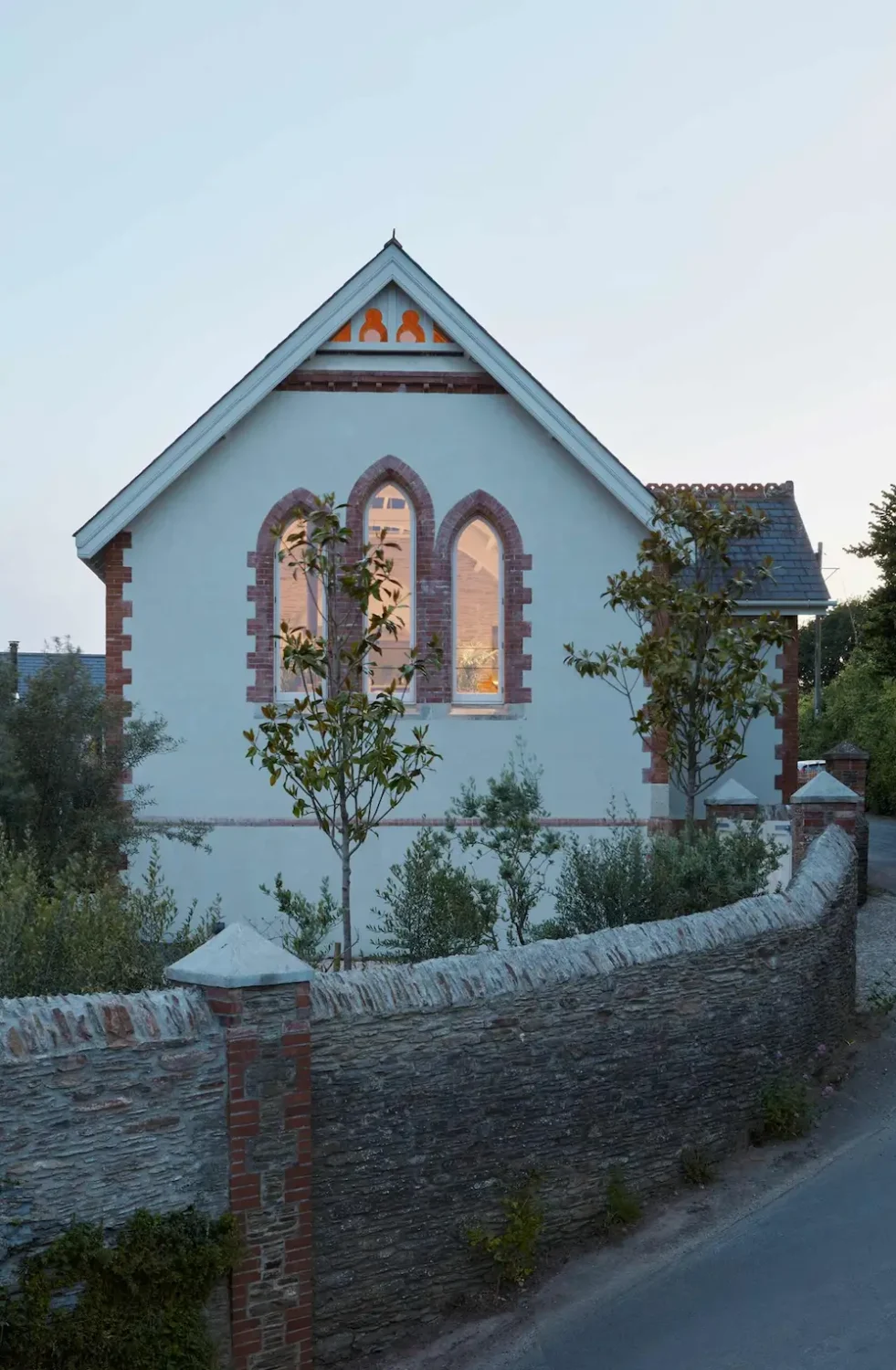
What makes The Old Chapel such a compelling renovation is its restraint. Tuckey Design Studio has resisted the urge to erase the building’s former identity, instead working with its unique architectural qualities to create a home that feels authentic and timeless.
The soaring ceilings, Gothic-inspired windows, exposed stonework, and reclaimed materials remain the defining features of the project. Contemporary additions, including the floating plywood room and bespoke staircases, are carefully calibrated to complement rather than compete with the historic structure.
The result is a family home that feels deeply connected to its setting and history—a thoughtful transformation that proves old buildings can adapt beautifully to modern life while retaining the qualities that make them extraordinary.
Discover more from Decoholic
Subscribe to get the latest posts sent to your email.