For years, stripes have been one of decorating’s most reliable tricks. They’ve appeared on French mattresses, English wallpapers, Scandinavian textiles, and coastal cabanas. Yet despite their long history, stripes are having a particularly strong moment right now.
Designers are putting them everywhere—from painted ceilings and statement staircases to upholstered headboards and kitchen runners.
But why?
Part of the answer lies in aesthetics. Stripes are timeless. They’re versatile. They work in virtually every decorating style.
The more surprising answer, however, comes from psychology.
Research suggests that stripes can influence how we perceive space, process visual information, and experience our surroundings. While no study has ever concluded that stripes directly increase confidence, there is growing evidence that they contribute to many of the qualities we associate with confident interiors: clarity, intentionality, structure, and visual authority.
Our Brains Prefer Order More Than We Realize
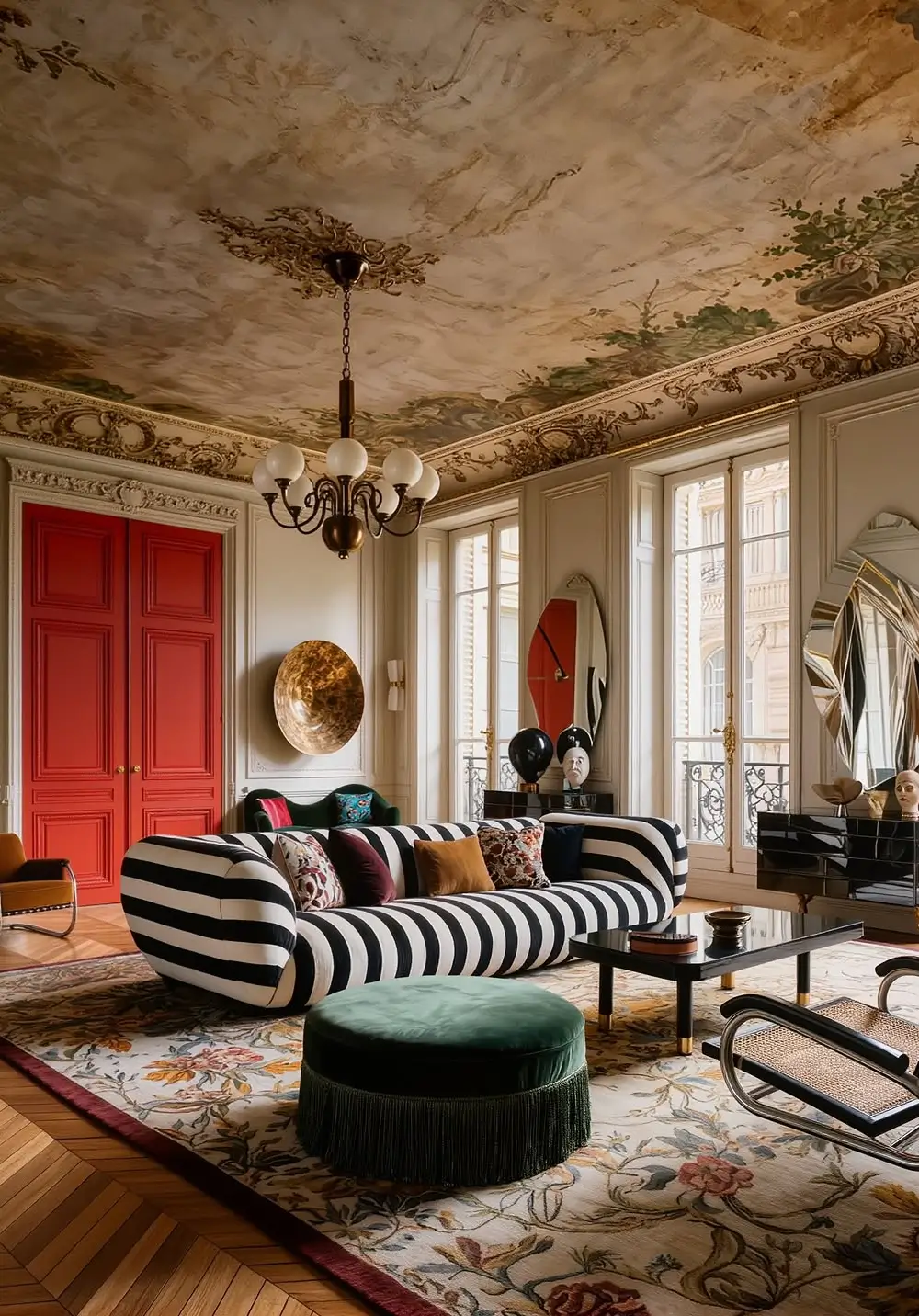
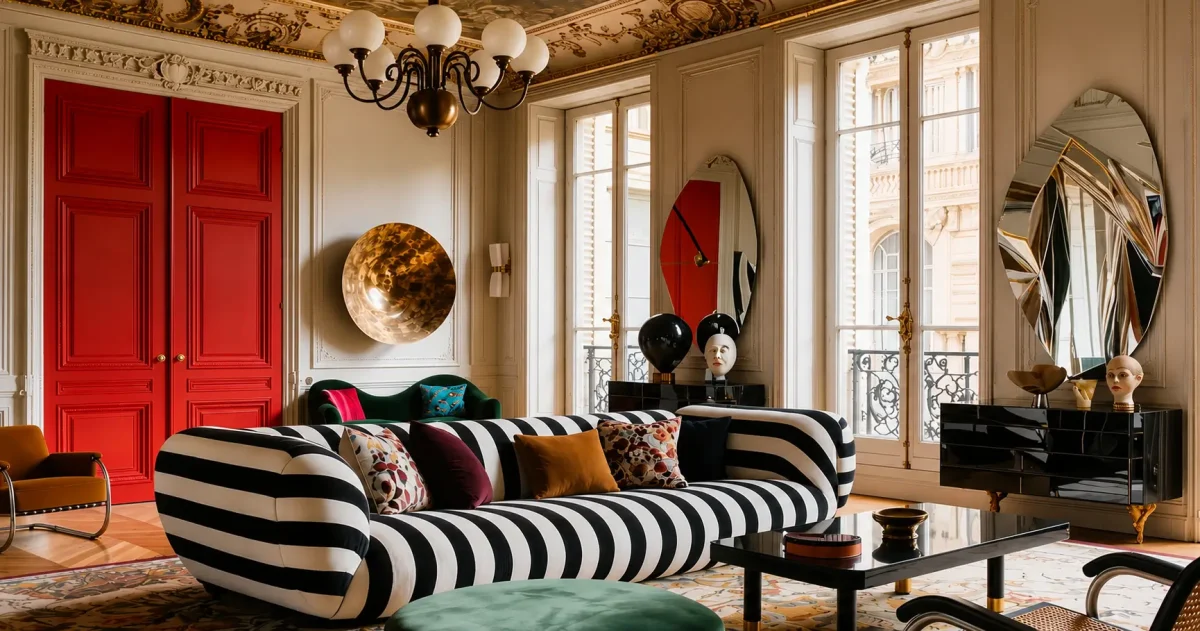
A dramatic striped sofa anchors this Parisian living room by NAIRA INTERIOR WORLD, proving how bold patterns can bring confidence and personality to a space rich in historic architectural details.
One of the most influential concepts in environmental psychology comes from researchers Rachel and Stephen Kaplan, whose work explored how people respond to built and natural environments.
According to the Kaplans’ Preference Matrix theory, humans tend to favor environments that balance complexity with coherence. In simple terms, we enjoy spaces that are interesting enough to hold our attention but organized enough to make sense immediately.
Stripes happen to satisfy both conditions.
They introduce pattern and movement while maintaining a highly predictable visual structure. Unlike more chaotic prints, stripes provide rhythm and repetition, making a room feel ordered rather than overwhelming.
This matters because environments that feel coherent are generally easier for the brain to process, reducing cognitive effort and creating a greater sense of comfort.
In decorating terms, that often translates into a room that feels calm, deliberate, and self-assured.
Stripes Can Change How We Perceive a Room
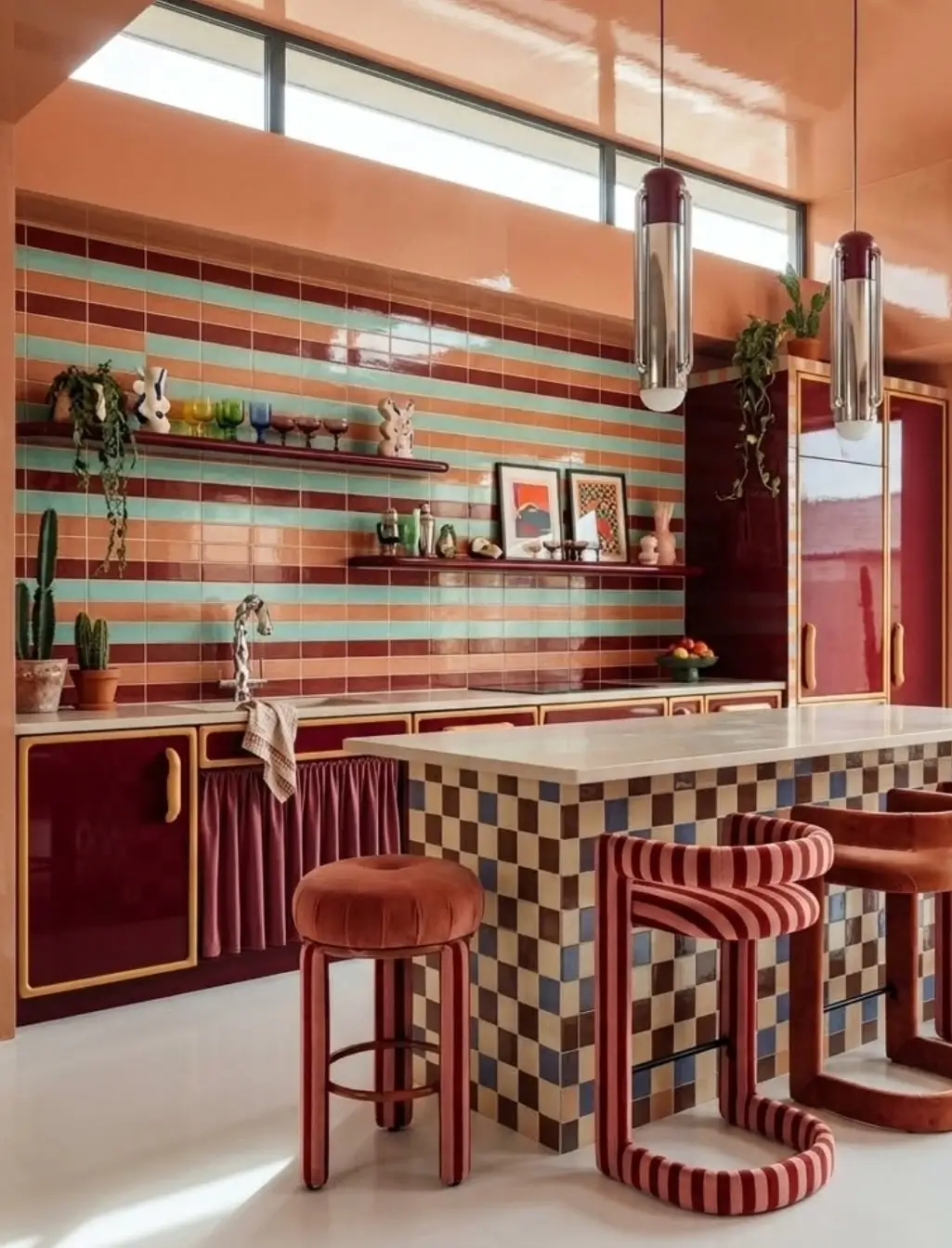
Retro candy hues, striped surfaces, and playful geometric patterns transform this kitchen (created and edited with Design Stream by MattoBoard) into a joyful celebration of color, texture, and nostalgia.
Perhaps the most fascinating research on stripes comes from Johannes Gutenberg University Mainz in Germany.
In a 2020 study published in i-Perception, researcher Eva von Castell and her colleagues investigated how wall patterns influence the perception of interior spaces.
Participants were shown computer-generated rooms featuring different wall treatments and asked to evaluate their dimensions.
The researchers found that striped wall patterns significantly influenced how people perceived room size. Certain stripe configurations made rooms appear larger than comparable spaces without patterns.
The study’s conclusion was striking: wall patterns do not simply decorate a room—they actively shape spatial perception.
For designers, this is hardly surprising.
For decades, decorators have used vertical stripes to emphasize height and horizontal stripes to enhance a sense of width. What is interesting is that scientific research now supports the idea that stripes genuinely affect how we experience a room, not just how we think about it.
A room that feels larger, taller, or more balanced often feels more confident as well.
The Science of Processing Fluency
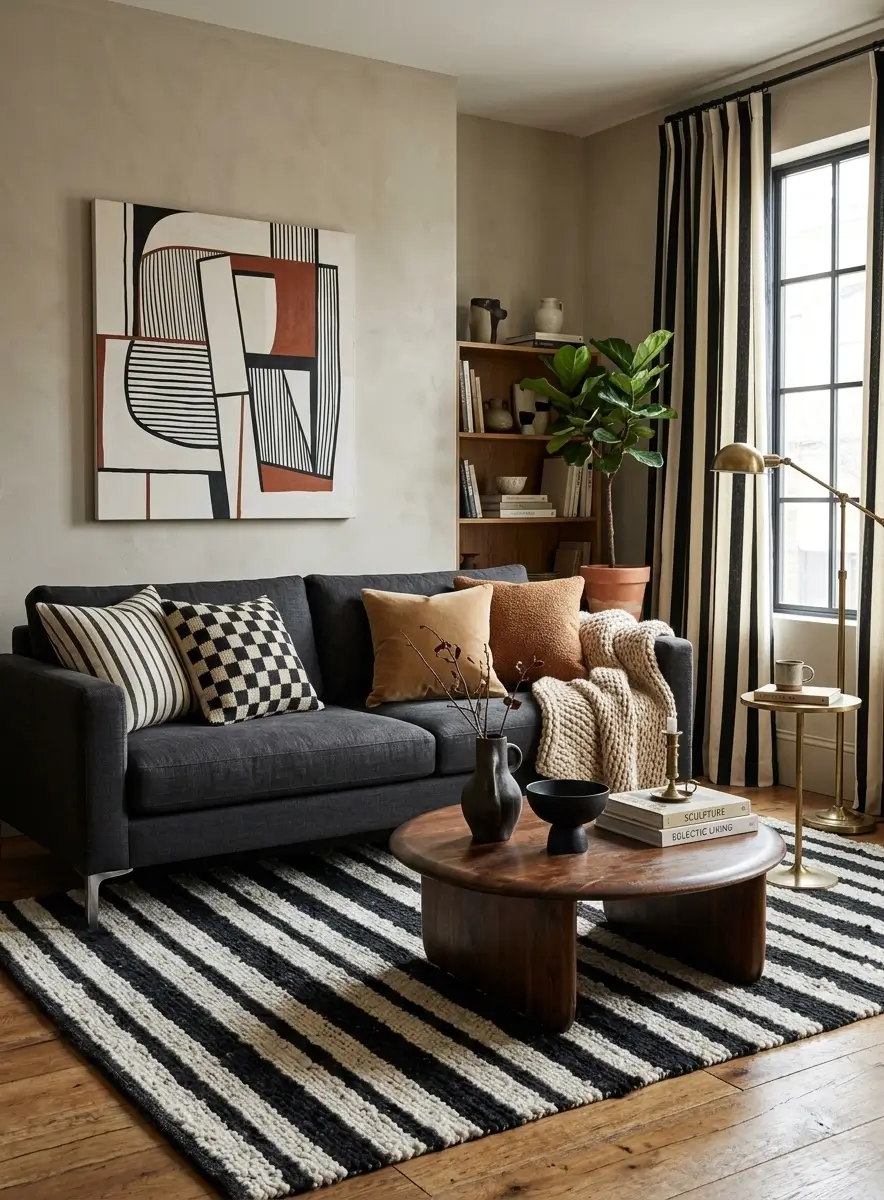
Black-and-white stripes bring structure and rhythm to this cozy modern living room, balancing soft textures, warm wood tones, and contemporary décor.
Another clue comes from the concept of “processing fluency.”
Psychologists Rolf Reber, Norbert Schwarz, and Piotr Winkielman proposed that people tend to prefer information that is easy for the brain to process.
Their 2004 review, published in Personality and Social Psychology Review, demonstrated that visual stimuli perceived with greater fluency are often judged as more attractive and pleasing.
Stripes are a textbook example.
Because they follow a predictable rhythm, our brains can quickly understand them. There is little ambiguity. We know where the pattern begins, where it continues, and how it repeats.
This doesn’t mean every striped room is automatically beautiful.
But it may help explain why stripes feel comfortable despite being visually bold.
They create excitement without creating confusion.
And that balance is surprisingly difficult to achieve.
How Designers Tame Stripes
One of the biggest misconceptions about stripes is that they are difficult to decorate with. In reality, the world’s best designers have been using them for decades—but they rarely use them alone.
Dorothy Draper: Pair Stripes with Florals
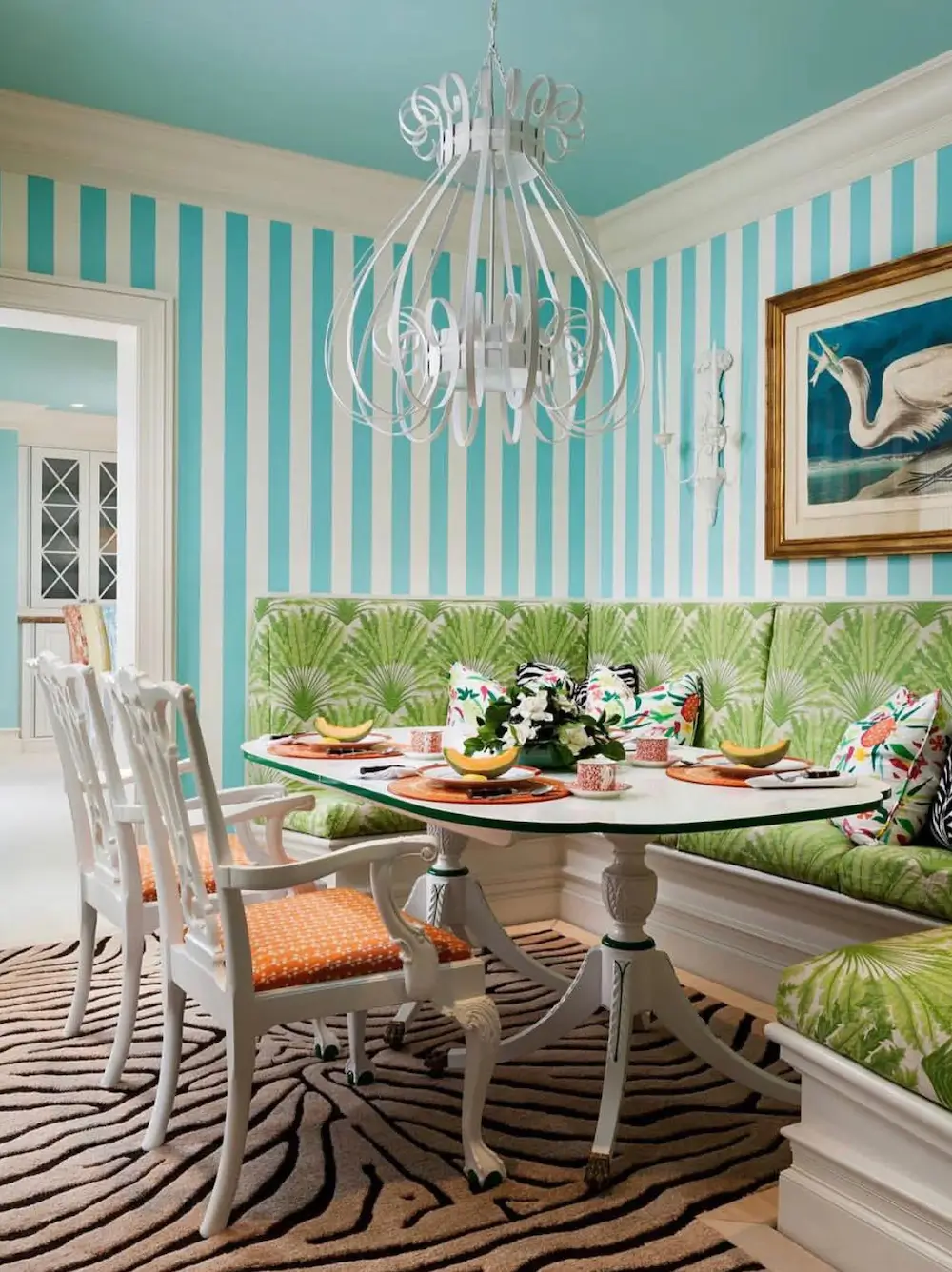
The legendary Dorothy Draper became famous for oversized black-and-white stripes at The Greenbrier, but her real secret was contrast. She balanced strong geometric lines with oversized floral prints, allowing each pattern to soften the other.
Try it yourself: Pair a striped sofa with floral cushions or artwork to create a room that feels both structured and inviting.
Mark D. Sikes: Limit the Color Palette
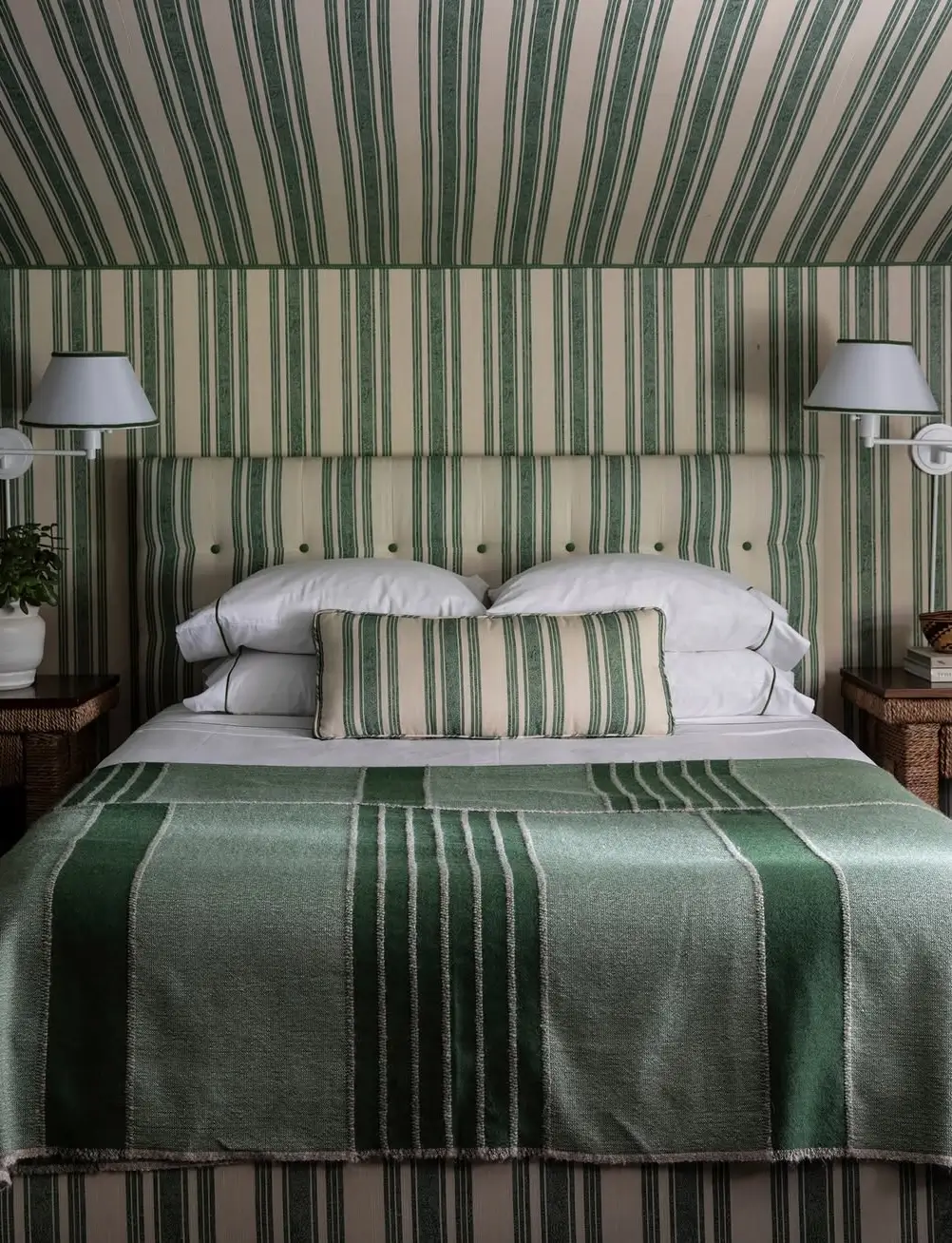
In this Bel Air guest room, designer Mark D. Sikes demonstrates the power of stripe drenching, using a classic green-and-white pattern across the walls, headboard, and bedding to create a cohesive and timeless retreat. The pattern feels very 1920s Old Hollywood and really helped unify the space.
Mark D. Sikes often layers stripes across walls, upholstery, and window treatments. The look never feels overwhelming because he typically sticks to a tightly edited palette—most famously green and white.
Try it yourself: If you’re repeating stripes throughout a room, keep the colors simple and consistent.
Miles Redd: Use Stripes as an Architectural Tool
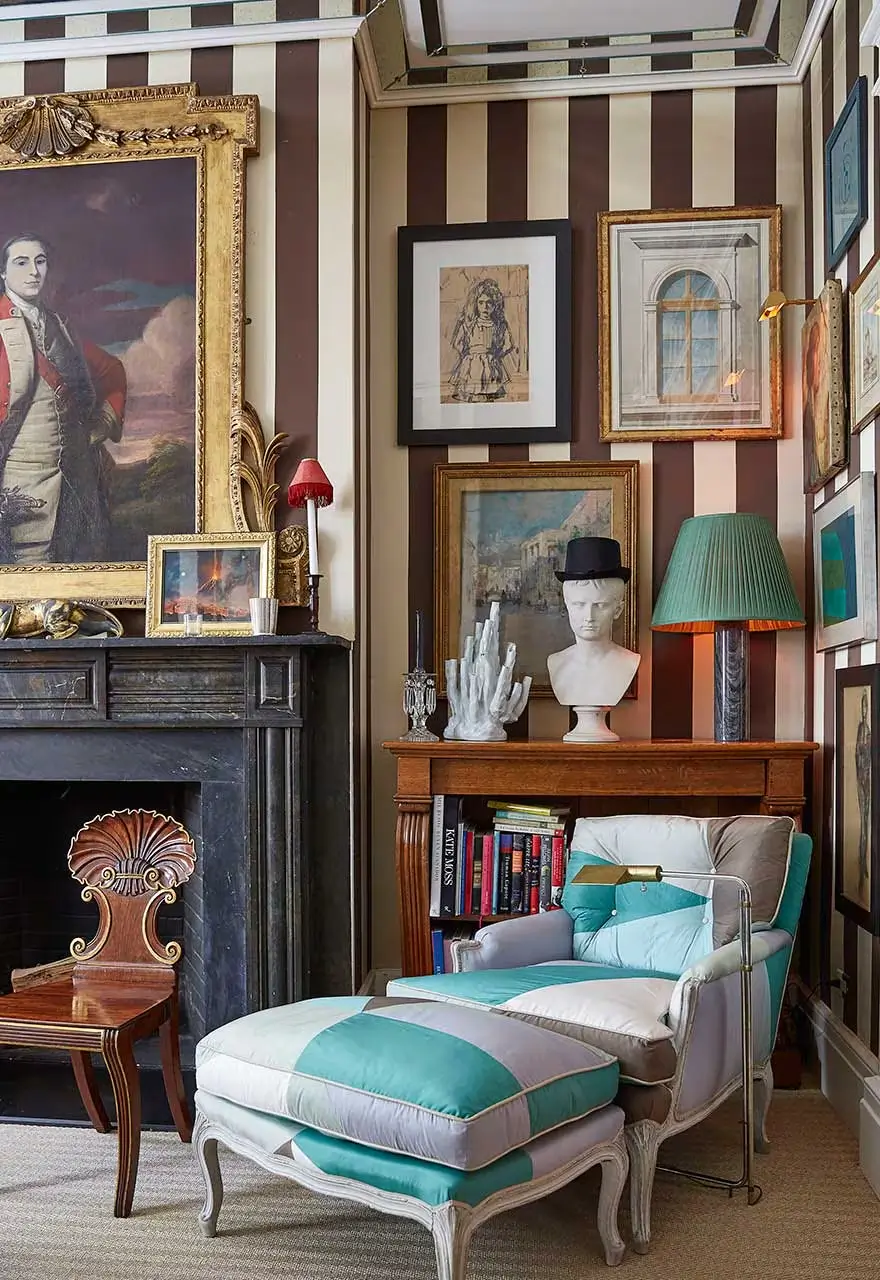
Unlike Dorothy Draper’s high-contrast glamour or Mark D. Sikes’s perfectly coordinated stripe drenching, Miles Redd uses stripes to inject energy into a room. He often layers them with saturated colors, glossy finishes, and other bold patterns, creating spaces that feel collected, theatrical, and a little unexpected. The result is a masterclass in controlled maximalism—proof that stripes don’t have to be subtle to feel sophisticated.
How to Decorate with Stripes Like a Confident Designer
You don’t need to cover every wall in stripes to embrace the trend. Sometimes a single bold move is enough.
Make a striped armchair the focal point.
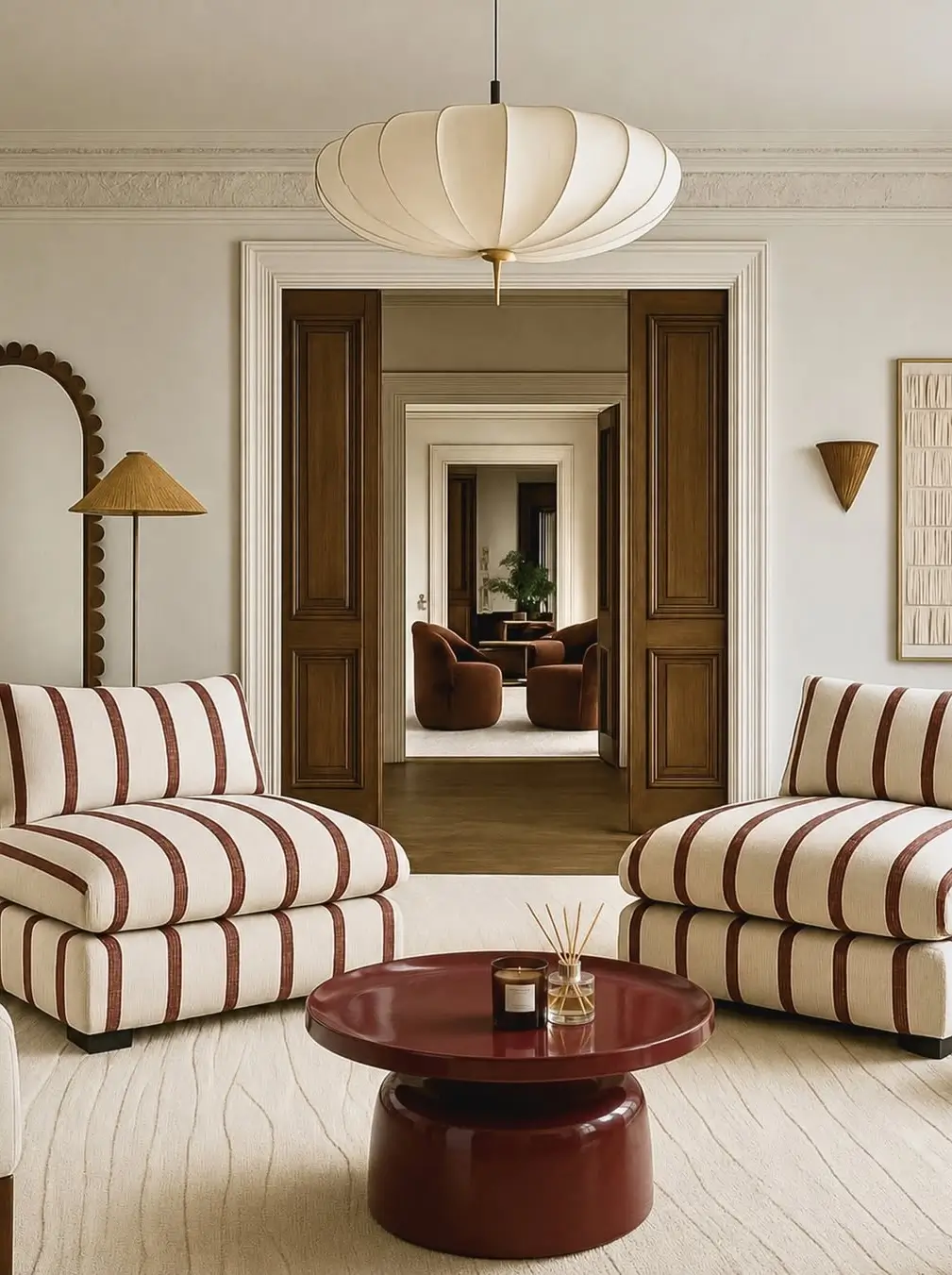
Image: La Época
A cream-and-burgundy, green-and-cream, or terracotta-striped sofa instantly becomes the room’s hero piece, adding personality and visual rhythm.
Think beyond the walls
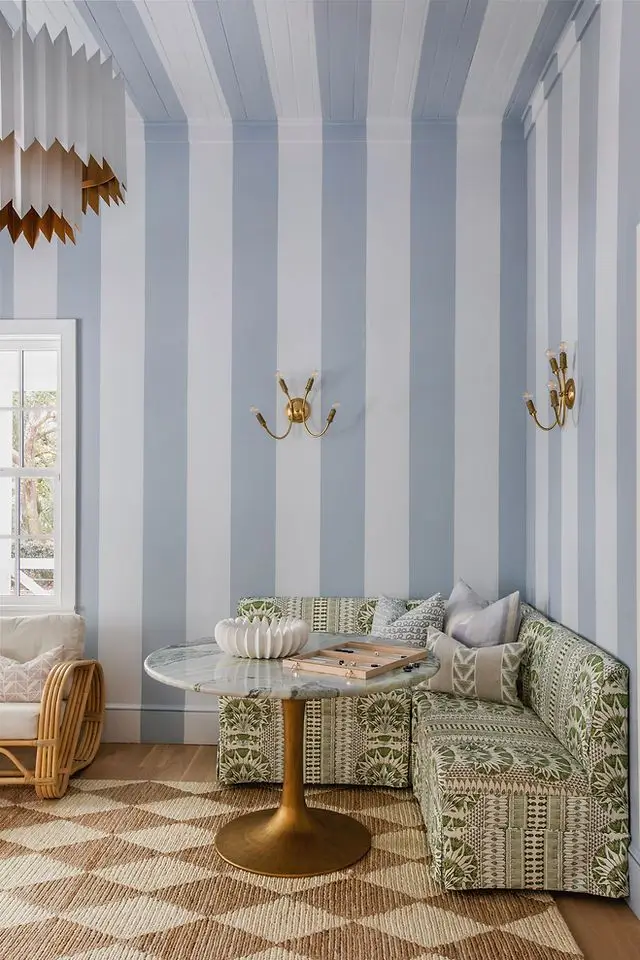
Designed by Megan Molten Interiors, this charming seating corner uses oversized blue-and-white stripes to add height, freshness, and a subtle sense of drama to a relaxed coastal space.
Designers increasingly treat the ceiling as the “fifth wall.” Painted stripes overhead can transform an ordinary room into a memorable architectural statement.
Start Small
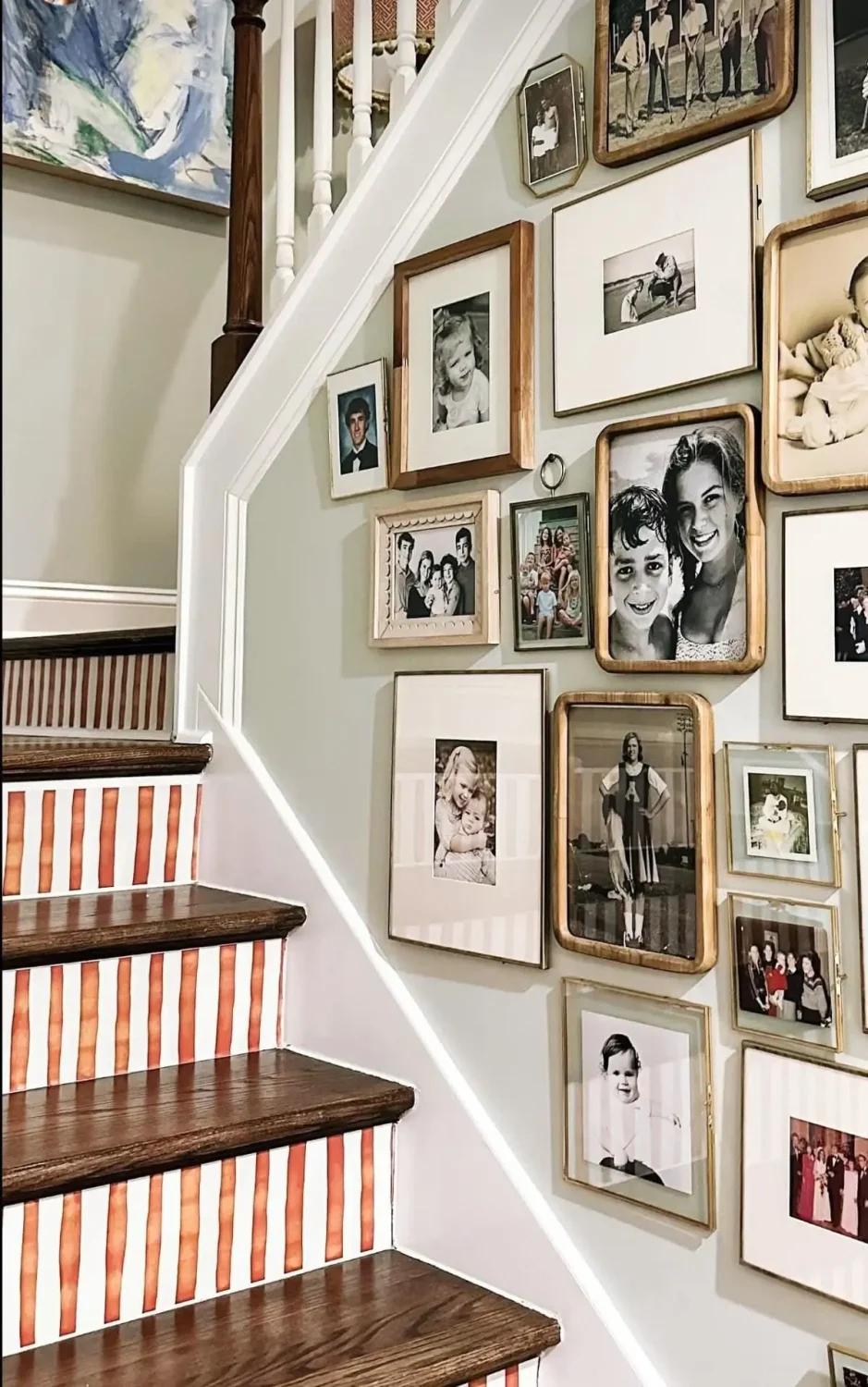
Not ready for a striped sofa or ceiling? Painting stripes on stair risers is a playful way to introduce pattern and personality without overwhelming a space.
Not every striped interior begins with a statement sofa. Sometimes the most successful applications are the most unexpected. Stair risers, cabinet interiors, window shades, and accent furniture offer low-commitment ways to introduce stripes while adding rhythm and personality to everyday spaces.
Choose colors that feel confident
Some stripe combinations have a particularly strong presence:
- Deep green and cream
- Terracotta and soft blue
- Burgundy and blush
- Chocolate brown and ivory
- Navy and white
- Black and white
The most successful striped interiors aren’t necessarily the boldest. They’re the ones that use contrast, rhythm, and repetition with intention.
The Real Connection Between Stripes and Confidence
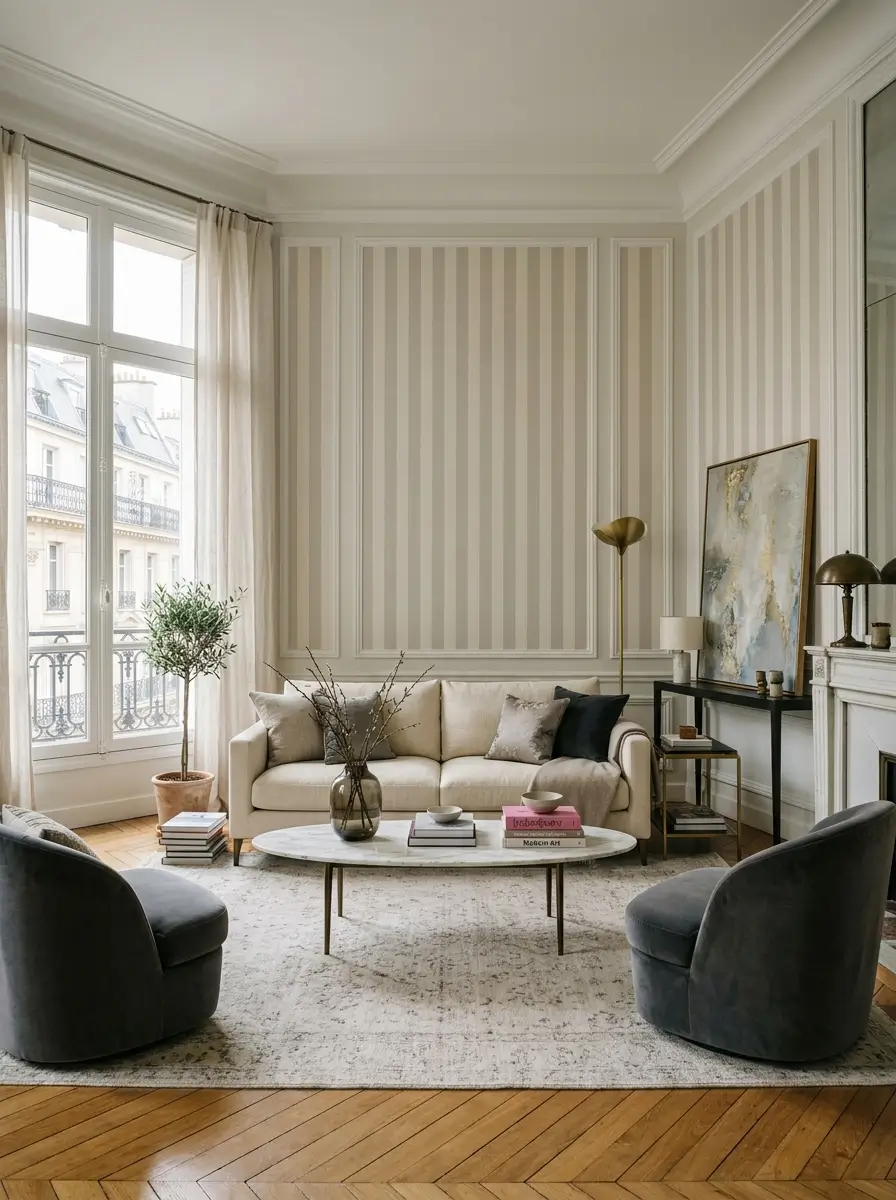
Soft striped wallpaper adds depth and refinement to this serene Parisian living room, proving that stripes can be just as impactful when used with restraint.
No scientific study has ever proven that striped wallpaper makes people more self-confident.
What the evidence does suggest is something arguably more interesting.
Research from environmental psychology shows that people respond positively to coherent environments. Studies from Johannes Gutenberg University Mainz demonstrate that stripes can alter spatial perception. Processing fluency theory suggests that predictable visual patterns are easier—and often more pleasurable—for the brain to process.
Together, these findings help explain why stripes often make a room feel stronger, clearer, and more intentional.
And perhaps that’s what confidence in design really is.
Not showing off.
Not following trends.
Simply making a choice—and owning it.
Discover more from Decoholic
Subscribe to get the latest posts sent to your email.