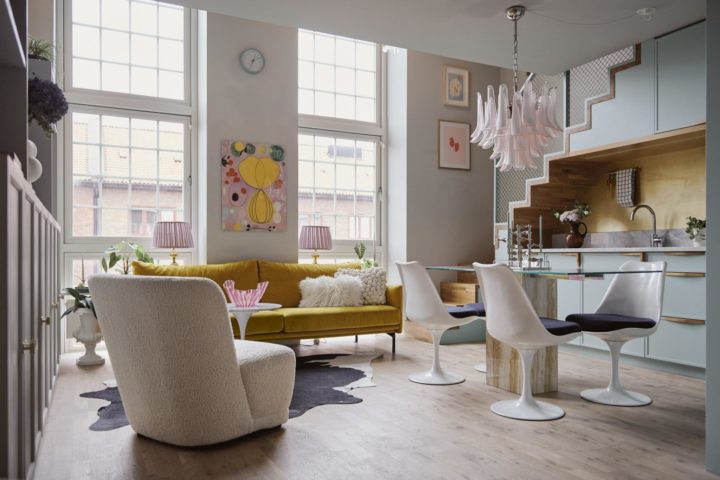
Small open-plan homes can feel surprisingly spacious — or impossibly cluttered. Usually both at the same time.
When the kitchen, dining area, and living room all share one compact footprint, every furniture choice suddenly matters more. A bulky sofa blocks the flow, pendant lights feel oversized, and one messy countertop can visually take over the entire apartment.
But a small open-concept layout can also feel warm, airy, and incredibly functional when the zones are defined thoughtfully. The trick isn’t filling the room with more furniture. It’s making fewer things work harder.
From slim islands and layered lighting to layout tricks that visually separate spaces without closing them off, these ideas make small homes feel calmer, brighter, and much easier to live in.
Images: FANTASTIC FRANK
Small House Open Concept Kitchen and Living Room
1. Invest in a good range hood
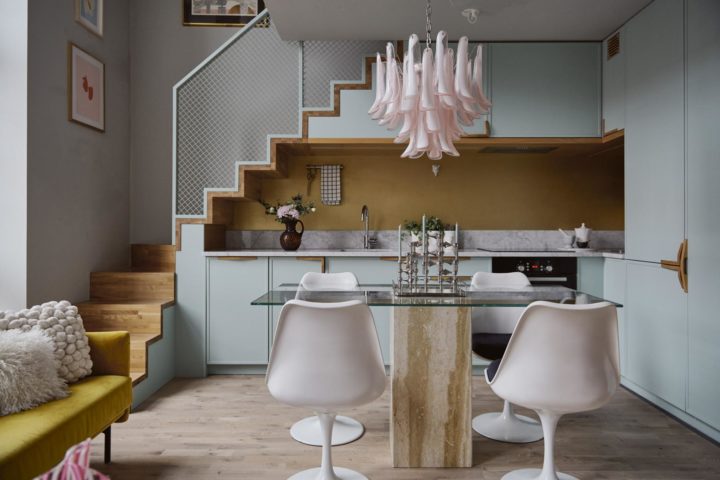
Although overlooked in most homes, a good range hood is an important appliance to have in your small space kitchen. It will help clear all the heat, smoke, and odor caused by cooking, leaving your space smelling fresh. The last thing you want is to have the living area smelling like onions the entire day.
2. Use rugs to create zones
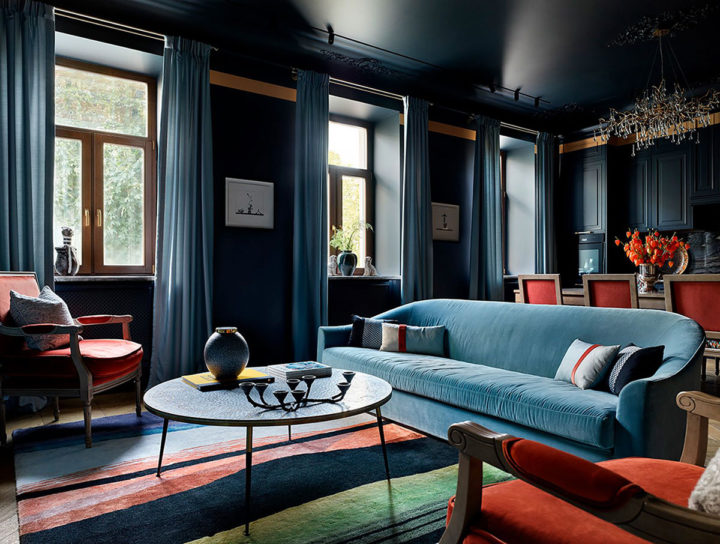
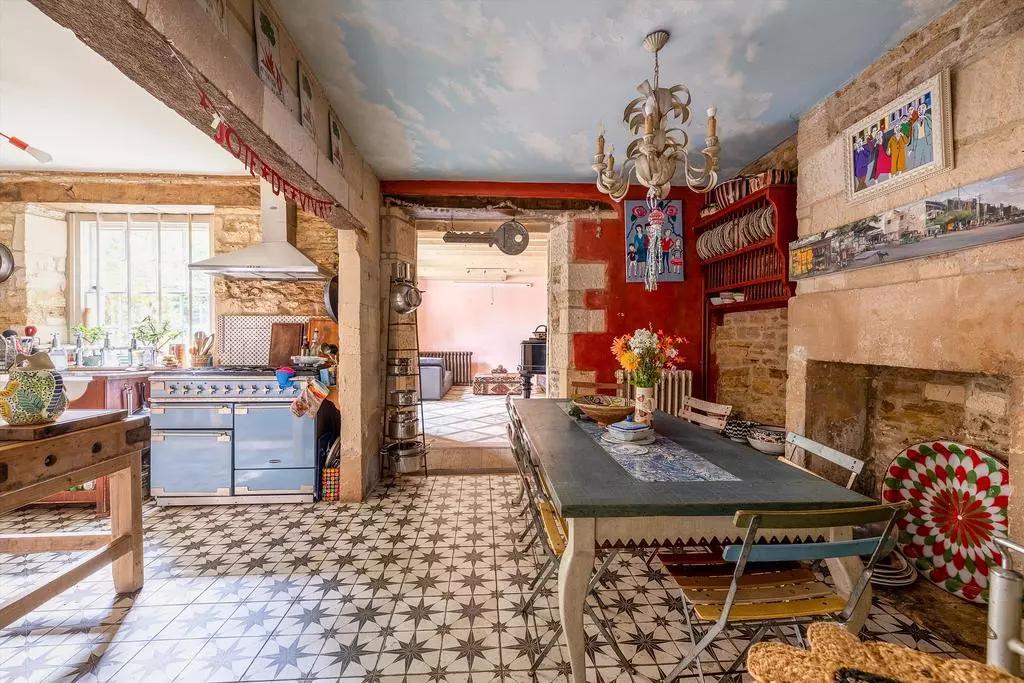
You can never go wrong with adding a rug to your space. They are the perfect way to define various area zones, especially when there are no other visible divisions in-between rooms. Place a rug in the dining area, and another one in the living space. For best results, use different rug colors and textures for the two spots, while ensuring they both compliment the interior décor.
Image: ED
3. Use Wall Color To Define Different Zones
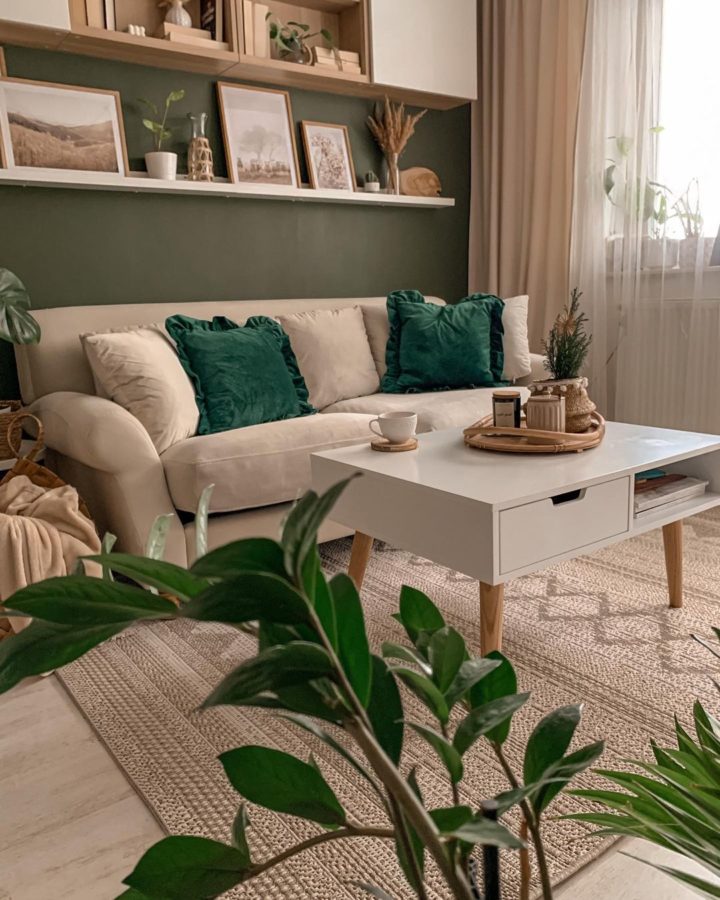
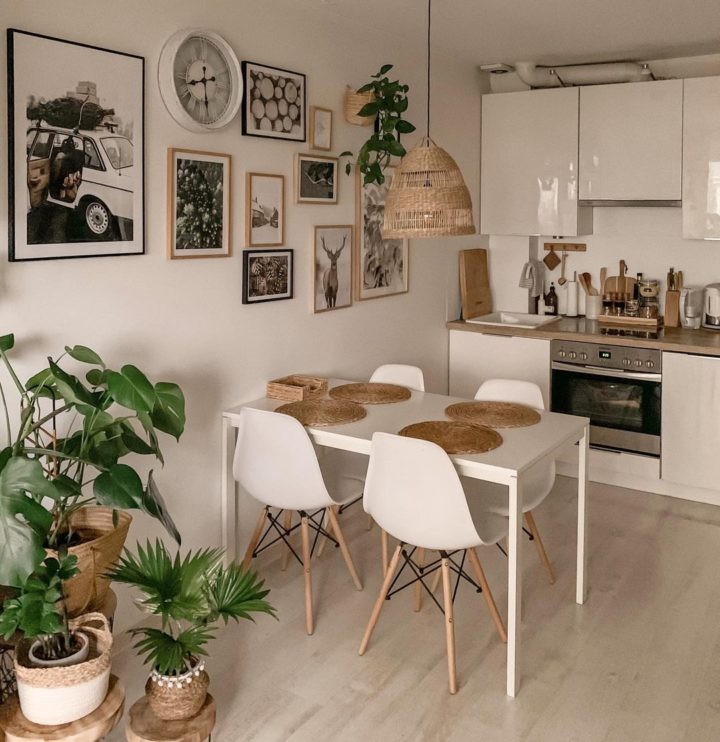
Images: what_makes_me_enjoy
One of the biggest mistakes in small open-plan homes is making every corner look exactly the same. Ironically, that often makes the room feel flatter and more chaotic instead of cohesive.
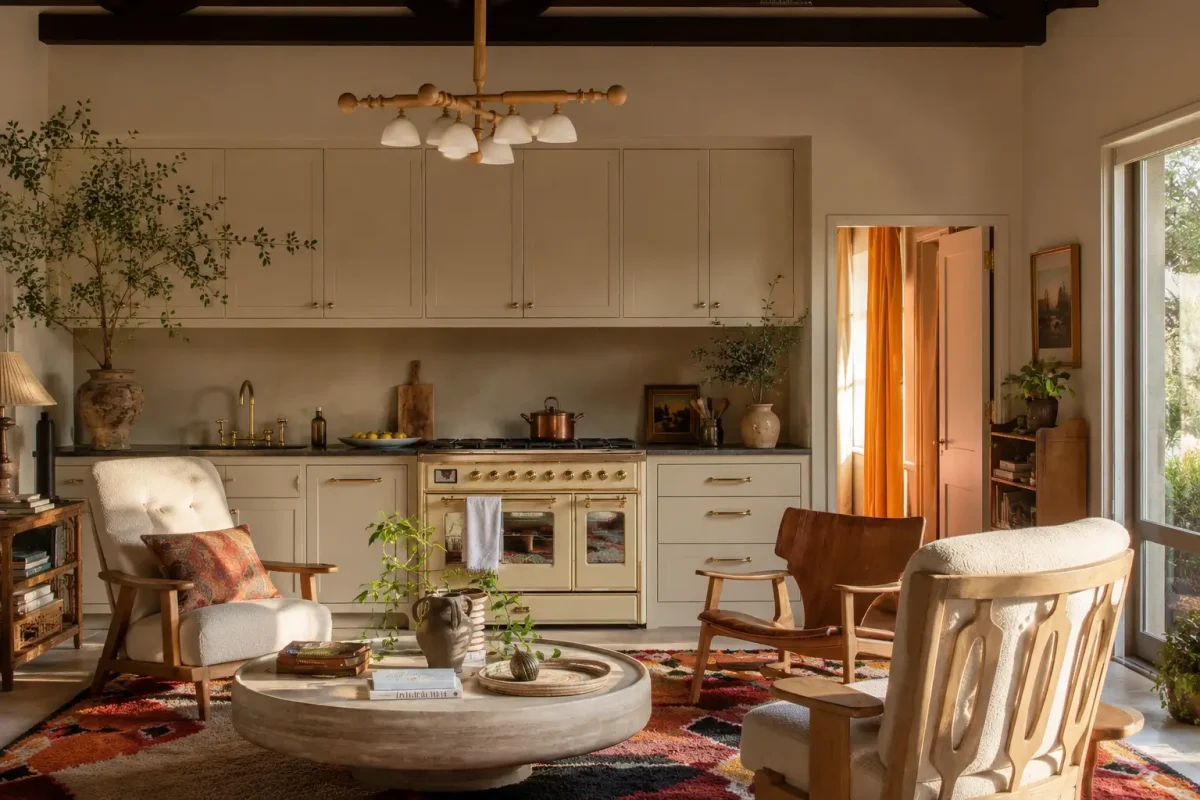
You don’t need dramatic accent walls or completely different color schemes. Small shifts in tone are usually enough.
Try slightly warmer tones in the living area and cooler neutrals in the kitchen. Soft greige cabinetry paired with warmer beige textiles, muted olive accents, or natural oak furniture creates gentle visual separation without interrupting the flow of the room.
This works especially well in apartments where the kitchen is fully visible from the sofa area.
The goal is for the spaces to feel connected — just not identical.
10 Small Living Room With TV Ideas That We Want to Copy ASAP
4. Use lighting to highlight different areas
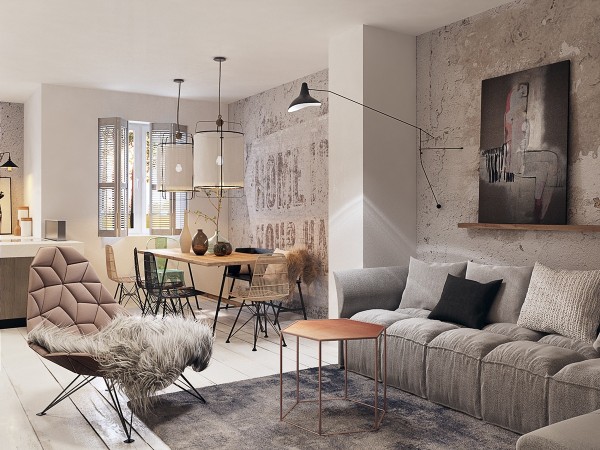
The best way to make your small house open concept kitchen and living room look and feel bigger is by opening it up to lighting. Therefore, planning the right lighting to use in such open floor spaces is a crucial part of coming up with a beautifully designed, and light-filled home.
For instance, for high ceilings, and large windows to achieve better overall lighting. Also, since it’s easy to over-light small open-concept spaces, use layer lighting. A good mixture of ambient, accent and task lighting will be ideal.
Ambient lighting meets the general lighting needs of your space, task lighting focuses on specific spots such as the cooking area, countertops, etc., while accent lighting gives the space a warm appeal.
Image: Piotr Furman
5. A Slim Island Can Still Change The Whole Room
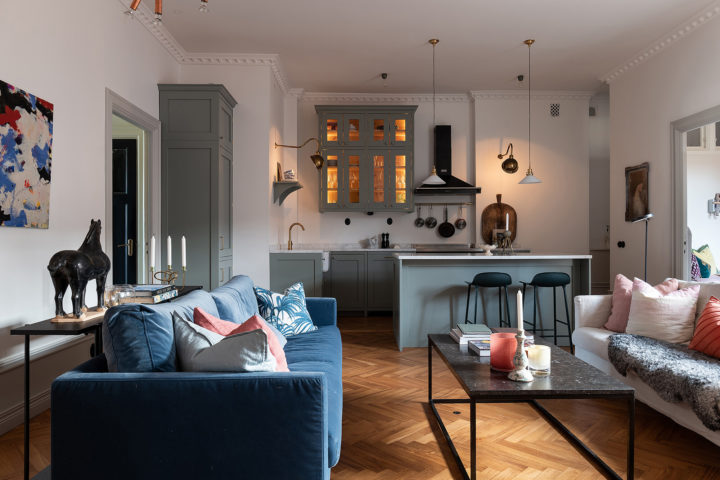
People often assume a kitchen island only works in large homes, but even a narrow island can completely improve a compact open-plan layout.
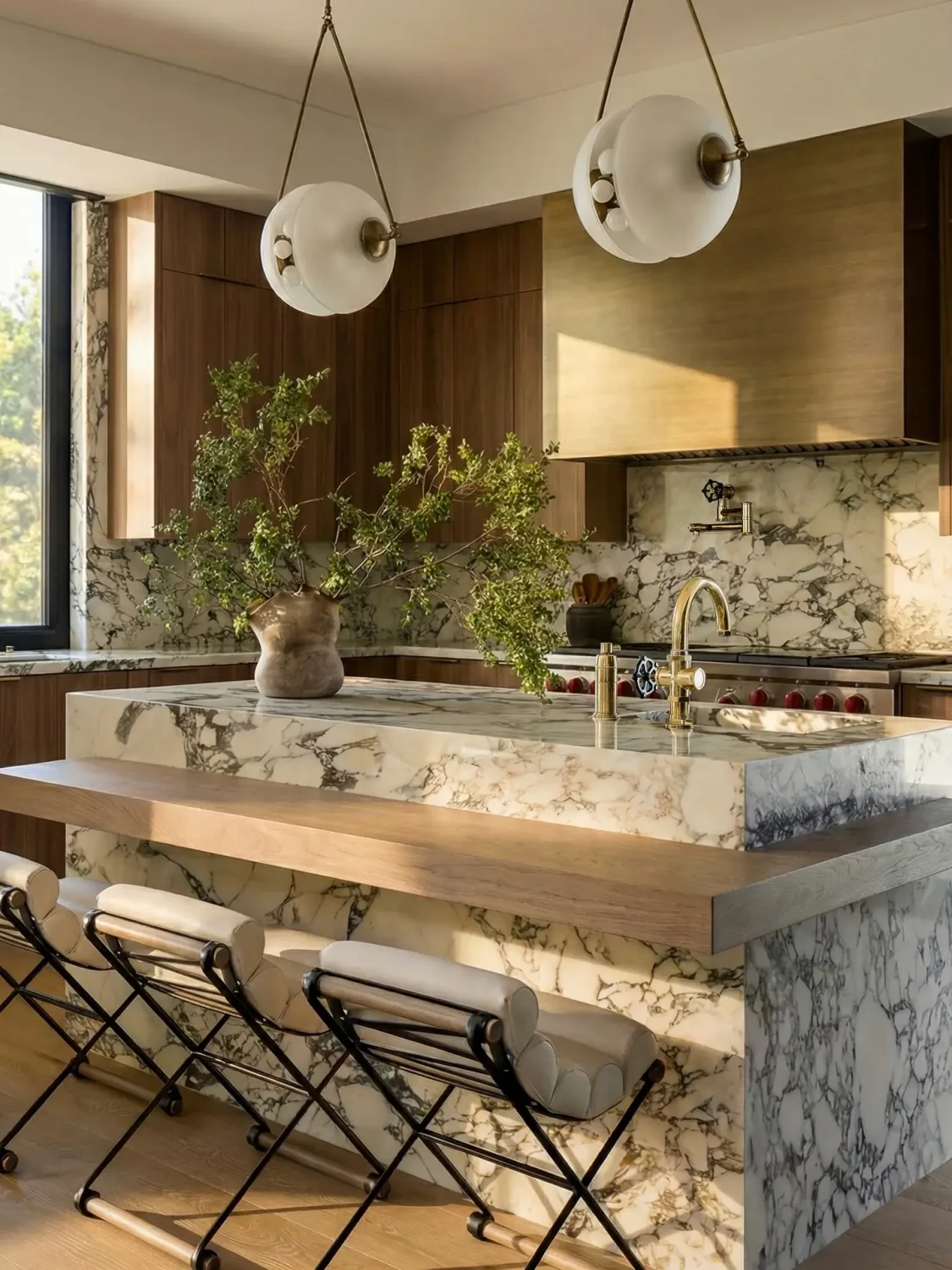
A slim island instantly creates structure between the kitchen and living room while adding prep space, storage, and casual seating at the same time.
In smaller apartments, a bulky island with a sink or cooktop can feel visually heavy. A simpler version usually works better. Think slim waterfall countertops, open shelving underneath, or compact islands with hidden storage.
Even a narrow piece can help define the kitchen zone without making the entire room feel blocked.
And honestly? Sometimes just having one clear surface for cooking that isn’t your dining table makes the whole apartment feel calmer.
6. Keep The Palette Calm — Not Necessarily All White
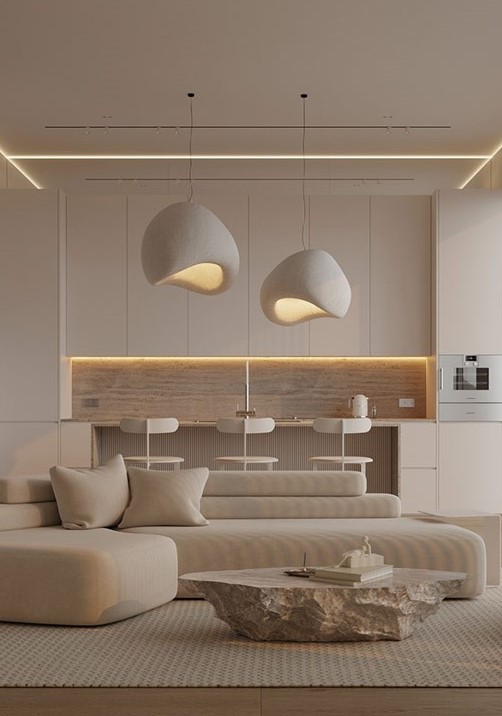
Image: Ivan Stoyka
Small open spaces don’t need to be entirely white to feel bigger.
In fact, ultra-white interiors can sometimes feel cold, flat, and strangely smaller once real life enters the picture. Especially when countertops are full of appliances and everyday clutter.
Instead, focus on a calm palette with soft contrast.
Warm whites, mushroom tones, dusty greens, pale taupe, natural wood, and textured fabrics create depth without overwhelming the room. The key is consistency. Too many contrasting colors or finishes can make an open-plan layout feel visually noisy very quickly.
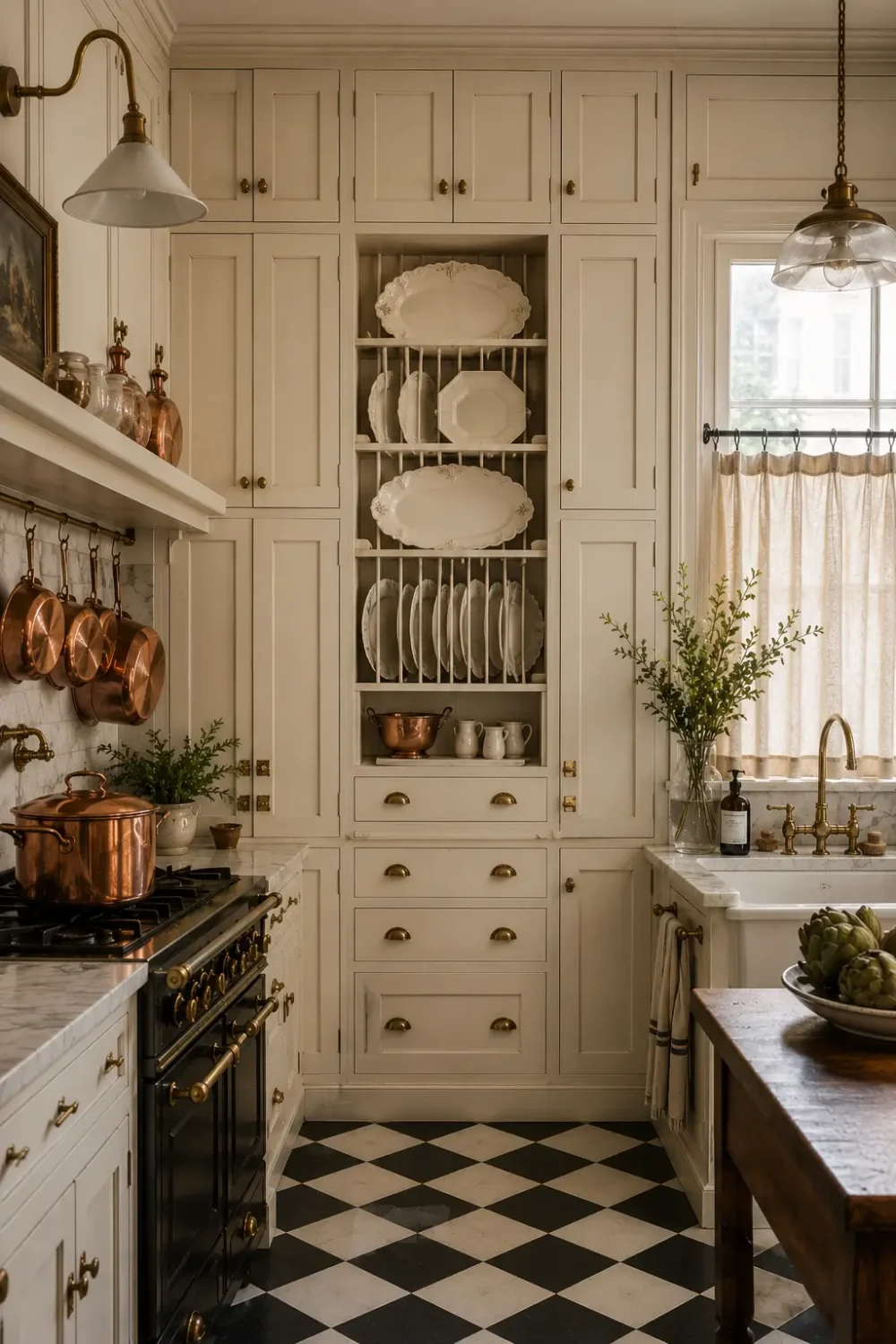
Texture matters just as much as color here. Linen curtains, matte cabinetry, woven rugs, wood grain, and plaster-like finishes help the room feel layered without adding clutter.
7. Use Materials To Create Gentle Separation
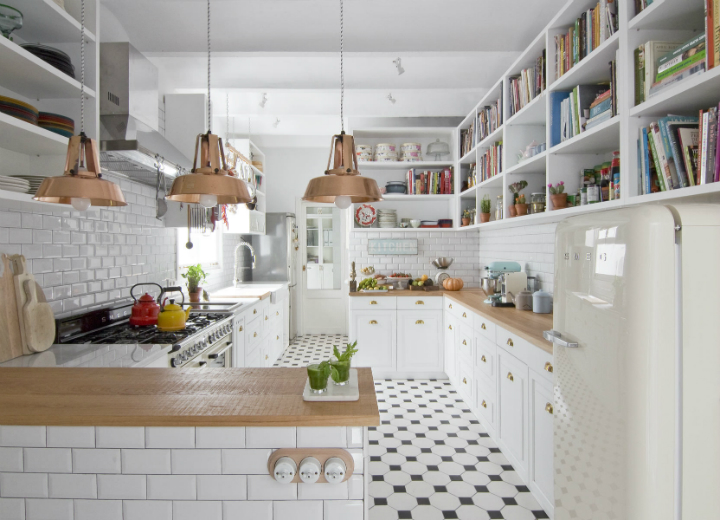
Image: A House with a Cool Design
Different materials can quietly define each area without making the apartment feel chopped up.
Wood flooring paired with tile in the kitchen is a classic example, but the transition should feel subtle. Harsh contrasts or too many flooring changes can make a small space feel busier instead of larger.
The same idea applies to finishes.
Maybe the kitchen has matte cabinetry while the living room leans softer and more textured with boucle, linen, or wood accents. These shifts help the eye understand the layout naturally.
The best open-concept homes usually feel layered — not overly coordinated.
8. Divide with shelving
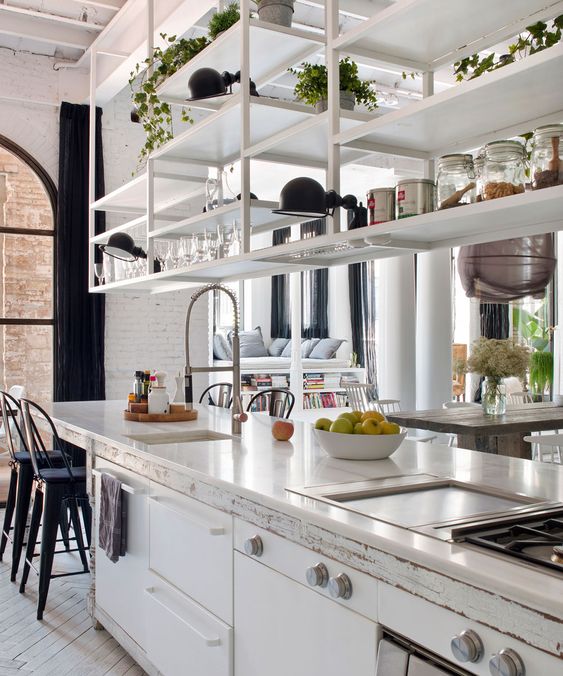
You can never go wrong using a bookcase to separate the space between your living area and dining room. Besides, apart from separating the two spaces, you can use it for storage.
Get a good quality strong unit to ensure it stays in place. Also, make sure the shelf leaves a good amount of space at the top and insides to allow easy filtration of light. You also want to highlight some objects.
If you choose to go for a free-standing unit, anchor and secure it to the roof to prevent it from tipping over.
9. Place a Peninsula
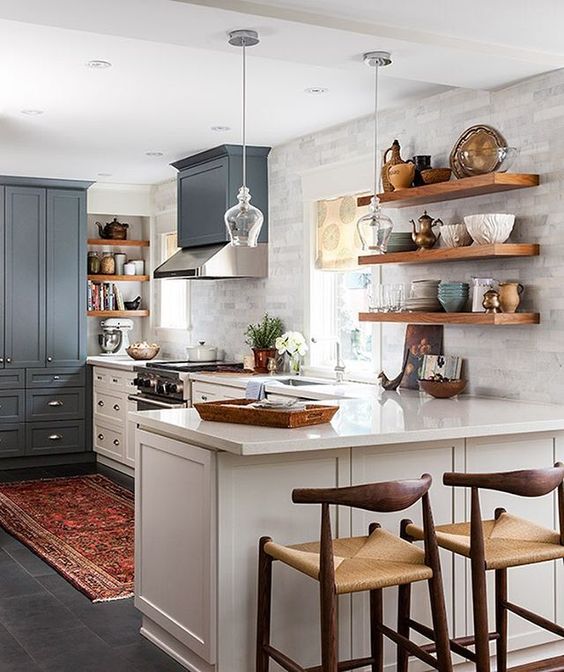
Sometimes there’s barely enough space to accommodate a kitchen island in your space. At such times, consider pacing a peninsula in your open concept kitchen and living room space. The extension from the already existing kitchen cabinets can be used as your preparation area or even sitting space.
Image: Design: Qanūk Interiors / Photography: Donna Griffith for House & Home
10. Minimize Clutter
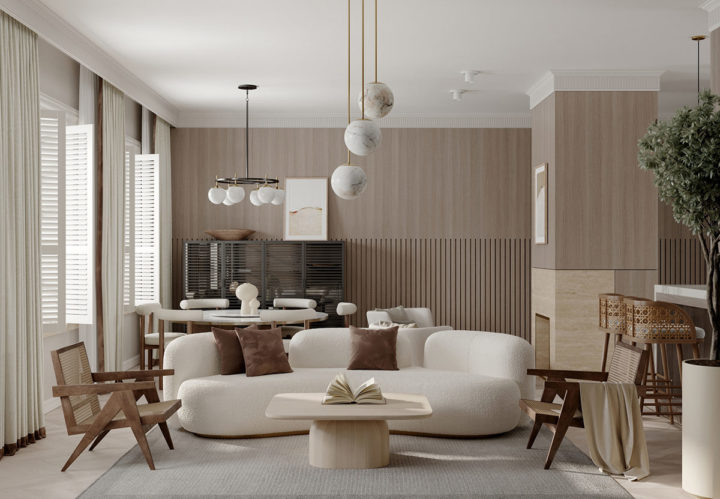
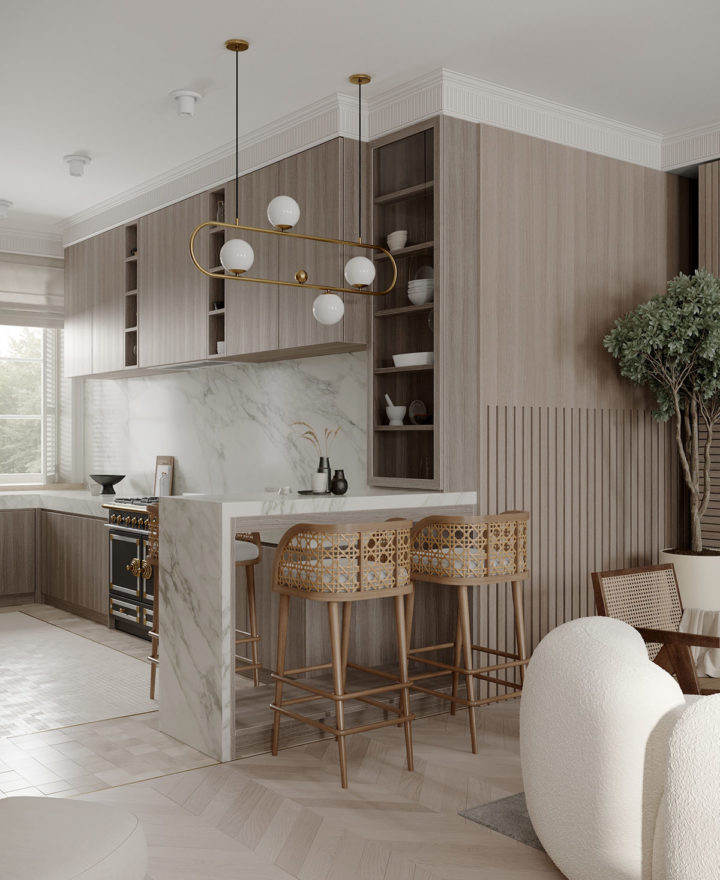
The less you have in your space the better. Ensure you have a designated space for everything, to avoid having things all over the floor, and countertop. As mentioned above, use the walls to hang organizers and shelves. You can also lookout for more storage space above things, such as dressers, desks, etc.
Image: Kseniya Petina
11. Add Indoor Plants
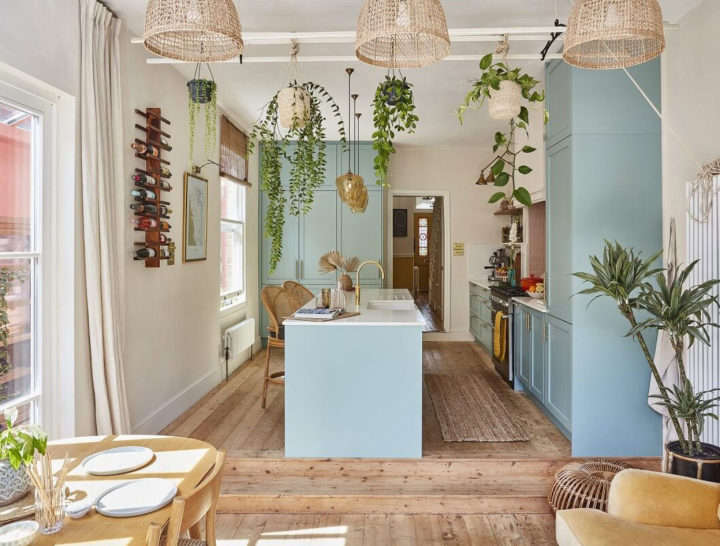
Indoor plants are always such a vibe. They’re best known for purifying the air and bringing their vibrant nature into a home. But, you can also use them to break your space, just as you would with a shelf or piece of art.
You can place them on a backless bookcase, a mounted shelf, or repurpose that clothing rack you don’t need anymore. Creativity is the key here.
Open concept spaces are becoming increasingly popular in homes across the world. They are ideal for small houses because they help maximize the use of limited space and create a more cohesive and open feel. In an open concept kitchen and living room, there are several tips and tricks you can use to make the most out of the space.
12. Curtains Matter More Than People Think
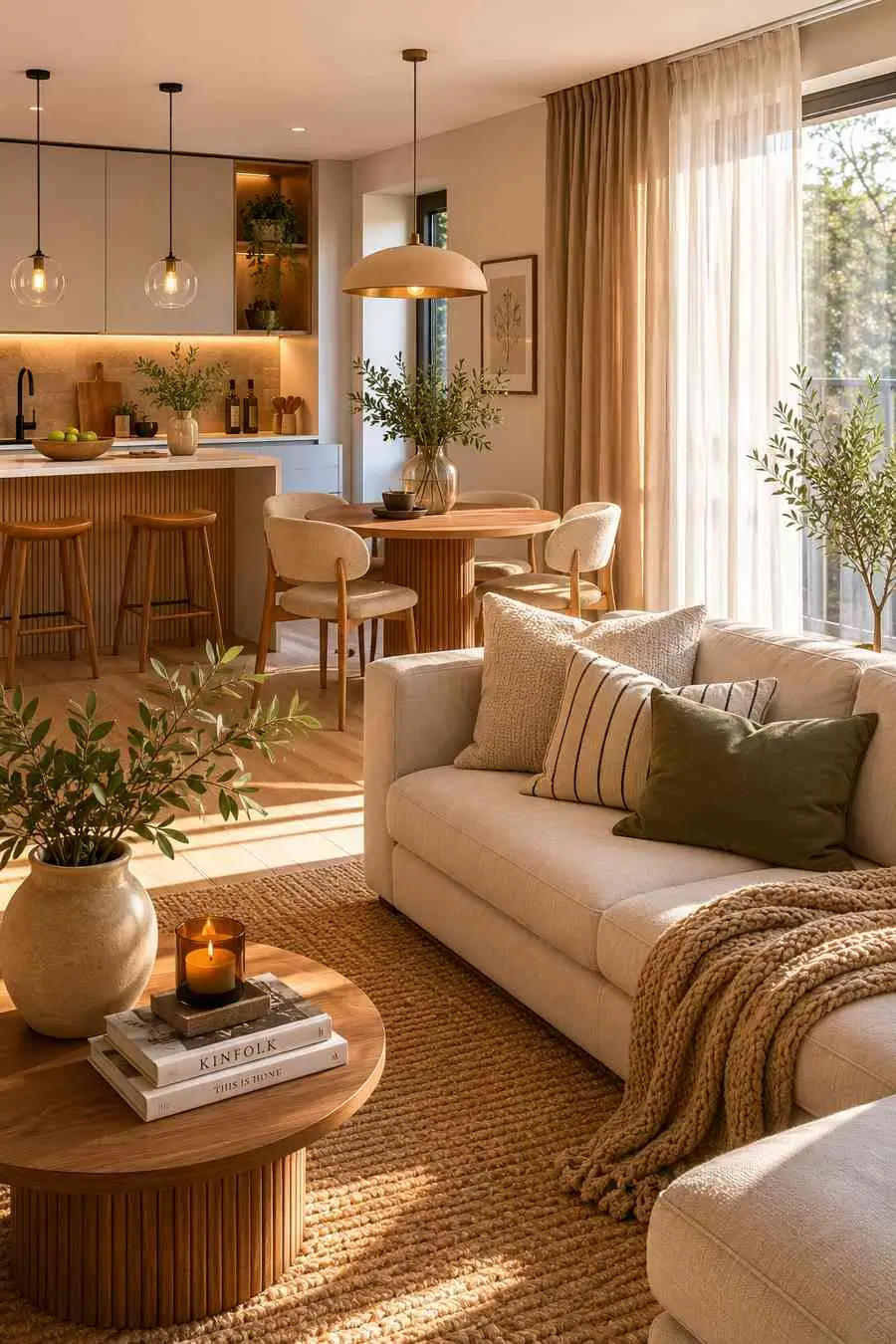
Short curtains are one of the fastest ways to make a small room feel visually smaller.
Hang curtains higher and wider than the window frame whenever possible. This draws the eye upward and makes ceilings appear taller while softening the hard edges that open-concept layouts sometimes have.
Light-filtering fabrics work beautifully in smaller spaces because they maintain brightness while still adding warmth and texture.
It’s a simple trick, but it changes the proportions of the room almost immediately.
13. Leave A Little Empty Space
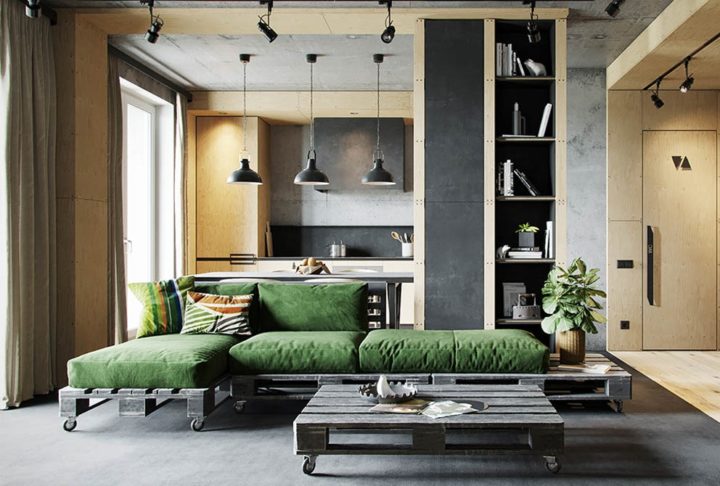
Not every corner needs furniture, shelves, baskets, or decor objects.
One of the reasons some small open-plan homes feel more luxurious is because they allow the room to breathe. Negative space matters.
A clear countertop, an empty corner near a window, or a little extra walking room between the kitchen and sofa often makes a home feel larger than adding another storage piece ever could.
Sometimes the smartest design decision in a small apartment is simply stopping before the room feels overfilled.
Final Thoughts
A small open-concept kitchen and living room doesn’t need perfect symmetry or expensive custom furniture to work well. The layouts that feel the most inviting are usually the ones that balance practicality with restraint.
Better lighting, smarter zoning, calmer colors, and furniture that fits the scale of the room can completely change how a compact home feels day to day.
And honestly, when an open-plan space works well, it tends to make the entire apartment feel bigger — even if the square footage never changes.
Discover more from Decoholic
Subscribe to get the latest posts sent to your email.