
If you’ve ever looked at a house and thought “Something about this just feels right,” there’s a good chance the balance of the space had something to do with it. And not in a vague, mystical way — but in a surprisingly practical one rooted in classical Feng Shui.
One of the oldest Feng Shui principles talks about the balance between two powerful symbolic forces: the Green Dragon and the White Tiger. These are two of the Four Celestial Animals (along with the Red Phoenix and the Black Tortoise) that describe how energy — or Qi — flows around a space.
And here’s the design takeaway that often surprises people:
Ideally, the left side of your home should be slightly higher than the right.
Let’s unpack why.
Meet the Green Dragon and the White Tiger

In classical Feng Shui, every building has an energetic orientation. When you stand inside your home and look toward the main entrance or outward toward the “face” of the building, the sides are defined like this:
- Left side → Green Dragon
- Right side → White Tiger
These two forces are meant to balance each other, but they are not equal in expression.
Think of it less like symmetry and more like choreography.
The Green Dragon (Left Side)
The Green Dragon represents dynamic, supportive energy.
Energy: Yang (active, expansive, bright)
Element: Wood
Symbolism: Protection, wisdom, authority, good fortune
In practical terms, the Dragon side should feel stronger and slightly elevated. Traditionally, this could mean:
- A higher building or hill on the left side
- Taller trees
- Slightly taller furniture
- Stronger architectural presence
This elevated side symbolically acts as a protective arm, supporting the house and guiding beneficial energy toward it.
Think of it as the confident friend walking next to you — steady, protective, and slightly leading the way.
The White Tiger (Right Side)
The White Tiger represents quieter, more controlled energy.
Energy: Yin (receptive, calm, passive)
Element: Metal
Symbolism: Physical strength, defense, instinct
The Tiger side should feel lower and calmer compared to the Dragon side.
In design terms this might mean:
- Lower landscaping
- Shorter furniture
- Less visual “weight”
- A quieter architectural expression
If the Tiger side becomes too dominant — higher, louder, or more aggressive visually — classical Feng Shui warns that it can create imbalance, symbolically linked to conflict, tension, or instability.
Basically: the Tiger should guard the house, not compete with it.
Why Height Matters
The height difference doesn’t need to be dramatic — and honestly, most modern homes won’t be designed with literal mountains on either side (tragically).
But the subtle hierarchy matters.
When the Dragon side is slightly higher, it creates what Feng Shui practitioners call the “Dragon’s Nest” — a supportive energetic formation that allows Qi to gather and flow harmoniously around the home.
In design language, it simply means the house feels balanced, supported, and calm.
How This Translates to Real Interiors
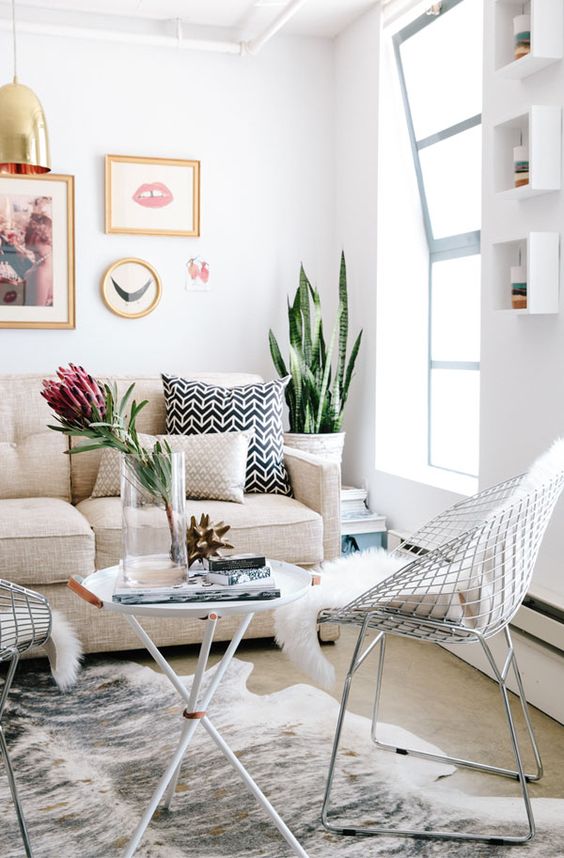
Even if you can’t control the landscape outside your home, you can still apply this principle inside.
For example:
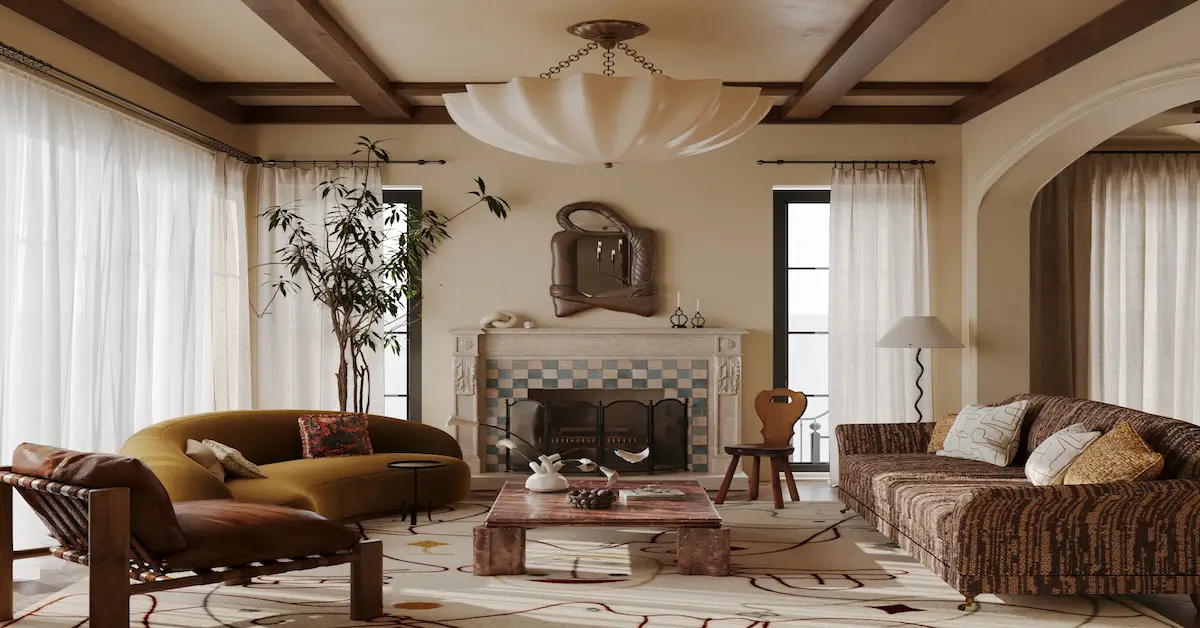
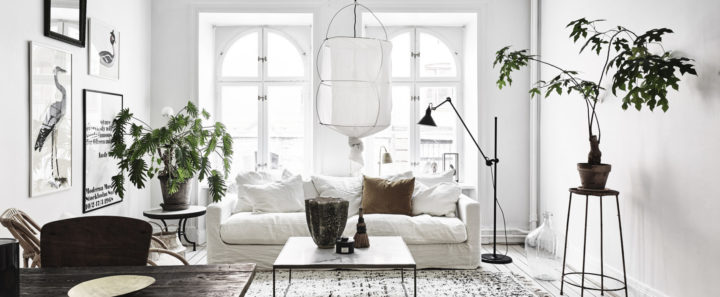
On the left side of the room (facing outward):
- Slightly taller furniture
- A floor lamp
- A taller plant
- Bookshelves or vertical elements
On the right side:
- Lower furniture
- Simpler decor
- More open space
The goal isn’t perfection — it’s subtle balance.
For more inspiration, check out:
The Big Picture

At its core, Feng Shui isn’t about superstition. It’s about how humans intuitively respond to spatial balance.
When the left side (Dragon) offers support and the right side (Tiger) stays calm and grounded, the space tends to feel more stable and harmonious.
And honestly?
That’s the kind of energy every home could use.
Discover more from Decoholic
Subscribe to get the latest posts sent to your email.