I’ve been thinking about walls lately.
Mostly because we seem to ask them to do very little.
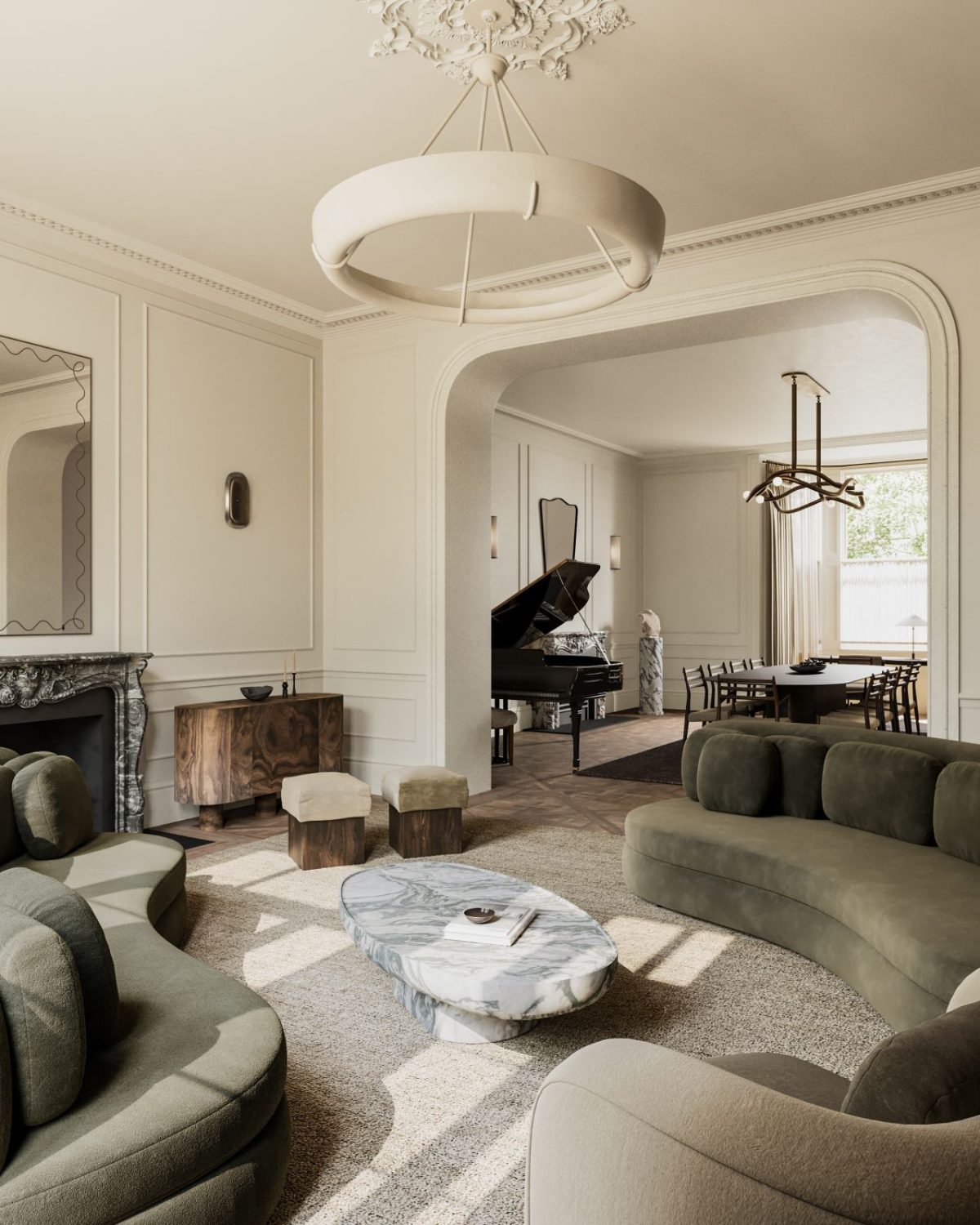
We’ll buy the sculptural chair, the marble side table, the lamp that looks slightly strange in the best possible way — and then put all of it against a warm white wall. It’s almost as if the furniture is allowed to have a personality, but the walls have been told to behave.
Maybe we should reverse that occasionally.
A wall is an enormous amount of visual space to leave out of the conversation. And right now, some of the rooms I find most interesting are the ones where the walls aren’t simply a background. They’re part of the idea.
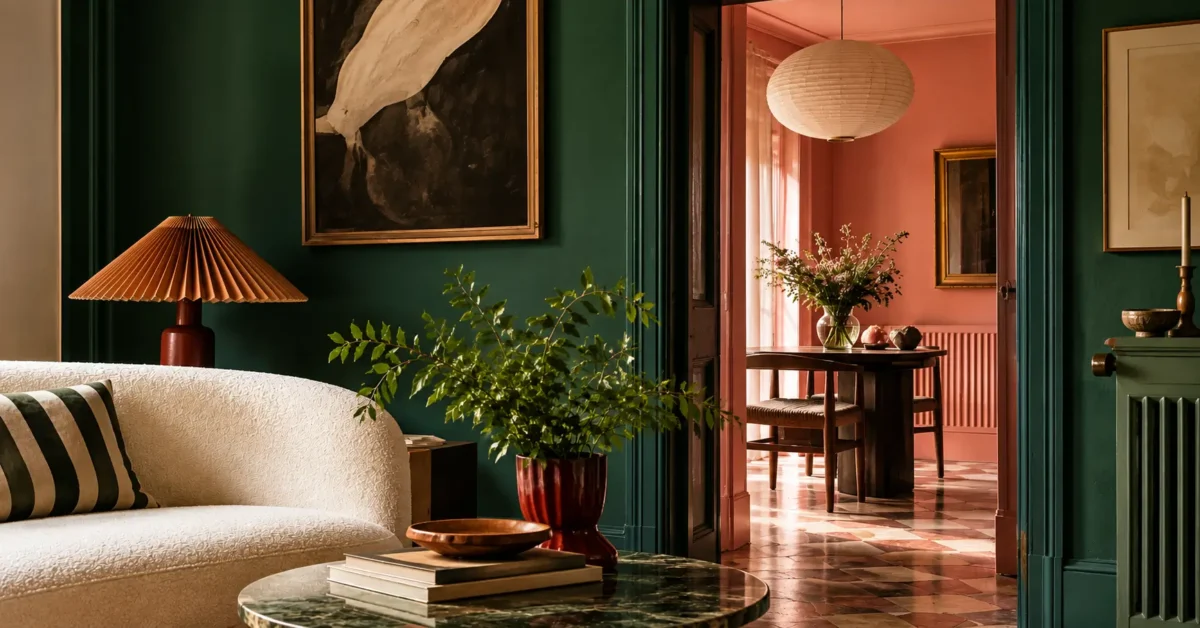
Not necessarily with expensive wallpaper or an elaborate mural. Sometimes it’s just a color you wouldn’t normally dare to use. A stripe that continues onto the ceiling. A glossy finish in a room where you expected matte. Tile taken much higher than necessary. A hand-painted border that is charming precisely because it isn’t perfect.
Something that makes you stop for a second.
The Color You Keep Talking Yourself Out Of
You know that color.
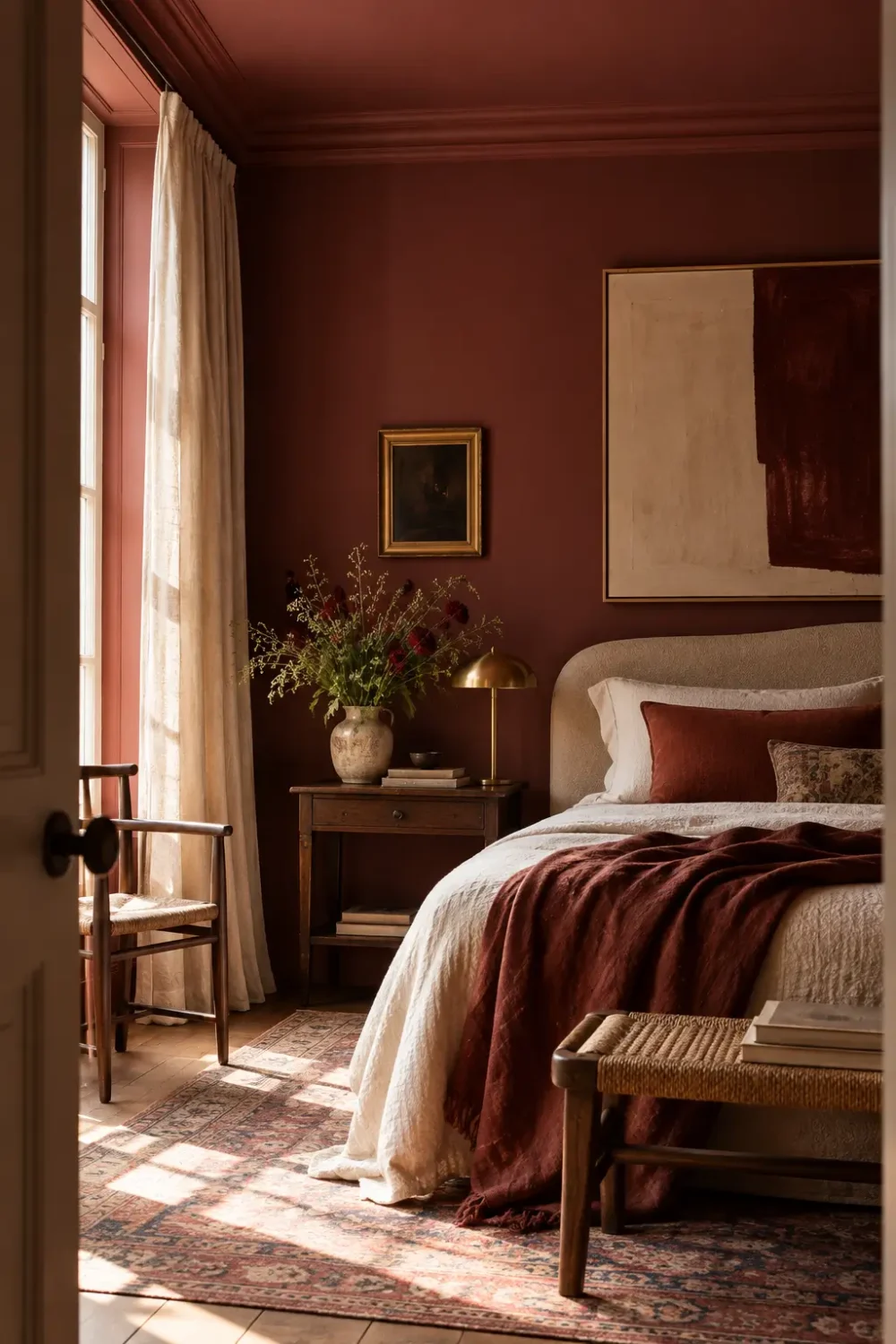
The one you keep saving and then deciding is probably too dark, too strong, too pink, too yellow, too something.
So you choose the safer version of it.
And quite often, that’s exactly where the room loses something.
There’s a strange psychology to decorating. We tend to experience a bold choice as a potential mistake, while a safe choice barely registers as a choice at all. Nobody lies awake wondering whether painting a room off-white was too reckless.
But avoiding regret isn’t the same thing as creating a room you love.
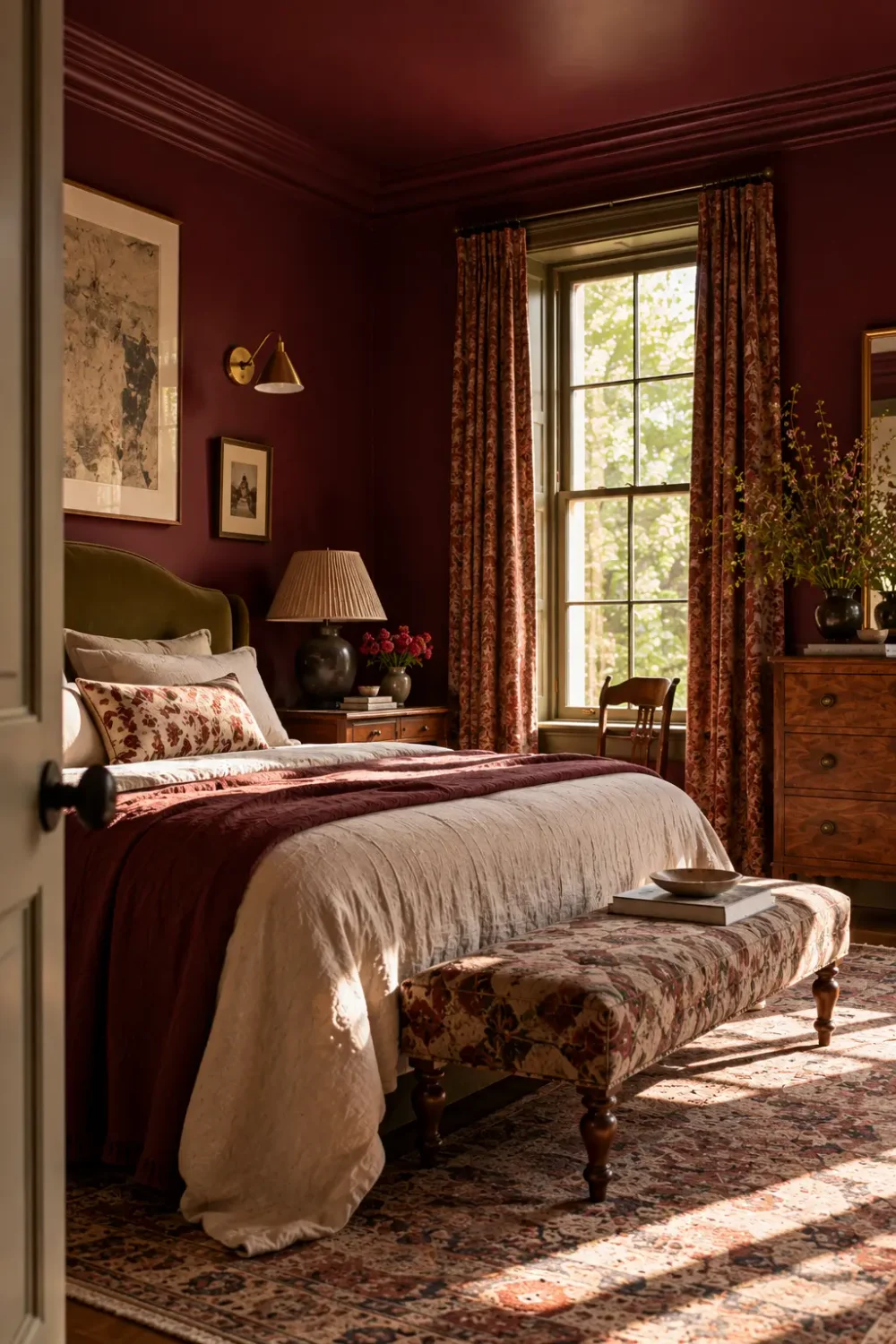
If you keep coming back to oxblood, muddy green, butter yellow or a very particular dirty pink, that repetition probably tells you more about your taste than whatever happens to be on a trend report this month.
Try the color.
Wallpaper the Room, Not Just the “Feature Wall”
There was a period when wallpaper was often treated almost apologetically: one wall behind the bed, the others left plain so things didn’t become “too busy.”
I’d rather see the opposite.
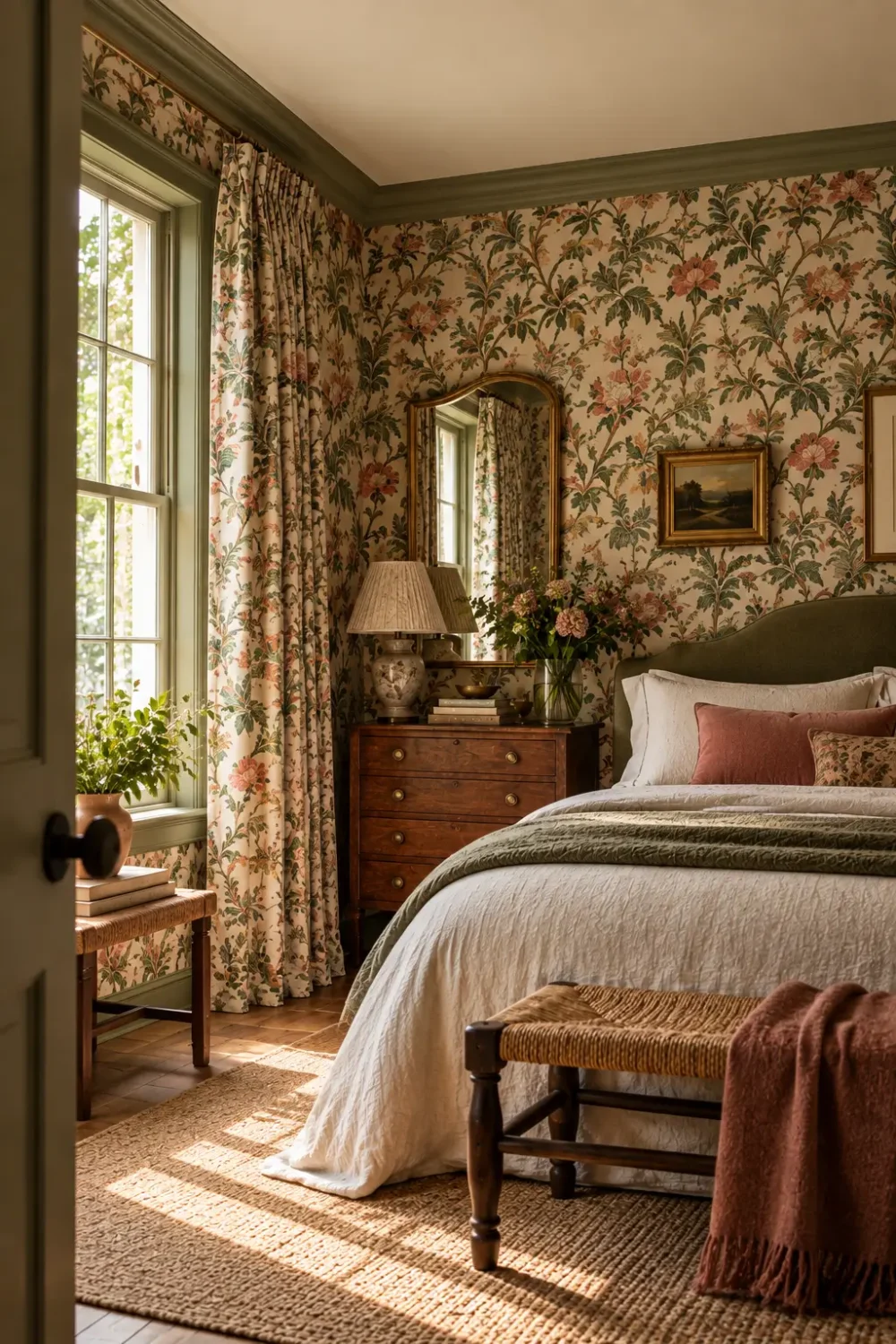
If the paper is beautiful, let it have the room.
Take it around the corners. Put it above the door. Let it meet the curtains. In a small bedroom, hallway or powder room, covering every wall can actually make the space feel more complete rather than more cluttered.
And please don’t save the interesting wallpaper exclusively for the downstairs bathroom because you’re afraid to live with it anywhere else.
If you love it, put it somewhere you’ll actually see it.
Look Up
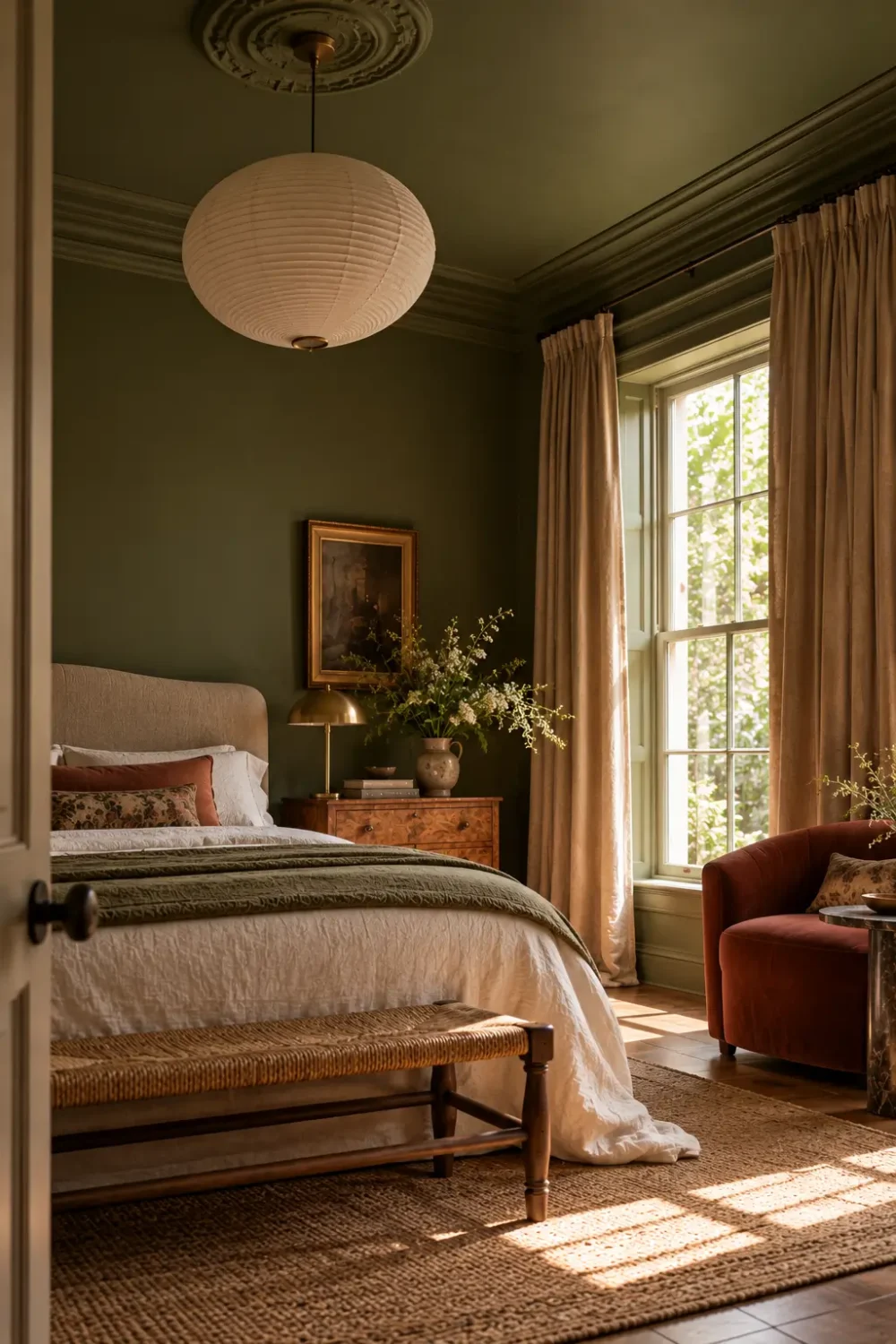
The ceiling might be the most neglected wall in the house.
We automatically paint it white even when absolutely nothing else in the room is white.
Try carrying the wall color straight over it. In a bedroom, especially, that can make the whole room feel softer and more enclosed. Or do the opposite and give the ceiling its own color.
Wallpaper can work beautifully overhead too — particularly in a small room where you want the space to feel like a little jewel box.
And if all of that sounds terrifying, start with the cornice. A contrasting line around the top of a room can completely change its proportions without changing very much at all.
Stop Correcting the Weird Idea
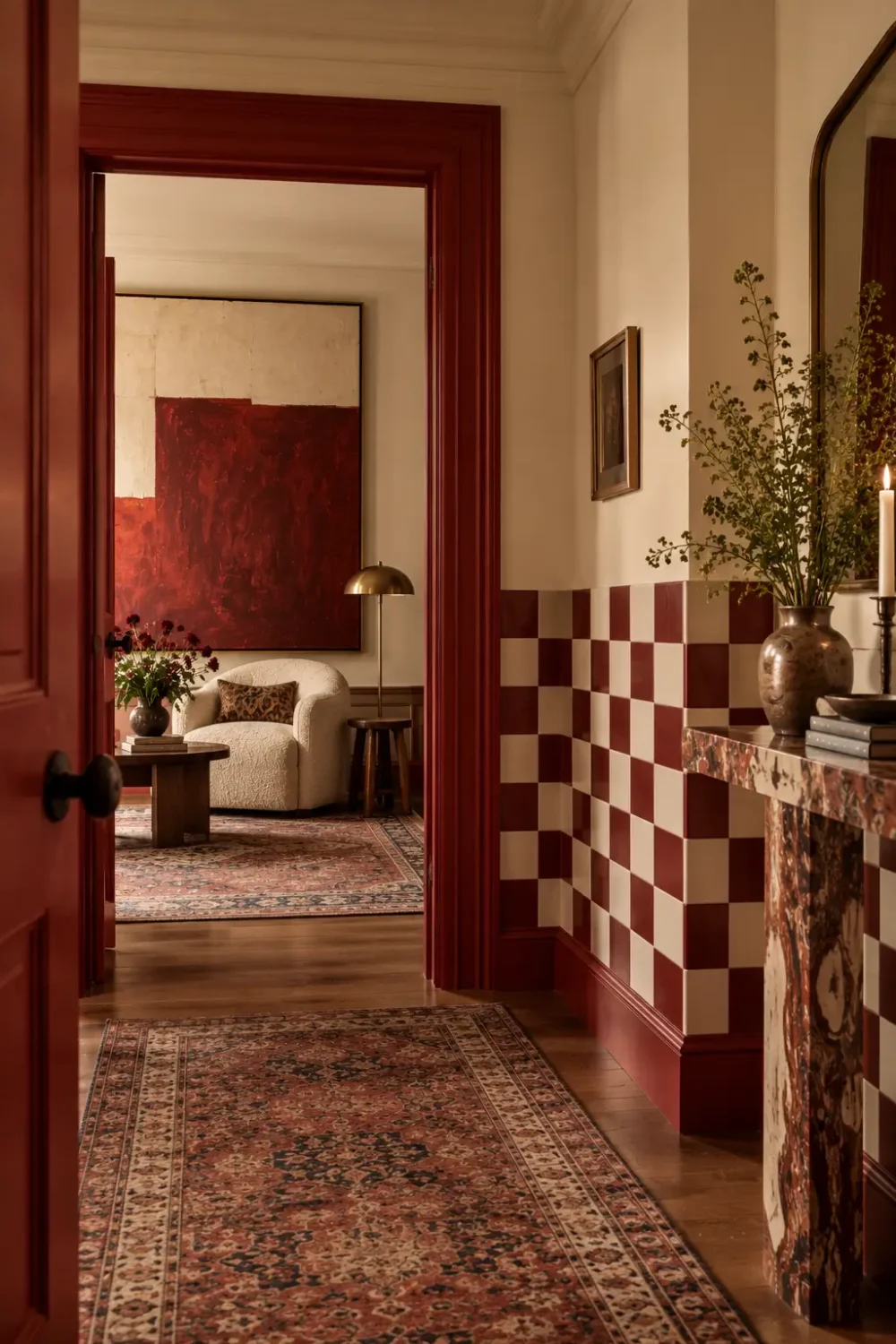
Sometimes the first idea is the interesting one.
Paint a huge rectangle behind the bed instead of buying a headboard. Run a checkerboard pattern halfway up a hallway. Put tiny tiles around a doorway. Hang one absurdly large painting on a narrow wall. Paint the inside of a doorframe bright red.
Then comes the second thought:
Is that weird?
Probably.
Keep going.
I think we edit ourselves far too early when decorating. We have an instinct, then immediately start making it more sensible. The strange color becomes a muted color. The giant artwork becomes something appropriately scaled. The wallpaper becomes a cushion.
By the time we’re finished making the idea tasteful, sometimes there isn’t much of the original idea left.
Perfect Can Be Surprisingly Impersonal
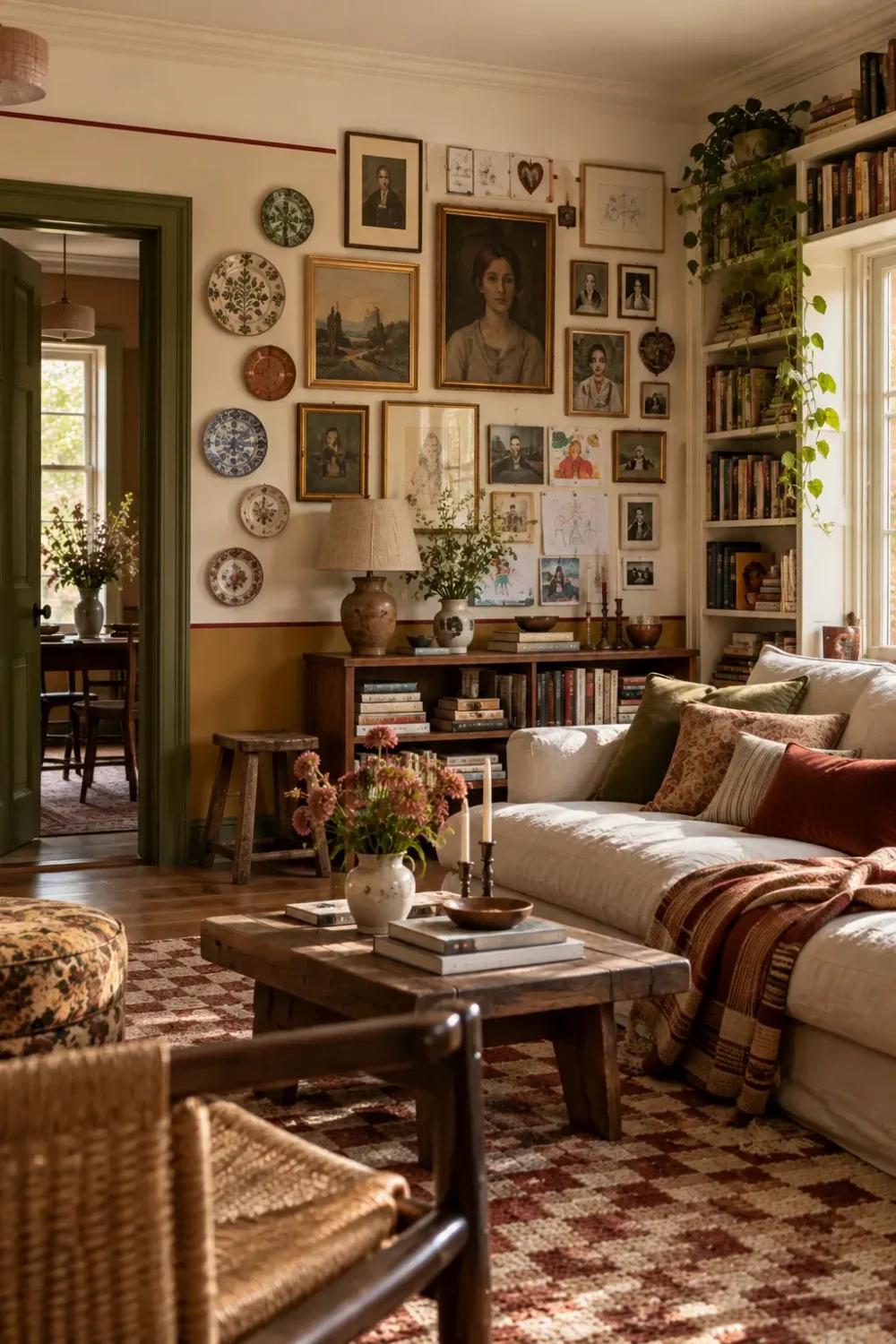
I don’t think every wall treatment needs to look professionally installed.
There’s something wonderful about seeing the hand behind a room.
A border painted slightly imperfectly. A collection of plates that grew over years rather than arriving as a set. Children’s drawings mixed with proper art. A wall covered almost chaotically with photographs, postcards and things that probably mean nothing to anyone except the person who lives there.
Those details are difficult to copy because their value isn’t really aesthetic.
They’re personal.
And perhaps that’s one reason highly coordinated rooms can sometimes feel less inviting than slightly imperfect ones. When every object seems to have been chosen to support the palette, you notice the decorating. When something unexpected appears, you start wondering about the person.
I’d rather wonder about the person.
Your House Is One of the Few Places You Don’t Need Consensus
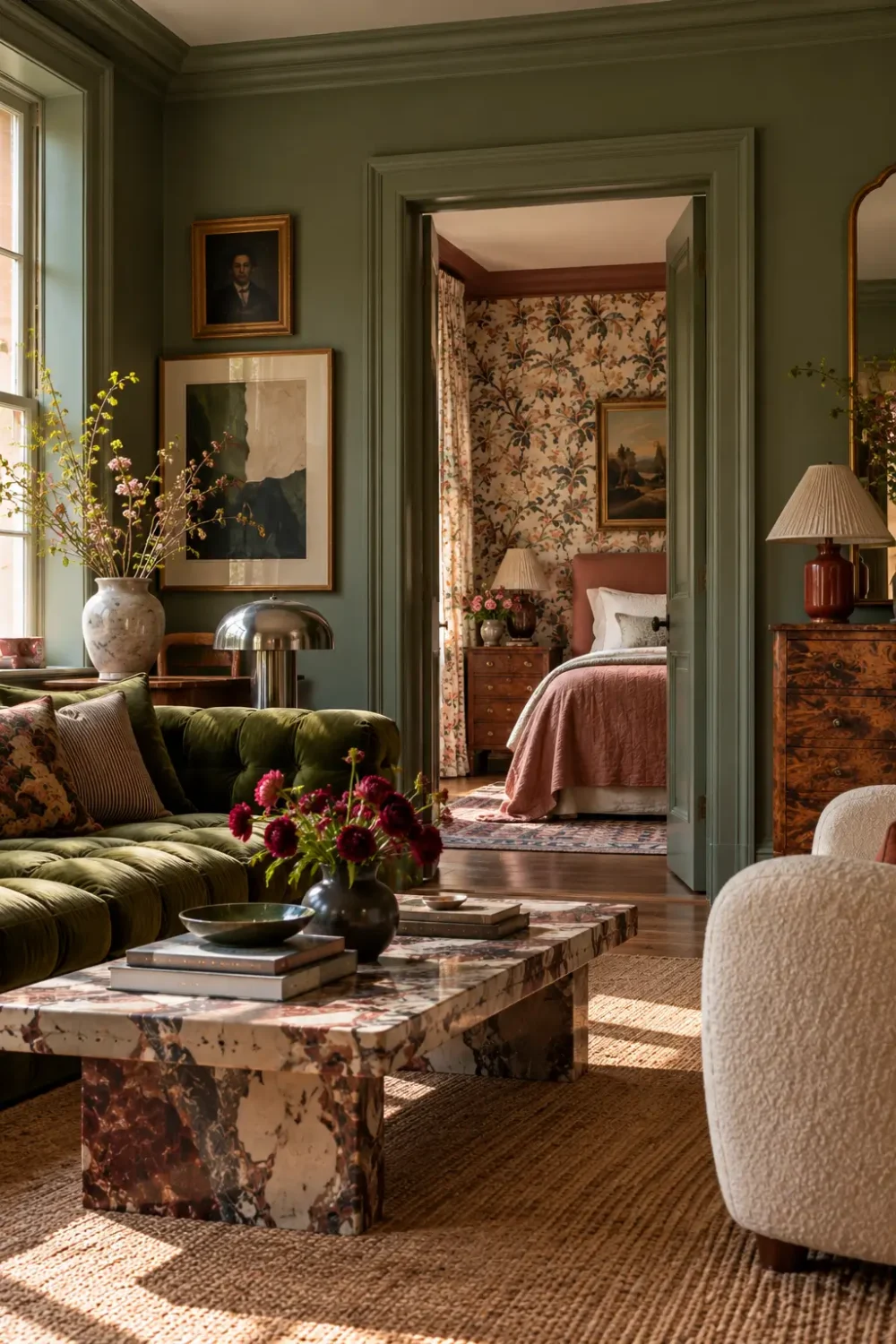
This might be my favorite thing about decorating.
You don’t have to convince anyone.
There’s no focus group deciding whether your bedroom should be blue. Your friends don’t get a vote on the floral wallpaper. Instagram doesn’t have to approve the striped ceiling.
We spend enough of our lives adjusting ourselves to other people — being appropriate, making sensible decisions, worrying about how things will be received.
Home can be different.
It can contain the things you’re drawn to before you’ve found the words to explain why.
And that’s probably where personal style actually begins. Not when you finally identify whether you’re “traditional” or “minimalist” or “eclectic,” but when you stop needing every choice to fit neatly inside a definition.
You can love old English florals and stainless steel.
You can put a 1970s lamp next to an 18th-century chest.
You can paint one room chocolate brown and the next one pale blue.
You are allowed to contradict yourself.
And Yes, You Might Hate It
This is important.
Sometimes taking a risk produces a terrible room.
You’ll open the paint tin you were absolutely certain about and wonder what possessed you. The wallpaper sample that looked incredible taped to the wall will suddenly feel enormous once it’s repeated 47 times.
That doesn’t mean you have bad taste.
It means you decorated a house.
Paint can be painted over. Wallpaper can eventually come down. Pictures can move. Even expensive mistakes become funny stories given enough time.
A home shouldn’t become so precious that we’re frightened to experiment with it.
Because the alternative is choosing only things we already know will work.
And we already know what those rooms look like.
So take the risk with the walls.
Not because every room needs to be bold. Not because white walls are suddenly wrong. And definitely not because someone has declared statement walls the next big trend.
Do it because somewhere between the strange wallpaper, the color you couldn’t stop thinking about and the painting that is technically much too big for that wall, your home starts looking less like an idea of a beautiful home and more like yours.
Discover more from Decoholic
Subscribe to get the latest posts sent to your email.