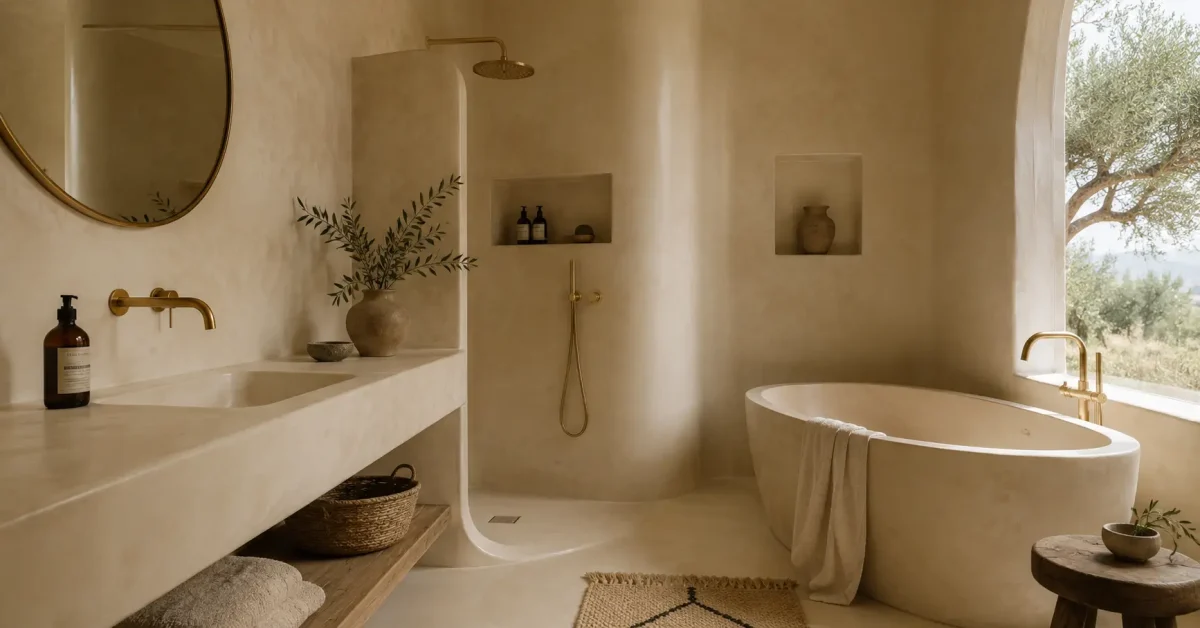
f you’ve noticed that the most beautiful bathrooms lately seem to have something in common, it’s this: they’re getting rid of the grout.
Instead of walls covered in tile, designers are embracing seamless plaster finishes that feel warmer, softer, and infinitely more luxurious. One of the most coveted finishes right now is tadelakt, a centuries-old Moroccan lime plaster known for its velvety texture and remarkable water resistance.
Originally used in hammams, riads, and fountains throughout Morocco, tadelakt creates a sculptural, handcrafted look that’s impossible to replicate with standard tile. The finish has a subtle movement, a soft sheen, and an organic quality that makes bathrooms feel more like boutique spas than purely functional spaces.
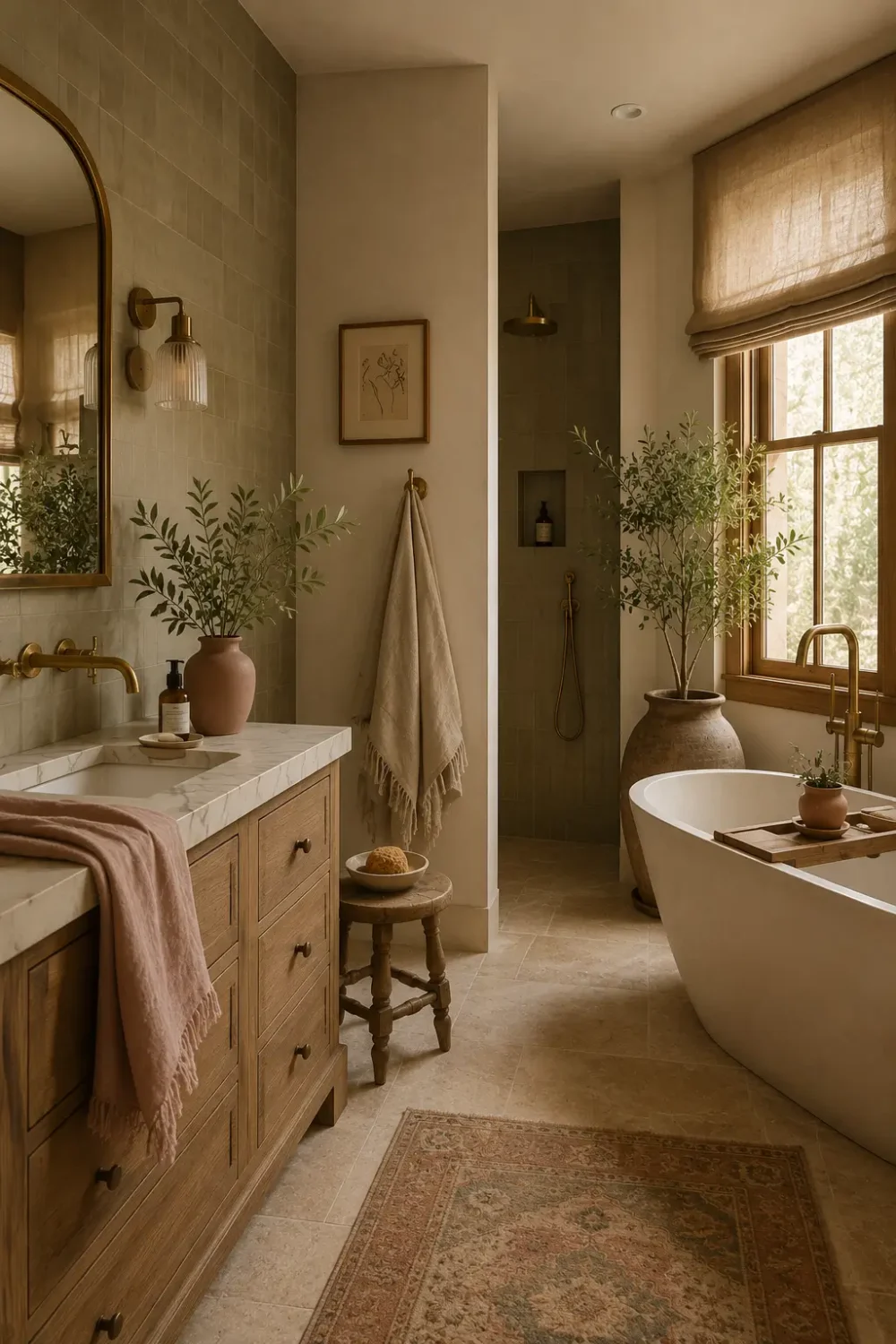
And while tadelakt has deep historical roots, it feels surprisingly modern. It pairs beautifully with contemporary architecture, minimalist interiors, Mediterranean homes, and the organic modern aesthetic that continues to dominate interior design trends.
Whether you’re dreaming of a Santorini-inspired retreat, a warm earthy bathroom, or a serene spa-like sanctuary, these tadelakt bathroom ideas prove that sometimes the most beautiful surfaces are also the simplest.
Why Designers Love Tadelakt Bathrooms
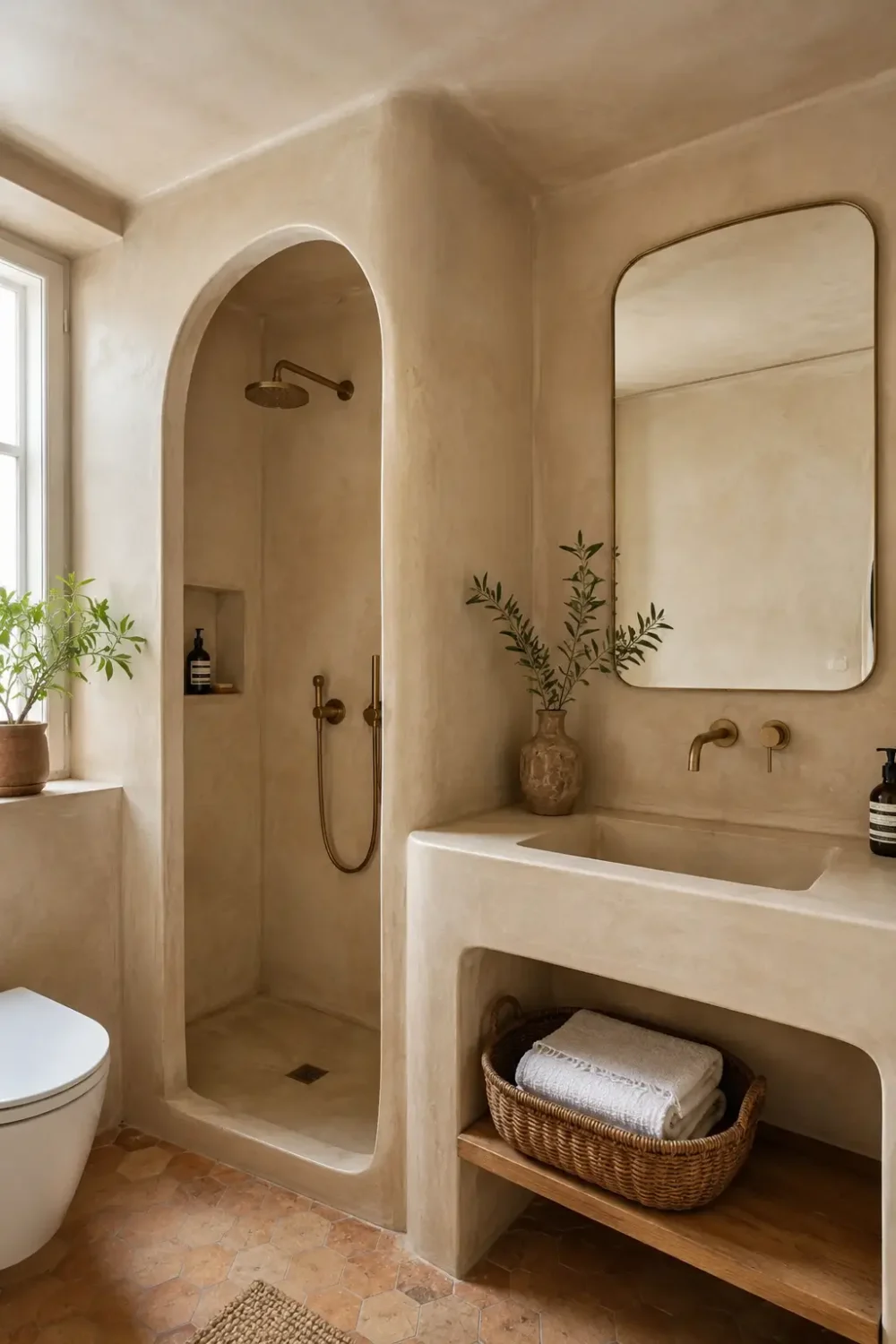
The appeal of tadelakt goes beyond aesthetics. Unlike traditional tile, which creates visual breaks through grout lines, tadelakt offers a seamless finish that allows walls, niches, benches, and sinks to feel sculpted from a single material.
The result is a bathroom that feels calm, cohesive, and remarkably soothing.
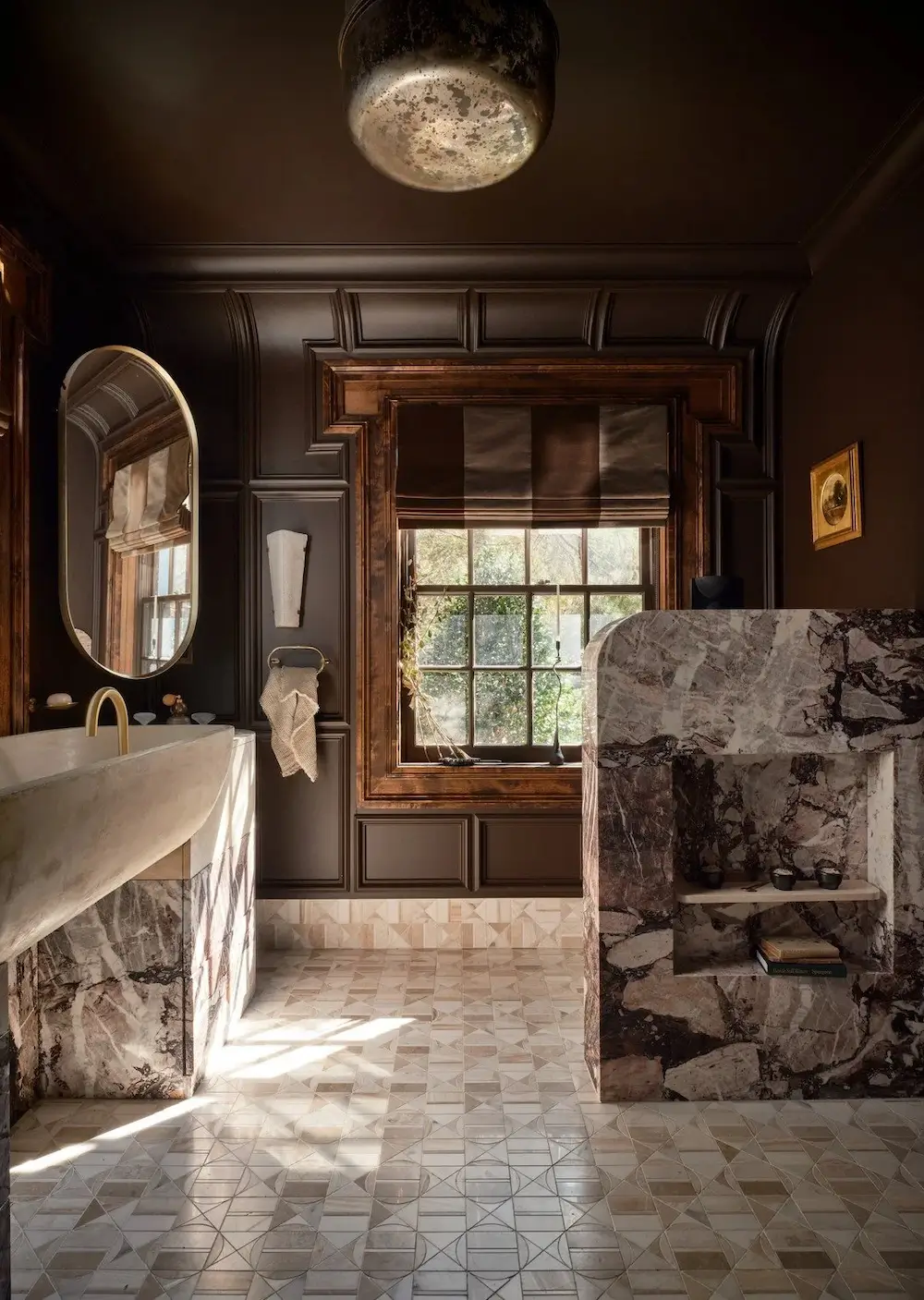
Designers also appreciate the versatility of the finish. While many people associate tadelakt with soft whites and sandy neutrals, it can also be found in rich terracottas, warm taupes, olive greens, charcoal tones, and even dramatic chocolate browns.
Because the finish is handcrafted, every surface develops subtle variations in color and texture, adding depth and character that manufactured materials often lack.
Tadelakt vs. Microcement: What’s the Difference?
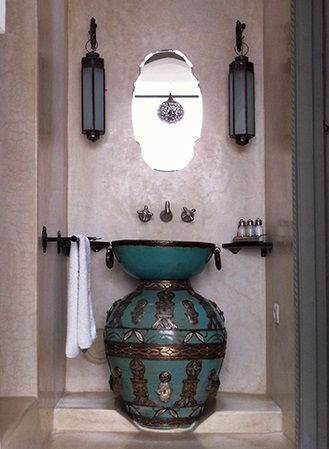
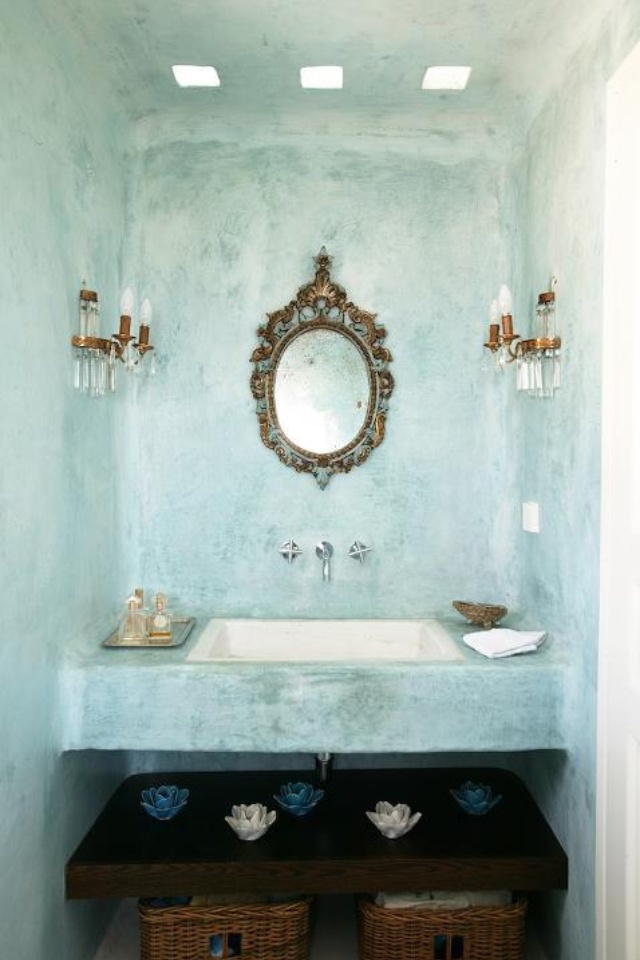
At first glance, tadelakt and microcement can look quite similar. Both create seamless surfaces and eliminate the need for extensive tiling. However, they are very different materials.
Tadelakt is a traditional lime plaster that is compressed, polished, and sealed using natural soap. The result is a soft, organic appearance with gentle movement and a slightly luminous finish.
Microcement, on the other hand, is a cement-based coating that creates a more uniform and contemporary look. It tends to feel more industrial and minimalist, while tadelakt feels warmer and more artisanal.
If you’re looking for a bathroom with Mediterranean, Moroccan, or organic-modern character, tadelakt often provides the richer and more authentic finish.
The Beauty of Imperfection

One of the reasons tadelakt continues to captivate designers is its embrace of imperfection.
Unlike porcelain tiles or engineered surfaces that aim for complete consistency, tadelakt celebrates subtle irregularities. Light reflects differently across its surface throughout the day, revealing gentle tonal shifts and handcrafted textures.
This quality gives bathrooms a lived-in elegance that feels timeless rather than trend-driven.
It’s the same reason natural stone, limewash, and handmade ceramics remain so desirable. The beauty comes from the material itself rather than from decorative embellishments.
Frequently Asked Questions
What is tadelakt?
Tadelakt is a traditional Moroccan lime plaster that has been used for centuries in hammams, riads, fountains, and bathrooms. The material is polished with a stone and treated with natural soap, creating a smooth, water-resistant finish with a distinctive soft sheen.
Is tadelakt waterproof?
Tadelakt is highly water-resistant when installed correctly. Its unique finishing process allows it to perform well in wet environments, making it a popular choice for showers, wet rooms, sinks, and bathroom walls.
Can tadelakt be used in showers?
Yes. Tadelakt has been used in wet areas for centuries and remains one of the most popular plaster finishes for luxury showers and spa-inspired bathrooms.
Is tadelakt expensive?
Because it requires specialized craftsmanship and multiple stages of application, tadelakt is generally more expensive than standard tile installations. However, many homeowners consider the seamless appearance and artisanal quality worth the investment.
Does tadelakt crack?
Like all lime-based materials, tadelakt can develop small hairline cracks if the substrate beneath it moves. Proper installation and preparation significantly reduce this risk.
Is tadelakt difficult to maintain?
Tadelakt is relatively low-maintenance. Most experts recommend avoiding harsh chemical cleaners and instead using gentle pH-neutral products to preserve the finish.
What colors does tadelakt come in?
Although white and beige remain the most popular options, tadelakt is available in a wide range of colors including warm taupe, terracotta, olive green, charcoal gray, and deep earthy browns.
Is tadelakt suitable for modern bathrooms?
Absolutely. While the material has ancient origins, its seamless appearance works beautifully in contemporary, minimalist, Mediterranean, Japandi, and organic-modern interiors.
Final Thoughts
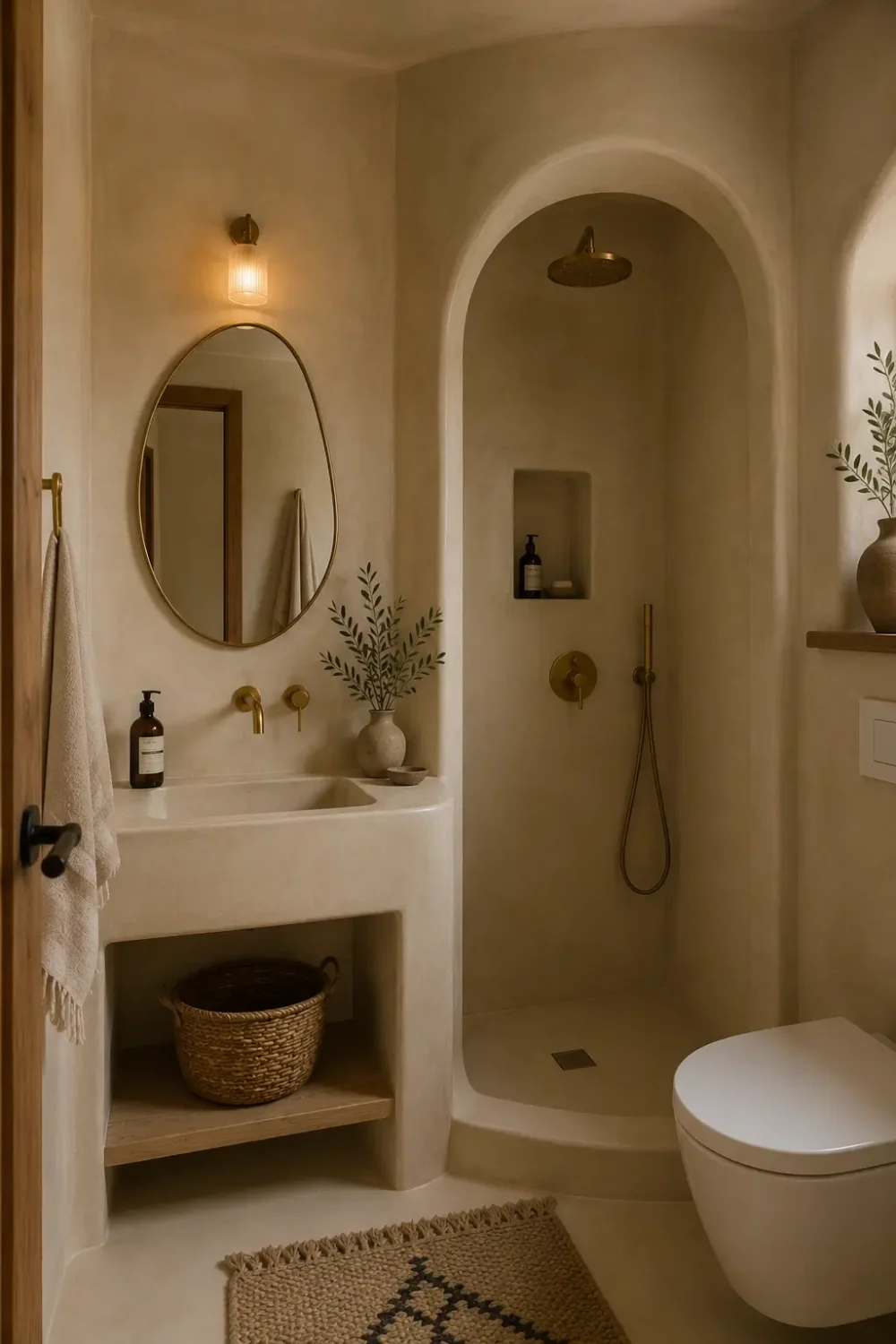
Tadelakt offers something increasingly rare in modern interiors: authenticity.
Its handcrafted character, seamless appearance, and natural beauty create bathrooms that feel calm, timeless, and deeply connected to traditional craftsmanship. Whether paired with warm wood, natural stone, brushed brass, or minimalist architecture, tadelakt has a way of making even the simplest bathroom feel extraordinary.
The following tadelakt bathroom ideas showcase just how versatile this remarkable finish can be.
Discover more from Decoholic
Subscribe to get the latest posts sent to your email.